This article may contain affiliate links. We may earn a small commission at no extra cost to you if you make a purchase through these links.
Recovery Wearables Tested: Whoop, Oura, Garmin in 2026
Whoop 5.0 wins on coaching workflow. Oura Gen 4 wins on sleep accuracy. Garmin wins on sport-specific depth. The 'best' depends entirely on your training type.
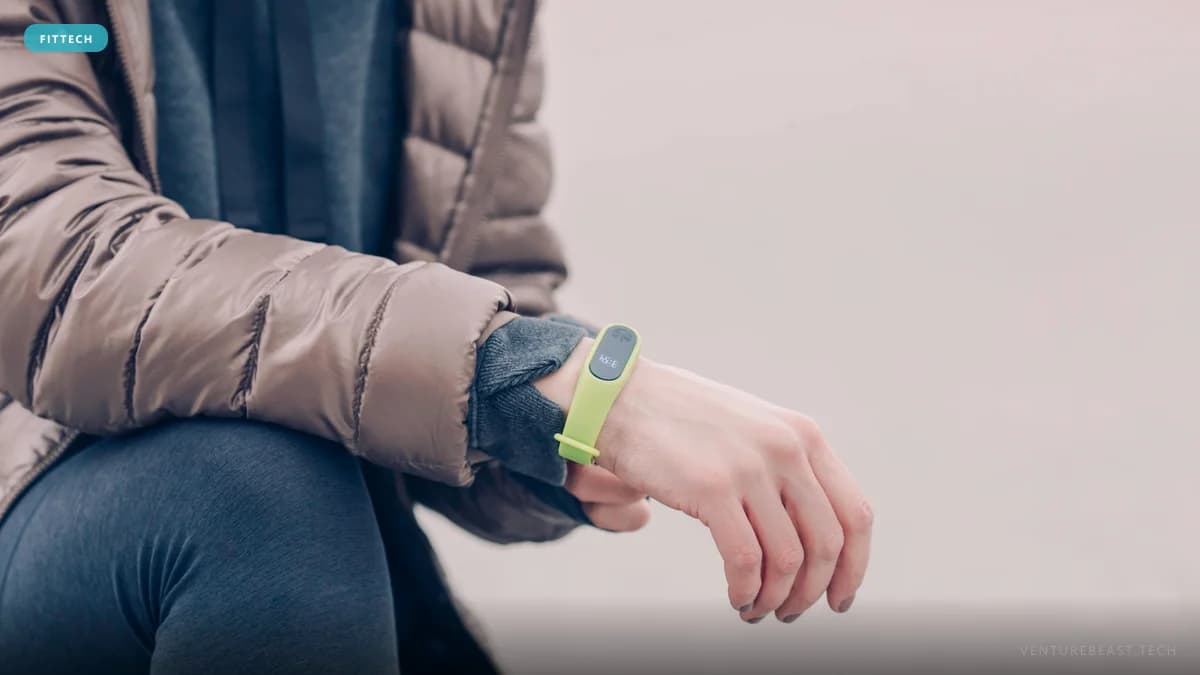
Three wearables now dominate the recovery-tracking market: Whoop 5.0 (band, $30/mo subscription with hardware included), Oura Gen 4 (ring, $349–$499 hardware + $5.99/mo subscription), and Garmin (any 2023+ watch model, one-time purchase, no subscription). Each takes a fundamentally different bet on what "recovery" means and how to deliver it. After living with all three, the honest answer is that the right one depends almost entirely on the user's relationship to training intensity.
The 2024 Sensors-journal validation of Oura Gen 4 (CCC = 0.99 vs reference ECG), Whoop 4.0 (0.94), and Garmin Fenix 6 (0.87) established the raw-HRV accuracy ranking. But raw HRV is not the product any of these companies actually sells — each wraps the underlying physiology in a proprietary composite Recovery / Readiness / Body Battery score. The composite is the product. And the composites are different enough that picking the wrong one for your use case wastes the investment.
The three composite scores compared
| Score | Vendor | Inputs | Surface |
|---|---|---|---|
| Recovery (0–100%) | Whoop | HRV, RHR, sleep performance | Single morning score guiding day-strain target |
| Readiness (0–100) | Oura | HRV balance, RHR, body temperature deviation, sleep quality, recent activity | Morning score; temperature deviation is unique to Oura |
| Body Battery (0–100) + Training Readiness | Garmin | HRV Status, sleep, recovery time, stress history, real-time activity | Real-time score draining and recharging throughout the day |
The most consequential difference: Whoop is built around a single morning Recovery score that prescribes a training-strain target for the day. Oura is built around Readiness as a biological-state report — temperature deviation, in particular, surfaces illness onset and menstrual-cycle phase variation that the other two don't capture. Garmin's Body Battery is a real-time energy gauge that updates during the day as you train and rest, and pairs with Training Readiness as the morning prescription.

Sleep tracking — Oura's structural advantage
Oura Gen 4's sleep tracking is the strongest in the category against the polysomnography gold standard. A 2023 study of 96 participants and 421,000+ epochs showed 91.7–91.8% overall sleep/wake accuracy and per-stage accuracy ranging from 75.5% (light sleep) to 90.6% (REM sleep). Whoop and Garmin are both behind on per-stage sleep classification.
The ring form factor explains a meaningful part of the gap. The finger-pulse signal is cleaner than wrist-derived signal because the finger has more capillary density and less tissue noise. Combined with a multi-year R&D investment specifically in sleep classification, Oura ships the closest consumer approximation to clinical-grade sleep analysis.
For users where sleep quality is the most important physiological signal — shift workers, parents of young children, anyone managing a sleep disorder — Oura's sleep-tracking advantage is decisive. For users where training-strain optimization matters more, Whoop's structural focus on the strain/recovery loop is more useful even with somewhat less granular sleep data.
The Whoop training-system bet
Whoop 5.0 sells a complete training-system worldview. The product flow is: wake up, see your Recovery score (red, yellow, or green), look at the day's prescribed Strain target, train to that target, sleep, repeat. The simplicity is the feature — Whoop deliberately strips out variant metrics and forces the user toward one decision per day.
The subscription model ($30/month with hardware included) is bundled around this flow. Whoop's enterprise-team product is the strongest team-deployment offering in the wearable market — NFL, NCAA, and elite Olympic-program teams use Whoop more than the alternatives because the operator dashboard for team performance staff is purpose-built for this use case. We covered the broader team-side adoption in our analysis of GPS load-monitoring vendors.
Garmin's value-without-subscription bet
Garmin's product moat is the absence of an ongoing subscription. Buy the watch ($200–$1,200 depending on model), and Body Battery, Training Readiness, HRV Status, sleep tracking, VO2 max estimation, and all the training-analytics features are included forever. For users who train consistently in sports Garmin handles well — running, cycling, swimming, hiking, golf — the platform's depth in those specific sports is unmatched.
The accuracy trade-off is real but smaller than the CCC numbers suggest. Garmin's 0.87 HRV accuracy is still close to Oura's 0.99 in absolute clinical terms — the difference matters for elite-athlete optimization but doesn't materially change training decisions for amateurs. The ecosystem (Garmin Connect, third-party app integrations, dedicated cycling and running platforms like Strava, TrainingPeaks) is the deepest in the category.
The decision tree
For 2026 buyers:
- Structured training + want a system that coaches intensity decisions: Whoop 5.0. The single Recovery score plus prescribed Strain target is the cleanest workflow for users who treat training as a structured discipline.
- Biological-state monitoring + sleep is the most important variable: Oura Gen 4. The temperature-deviation signal and the sleep-tracking accuracy are best-in-class. Ring form factor is unobtrusive at night.
- Sport-specific depth + no subscription tolerance: Garmin. Pick the watch model that matches your primary sport (Forerunner for running, Edge for cycling, Fenix for multi-sport). Body Battery is sufficient for recovery decisions even if it's not as well-tuned as the other two.
- iPhone primary, want a smartwatch: Apple Watch with a third-party recovery app (Athlytic, Bevel, Training Today) bridges the gap. Native Apple recovery metrics are less mature than the three covered here, but the ecosystem is hard to beat.
- Multi-user / household scenario: Oura Gen 4 rings or Whoop bands scale better per-user than expensive Garmin watches.
The deeper context, as covered in our HRV training analysis and the omnichannel fitness strategy guide, is that consumer wearables have matured to the point where most products are credible. The remaining differentiation is workflow fit, not technical capability.
The bottom line
2026 is not a year for switching wearables on technical grounds — the three major products are all clinically competent. It's a year for matching workflow to need. Whoop's training-system worldview is the right fit for structured athletic populations. Oura's biological-state framing wins for users where sleep, temperature, and recovery rather than training intensity is the primary monitoring question. Garmin's no-subscription, sport-specific depth is unmatched for users with a clear primary-sport focus. Pick on workflow fit; the underlying physiology is solved.
Frequently Asked Questions
Which is more accurate: Whoop, Oura, or Garmin?
For raw HRV measurement against reference ECG, the 2024 Sensors validation ranking is Oura Gen 4 (CCC 0.99), Whoop 4.0 (0.94), Garmin Fenix 6 (0.87). For sleep stage classification against polysomnography, Oura also leads. For real-time training intensity calculation, Garmin's sport-specific algorithms are stronger than either. All three are clinically credible for general fitness use.
Does the Whoop subscription include the hardware?
Yes — Whoop's $30/month subscription includes the band hardware, ongoing software, and free hardware upgrades when new generations launch. There is no separate hardware purchase. The model contrasts with Oura (ring purchase $349–$499 plus $5.99/month subscription) and Garmin (one-time hardware purchase, no subscription).
Why does Oura have higher accuracy than Whoop and Garmin?
Two reasons. First, the ring form factor uses finger pulse sensing, which has better capillary density and lower tissue noise than wrist-based sensing. Second, Oura has accumulated a multi-year dataset across millions of users that has progressively refined the underlying sleep and HRV classification models. Whoop is close behind on HRV but slightly behind on sleep staging; Garmin trails both on HRV but leads on sport-specific training analytics.
What is Garmin Body Battery and how is it different from Whoop Recovery?
Body Battery is a real-time energy score (0–100) that drains as you train or experience stress and recharges as you rest or sleep. It updates throughout the day. Whoop Recovery is a single morning score (0–100%) that prescribes the day's training-strain target and doesn't change during the day. Both are proprietary composites built on similar underlying signals (HRV, resting heart rate, sleep, activity history) but the surfacing pattern is different.
Can I use these devices for medical purposes?
Limited — none of the three composite recovery scores (Whoop Recovery, Oura Readiness, Garmin Body Battery) are FDA-cleared as medical devices. They are wellness products. Oura's individual ECG features and Apple Watch's ECG do have FDA clearance for atrial fibrillation screening (covered in our wearable ECG analysis), but the composite recovery scores are not regulated devices and should not be used for clinical decision-making.
Enjoying this article?
Get more strategic intelligence delivered to your inbox weekly.
Enjoyed this article?
VentureBeast.Tech is independent and reader-supported. If this saved you time, you can buy us a coffee — it keeps the research deep and the site ad-light.
Support us on Ko-fi

Comments (0)
No comments yet. Be the first to share your thoughts!