This article may contain affiliate links. We may earn a small commission at no extra cost to you if you make a purchase through these links.
AI Radiology 2026: FDA-Cleared Imaging Tools Explained
1,039 FDA-cleared AI radiology devices exist in 2026. Viz.ai's stroke triage has the strongest evidence; Aidoc just shipped the first foundation model.
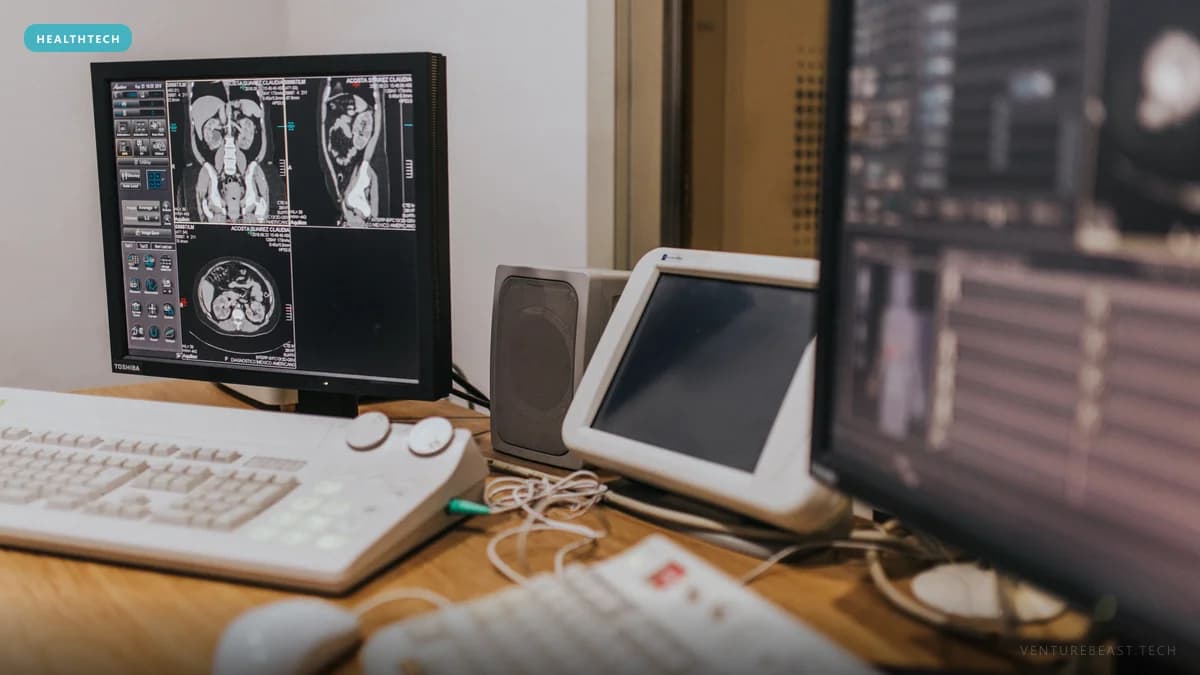
Radiology has become the FDA's busiest AI-device category by a wide margin. In December 2025, the agency added 56 new radiology-specific AI devices to its authorized list, bringing the total to 1,039 AI-enabled imaging tools — nearly 80% of every AI medical device the FDA has ever cleared. In January 2026, Aidoc received clearance for what's being called the first foundation-model-powered clinical AI device: a body CT triage system covering 14 conditions simultaneously, with a mean sensitivity of 97% and specificity of 98% in its pivotal trial.
The scale of FDA activity in this single specialty reflects a genuine structural fit — radiology is fundamentally a pattern-recognition discipline applied to standardized digital images, which is exactly the problem class where modern computer vision performs best. But "1,039 cleared devices" understates how uneven adoption and evidence quality actually are across use cases. Some applications (stroke triage) have multi-year, multi-center outcome data. Others (breast cancer screening) are still accumulating evidence despite widespread deployment.
Where the evidence is strongest: stroke and vascular triage
Viz.ai's large-vessel-occlusion stroke detection is the most mature clinical AI radiology deployment in the country. The system analyzes CT angiography images and sends real-time smartphone alerts directly to stroke response teams when it detects a clot pattern consistent with a large vessel occlusion — the specific stroke subtype where minutes of delayed treatment materially worsen outcomes. Viz.ai's platform now spans 50+ FDA-cleared algorithms deployed at more than 1,700 hospitals.
The reason stroke/vascular triage has the strongest evidence base isn't coincidental — it's a time-critical condition with an unambiguous, measurable outcome (time-to-treatment, functional recovery scores), which makes clinical trials cleaner to design and results easier to interpret than diagnostic-accuracy-only studies. Multiple multicenter studies have now linked Viz.ai-style triage to measurable reductions in door-to-treatment time, which is the single most predictive metric for stroke outcome.
Breast cancer screening — widespread but still accumulating evidence
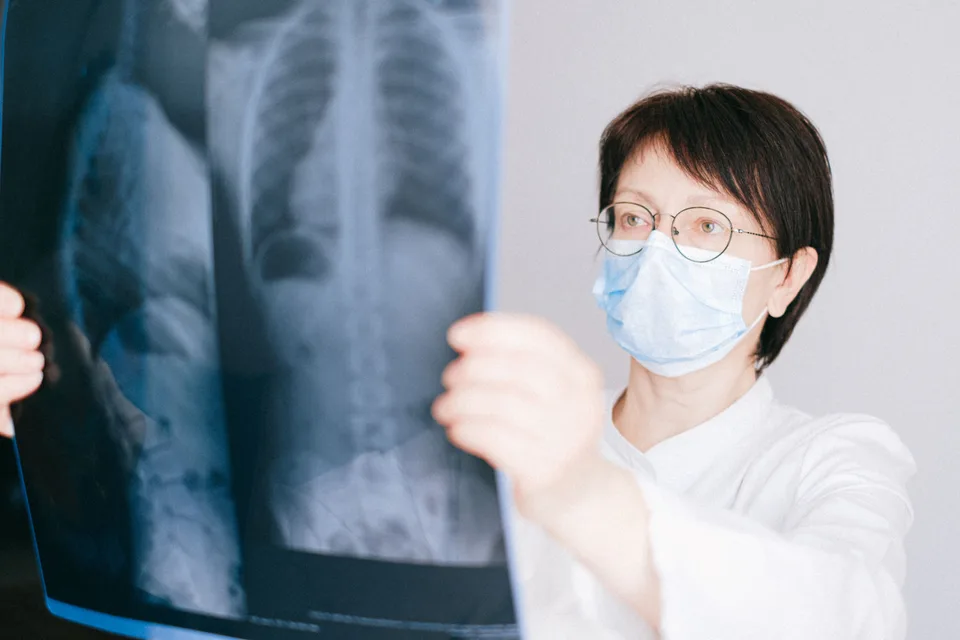
RadNet's Enhanced Breast Cancer Detection (EBCD) program applies AI as a second reader on mammography, and published results show AI-aided interpretation lowered false-negative rates by nearly 9% while decreasing unnecessary recall rates — a genuinely favorable combination, since recalls carry real patient anxiety and downstream cost. A registered clinical trial is now underway specifically comparing screening mammography outcomes with and without AI assistance for breast cancer detection and recall rates.
The honest characterization: AI-assisted mammography is widely deployed and the early data is encouraging, but the evidence base is meaningfully less mature than stroke triage's multi-year outcome record. Radiologists and health systems adopting AI-assisted mammography in 2026 are doing so on the strength of accuracy studies and early real-world deployment data, not yet on the kind of definitive outcome trials that exist for time-critical triage applications.
The foundation-model breakthrough — Aidoc's January 2026 clearance
Aidoc's clearance is structurally different from prior radiology AI approvals. Previous-generation cleared devices were almost universally narrow, single-condition classifiers — a model trained and validated to detect exactly one finding (a specific fracture type, a specific hemorrhage pattern). Aidoc's new device is a foundation model — a single underlying AI system fine-tuned to triage 14 different conditions from body CT scans simultaneously, with a published mean sensitivity of 97% and specificity of 98% across the pivotal validation study.
This matters beyond the headline accuracy numbers. A foundation-model architecture means faster expansion to additional conditions without building an entirely new narrow classifier each time, and it signals where the rest of the FDA-cleared AI radiology market is heading — from a fragmented landscape of hundreds of single-purpose point solutions toward consolidated, broad-coverage triage platforms that a health system deploys once and expands over time.
The gap between "FDA-cleared" and "practice-changing"
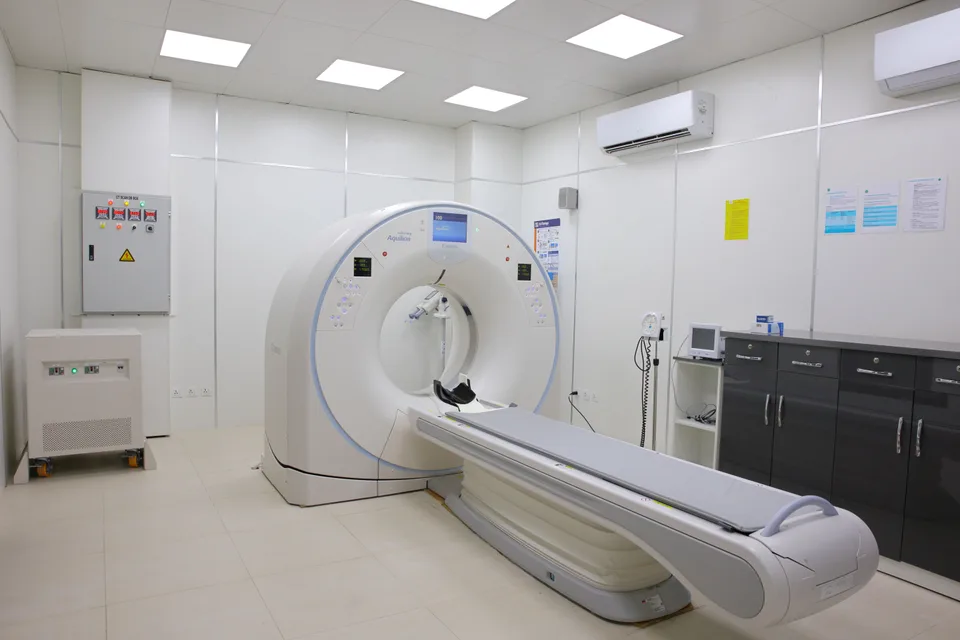
The 1,039-device figure invites an easy misreading — that radiology has been substantially automated. It hasn't. FDA clearance in this category is typically a 510(k) clearance demonstrating substantial equivalence to a predicate device on a specific, narrow task, not a broad claim of diagnostic autonomy. The vast majority of cleared radiology AI tools function as a "second reader" or triage-and-alert layer that flags findings for a radiologist's review — none currently operate as an autonomous diagnostic replacement for physician interpretation in the U.S. regulatory environment.
This connects to the pattern we've documented in ambient clinical AI — the strongest 2026 healthcare-AI deployments augment rather than replace clinical judgment, and the FDA's clearance pathway structurally reinforces that model. The practical clinical value comes from workflow acceleration (faster triage of the most urgent cases) and second-reader accuracy gains (catching findings a fatigued or high-volume radiologist might miss), not from removing physicians from the diagnostic loop.
What health systems should actually evaluate
Given the uneven evidence quality across the 1,039 cleared devices, the practical adoption framework for 2026:
This fits the broader digital-diagnostics pattern we covered in at-home genomics 2026 — increasingly, the clinical value of an AI-derived signal depends less on raw accuracy and more on how well the workflow around it is designed to route findings to the right specialist at the right time.
- Time-critical triage (stroke, pulmonary embolism, aortic dissection): Strongest evidence category. Deploy with confidence — Viz.ai-class platforms have multi-year, multi-center outcome data.
- Cancer screening second-reader (mammography, lung nodule detection): Good accuracy evidence, developing outcome evidence. Deploy as a genuine second-reader tool, monitor false-negative and recall-rate metrics locally.
- Broad foundation-model triage platforms (Aidoc-class): Newest category, strong pivotal-trial numbers but limited real-world deployment history as of 2026. Consider pilot deployment with close outcome tracking before system-wide rollout.
- Narrow single-condition classifiers outside the above categories: Evaluate case-by-case — FDA clearance alone doesn't guarantee meaningful clinical impact at your specific patient population and workflow.
The bottom line
AI radiology in 2026 is the most mature clinical-AI category by device count and regulatory activity, but "FDA-cleared" spans an enormous range of actual clinical maturity — from Viz.ai's battle-tested, multi-year stroke-triage outcome data to Aidoc's brand-new foundation-model platform with strong trial numbers but limited deployment history. The trajectory is clear: narrow single-purpose classifiers are giving way to broader foundation-model triage platforms, and the augment-not-replace regulatory model is likely to hold for the foreseeable future. Health systems evaluating AI radiology tools in 2026 should weight the specific evidence base for their target use case far more heavily than the FDA-clearance status alone.
Frequently Asked Questions
How many AI radiology devices has the FDA cleared?
As of December 2025, the FDA had cleared 1,039 AI-enabled radiology devices — nearly 80% of all AI-enabled medical devices the agency has ever authorized. The agency added 56 new radiology-specific clearances in a single update in December 2025, reflecting the category's continued rapid regulatory activity into 2026.
Can AI radiology tools diagnose patients without a doctor?
No. The vast majority of FDA-cleared AI radiology tools are cleared as decision-support or triage aids — flagging findings, prioritizing urgent cases, or serving as a "second reader" alongside a radiologist — not as autonomous diagnostic replacements. U.S. FDA clearance pathways for these devices (typically 510(k)) do not currently authorize AI systems to make independent diagnostic determinations without physician oversight.
What is Aidoc's foundation model AI device?
Aidoc received FDA clearance in January 2026 for what is described as the first foundation-model-powered clinical AI device in radiology — a single underlying AI system that triages 14 different conditions from body CT scans simultaneously, with a published mean sensitivity of 97% and specificity of 98% in its pivotal validation study. This differs from prior-generation devices, which were typically narrow classifiers built for one condition each.
Does AI improve breast cancer detection in mammography?
Early evidence is favorable. RadNet's AI-assisted mammography program showed roughly a 9% reduction in false-negative interpretations alongside decreased unnecessary patient recalls. A dedicated clinical trial comparing AI-assisted versus standard mammography screening outcomes is currently underway to build a more definitive evidence base, since the current data — while encouraging — is less mature than the multi-year outcome evidence available for stroke-triage AI.
Which AI radiology application has the strongest clinical evidence?
Stroke and vascular triage, led by platforms like Viz.ai, has the strongest published clinical evidence in the AI radiology category. Multiple multicenter studies have linked Viz.ai-style large-vessel-occlusion detection to measurable reductions in door-to-treatment time — the single most predictive metric for stroke patient outcomes — across a deployment base of more than 1,700 hospitals.
Enjoying this article?
Get more strategic intelligence delivered to your inbox weekly.
Enjoyed this article?
VentureBeast.Tech is independent and reader-supported. If this saved you time, you can buy us a coffee — it keeps the research deep and the site ad-light.
Support us on Ko-fi
Comments (0)
No comments yet. Be the first to share your thoughts!