This article may contain affiliate links. We may earn a small commission at no extra cost to you if you make a purchase through these links.
Catapult vs STATSports vs WIMU: GPS Load Monitoring
The three elite GPS load-monitoring systems compared head-to-head: sample rate, indoor capability, analytics depth, and which clubs use each.
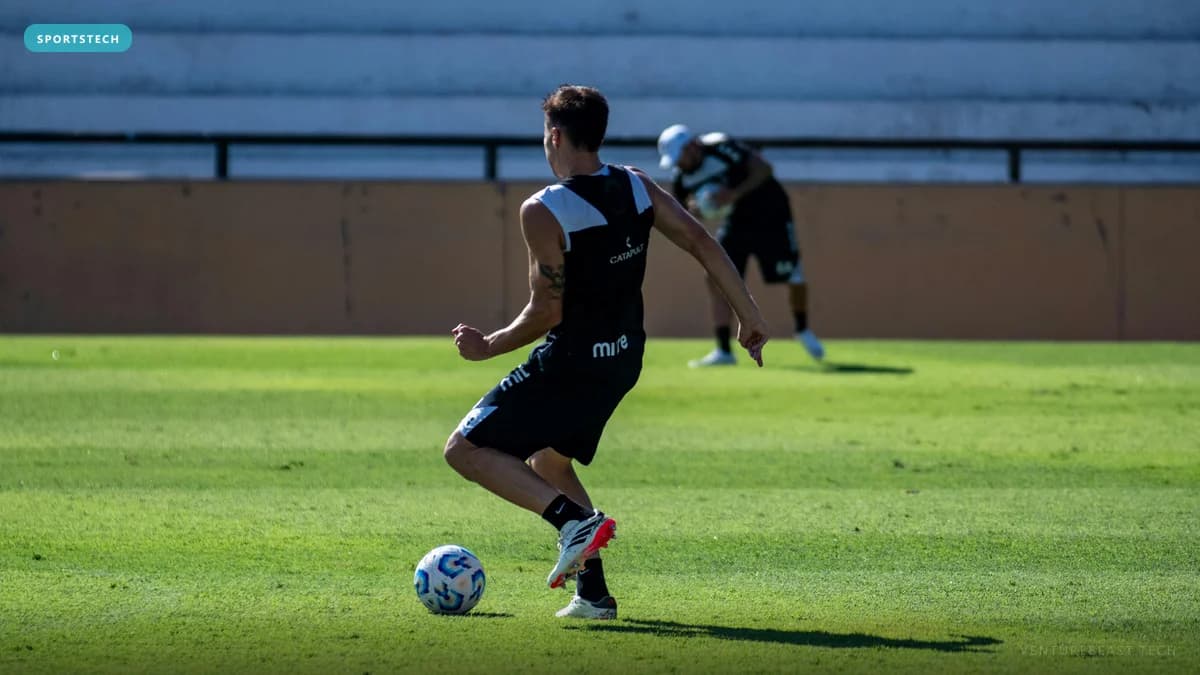
Three vendors dominate elite-team GPS load-monitoring in 2026: Catapult Sports (Australian-listed, 3,000+ teams), STATSports (Irish, the FIFA-approved Apex unit worn across the Premier League), and WIMU (Spanish, the system used by FC Barcelona, Real Madrid, and the Spanish national team). At $20,000–$40,000 per season per squad, this is the most expensive piece of sports-tech infrastructure outside of stadium video — and the most consequential, because it directly controls how many minutes each player trains and plays.
Load-monitoring vendor selection is the kind of decision that does not show up in any media coverage but determines whether a $100 million player misses six weeks with a hamstring or plays through the European cup run. The three systems take meaningfully different design approaches, sell to different parts of the market, and produce different player-availability outcomes. After spending a year comparing the literature and talking to performance staff, here is how they actually compare.
What each system actually does on the body
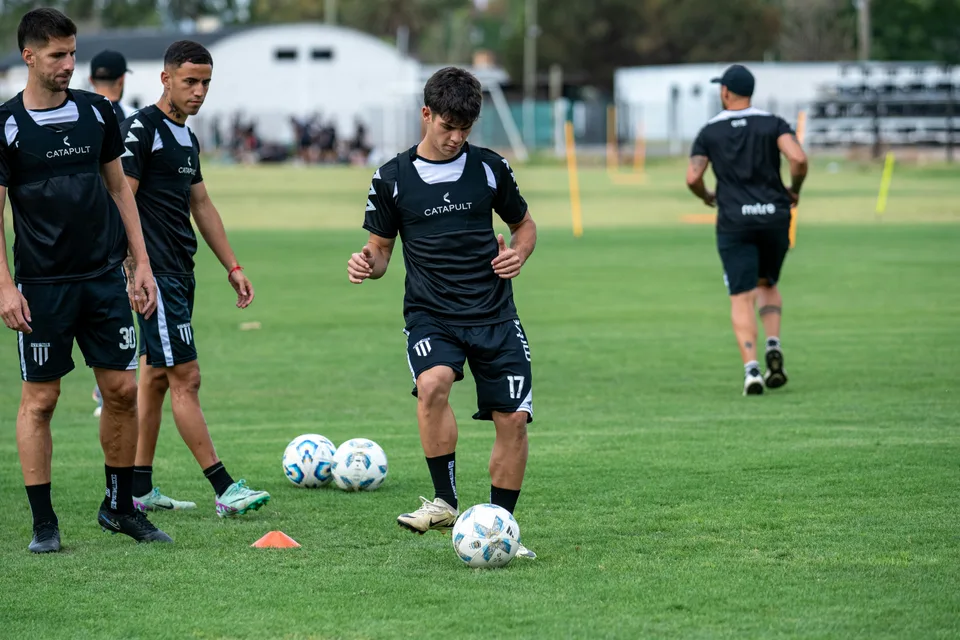
All three vendors ship a small unit (around 50 grams) worn in a vest between the shoulder blades. The unit contains a GPS receiver, a 9-axis inertial measurement unit (IMU: accelerometer + gyroscope + magnetometer), a heart-rate radio that pairs to a chest strap, and a wireless modem for live data telemetry. From those raw sensor streams, each company computes the canonical training-load metrics: distance covered, sprint count, high-speed running, acceleration/deceleration events, metabolic power, and the company-specific player-load summary metric.
The differences start with sample rate, satellite constellation, and the analytics layer above the raw data:
| Vendor | GPS sample rate | Satellite constellations | Indoor mode | Headline analytics metric |
|---|---|---|---|---|
| Catapult Vector S7 | 10 Hz | GPS + GLONASS + Galileo | Optional UWB anchors | Player Load |
| STATSports Apex Athlete | 10 Hz | GPS + GLONASS | None (outdoor-only) | Dynamic Stress Load |
| WIMU PRO | 20 Hz (advertised) | GPS + GLONASS + Galileo + BeiDou | UWB antennas (full hybrid) | Player Load + Power Load |
The most consequential differentiator is the indoor mode. WIMU is the only vendor with a fully integrated UWB (ultra-wideband) indoor positioning layer — its system runs the same player-load math in both outdoor (GPS) and indoor (UWB anchor) modes without changing sensors. Catapult sells UWB as an upgrade but it is a separate hardware install. STATSports does not offer indoor positioning at all. For a basketball or handball federation, this is decisive — only WIMU and Catapult-with-upgrade ship a real indoor solution.
Where each vendor has won the market
The customer rosters reveal the strategic positioning more clearly than any spec sheet. A 2025 buyer survey from The Upside found Catapult and STATSports together captured nearly 50% of mindshare among pro performance staff.
- Catapult: 3,000+ elite teams, the largest installed base by an order of magnitude. Strongest in Australian Rules Football (where the company originated), the NFL, MLS, and English Championship/EFL. Public company (ASX:CAT), reported FY2025 revenue around AUD $145 million.
- STATSports: Premier League dominance — official partner of Manchester City, Liverpool, Tottenham, and roughly two-thirds of the EPL. Also strong in international rugby and Gaelic football. Private, Northern Ireland-based. Apex unit FIFA-approved for in-match wear.
- WIMU: La Liga and the Spanish national team. FC Barcelona, Real Madrid, Atlético Madrid all use WIMU PRO. Strong indoor footprint (basketball, handball, futsal). Madrid-based, owned by RealTrack Systems since 2014.
Three competitive observations matter when staff are choosing between them. First, Catapult has the deepest analytics suite — the OpenField software now ships ML-based injury risk modeling out of the box, trained on the largest cross-league dataset in the category. STATSports and WIMU offer comparable raw data, but their analytics layers are thinner; teams typically supplement with their own sport scientists running custom models in R or Python. Second, STATSports has the cleanest in-match experience — the FIFA approval matters because referees will eject players wearing non-approved tracking units, and STATSports' Apex unit is the most ubiquitous on Premier League match-day rosters. Third, WIMU's hybrid indoor/outdoor architecture is unmatched. For organizations that operate multiple sports (a Real Madrid-style multi-section club with basketball and handball squads alongside football), the single-platform appeal is real.
The injury-prevention claim — and what the data actually shows
Every vendor markets GPS load-monitoring as injury prevention. The actual evidence is more nuanced than the brochures suggest.
The strongest finding from the academic literature (notably Gabbett's acute-to-chronic workload ratio framework, since heavily critiqued) is that sharp week-over-week workload spikes are associated with elevated soft-tissue injury risk in the following microcycle. The GPS unit's job is to give the performance staff that ratio early in the week so a player who has trained too hard can be backed off before Wednesday rather than carried into match-day. None of the three vendors disputes this framing — and none of them have published controlled studies showing a clinically significant reduction in non-contact injury rate from adopting their system specifically.
What the data does show: clubs that adopt comprehensive GPS load-monitoring tend to report fewer non-contact injuries than clubs that do not. The causal arrow is debated — sophisticated clubs adopt sophisticated systems, and sophisticated clubs already had better injury prevention. But the correlation is consistent enough across the literature that essentially every top-tier professional club in Europe and North America runs one of the three platforms. The cost-benefit is favorable even if the direct causal claim is unproven.
What practitioners should buy
Three buyer profiles cover most of the market:
- Outdoor-only single-sport club (most soccer, rugby, American football): STATSports Apex for English-speaking markets, Catapult Vector for everywhere else. STATSports has the cleaner match-day experience; Catapult has the deeper analytics. Decision usually comes down to which competitor your league rivals are running, because cross-club benchmarking matters and you want comparable data.
- Indoor or hybrid sport (basketball, handball, volleyball, futsal): WIMU. The integrated UWB indoor capability is genuinely differentiated. Catapult-with-upgrade works but it's a more expensive deployment.
- Multi-sport federation (national olympic committees, university athletics departments): WIMU for its breadth, or a mixed Catapult/STATSports deployment if cross-sport data fusion is not a priority. The single-vendor argument matters more for federations than for clubs.
For deeper context on how the underlying sensor-and-model loop is reshaping every part of professional sports, see our analyses of the MLB ABS Challenge System and the ball-tracking arms race — both are reading the same Hawk-Eye-class data pipeline that GPS load-monitoring helped pioneer.
The verdict
For Premier League and elite European football, STATSports Apex remains the smart default — FIFA approval plus the largest in-league peer comparison pool. For multi-sport federations and clubs with serious indoor programs, WIMU PRO is the only single-vendor answer. For everyone else and especially for the deepest off-the-shelf analytics, Catapult Vector is the safest pick. None of the three is a wrong choice; the wrong choice is to keep running on paper-and-stopwatch monitoring in 2026 when the cost of a single missed first-team match exceeds an entire season of any of these systems.
Frequently Asked Questions
How much does a Catapult, STATSports, or WIMU GPS system cost?
Elite-team systems from all three vendors cost $20,000–$40,000 per squad per season, including units, charging infrastructure, software licenses, and vendor support. Multi-team deployments (first team + academy + women's team) typically reach $80,000–$150,000 annually. Lower-tier consumer variants (Catapult One, STATSports Apex Athlete Series) are available for individual athletes at $200–$300 per device.
Which Premier League clubs use STATSports versus Catapult?
STATSports has roughly two-thirds of the Premier League, including Manchester City, Liverpool, and Tottenham as named official partners. Catapult holds the remaining one-third plus several Championship clubs. La Liga splits the other way — WIMU dominates with FC Barcelona, Real Madrid, and Atlético Madrid, while a handful of smaller clubs use Catapult.
Can GPS load-monitoring actually prevent injuries?
The evidence is correlational, not causal. Clubs that adopt comprehensive GPS load-monitoring report fewer non-contact soft-tissue injuries than clubs that don't, but no controlled study has isolated the system itself as the cause. The practical case is that sharp week-over-week workload spikes elevate injury risk, and GPS units give performance staff an early warning to adjust training intensity.
What is the difference between GPS sample rate and accuracy?
Sample rate (Hz) is how many position readings the unit takes per second — Catapult and STATSports run at 10 Hz, WIMU advertises 20 Hz. Accuracy depends on the number of satellite constellations the unit can hear from (GPS, GLONASS, Galileo, BeiDou). Higher sample rate plus more constellations means more accurate sprint and acceleration metrics, especially in covered stadiums where the satellite view is partially blocked.
Are these units allowed in match play?
STATSports Apex is FIFA-approved for in-match wear in all FIFA-sanctioned competitions, including the Premier League and Champions League. Catapult Vector is approved for many leagues but check the specific competition's tracking-equipment list. Match-day approval matters because referees can require a player to remove non-approved equipment before kickoff.
Enjoying this article?
Get more strategic intelligence delivered to your inbox weekly.
Enjoyed this article?
VentureBeast.Tech is independent and reader-supported. If this saved you time, you can buy us a coffee — it keeps the research deep and the site ad-light.
Support us on Ko-fi

Comments (0)
No comments yet. Be the first to share your thoughts!