This article may contain affiliate links. We may earn a small commission at no extra cost to you if you make a purchase through these links.
MLB ABS Challenge System: 1,000 Calls, 55% Overturned
MLB's ABS Challenge System launched April 2026. After ~1,000 calls with 55% overturned, the catcher's seat is suddenly baseball's most powerful.
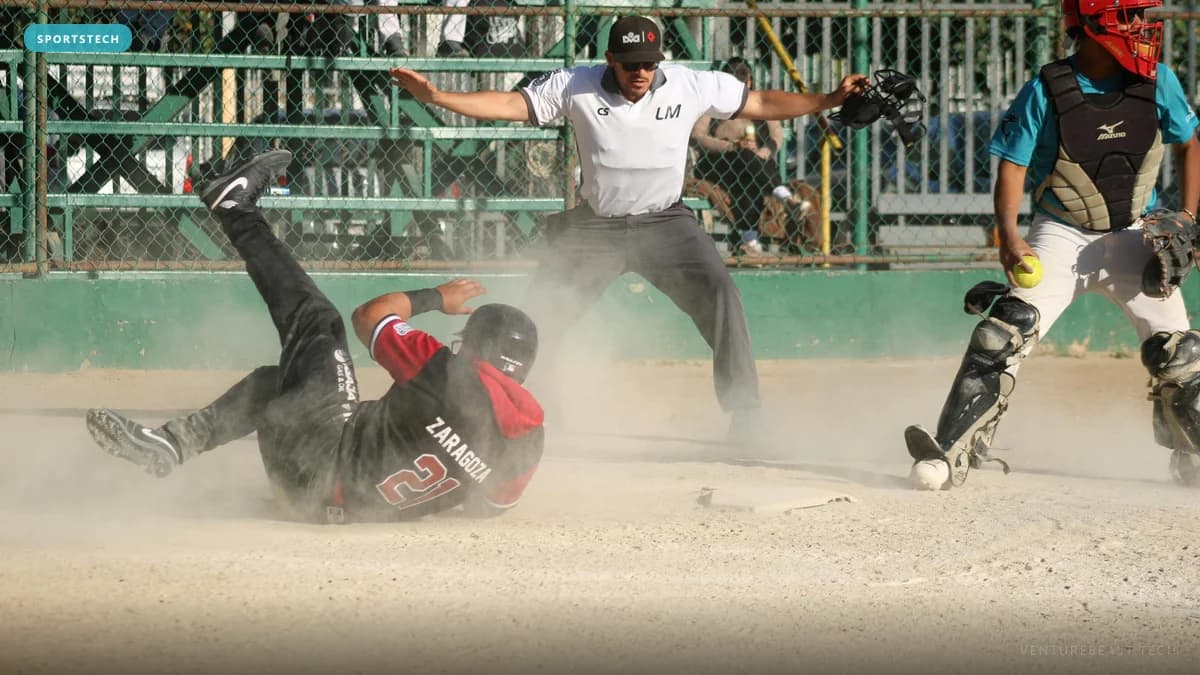
MLB's Automated Ball-Strike Challenge System launched on April 13, 2026, with the Giants-Yankees opener on Netflix. After roughly 1,000 challenges across the first several weeks of the season, 55% have been overturned — and the most consequential seat on a baseball diamond is no longer the umpire's.
The Joint Competition Committee approved ABS in September 2025 after years of Minor League testing. The version that reached the majors is deliberately not full automation — Minor League surveys showed players, managers, and fans all preferred preserving "the human element of umpiring." The compromise: human umpires still call every pitch, but batters, pitchers, and catchers can tap their helmet to send any one of them to the Hawk-Eye system for verification. Each team gets two challenges per game, and the math has rewired in-game strategy faster than anyone expected.
This is the first time MLB has handed players direct, in-game override authority over an umpire decision. The blueprint matters beyond baseball — the NFL, NBA, and international tennis circuits have been quietly studying the same model.
How the ABS Challenge System actually works
The rules are tighter than most fans realize. Each team starts a game with two challenges. Only the batter, catcher, or pitcher can initiate one, and they must do it immediately — a cap or helmet tap before the next pitch. Managers, hitting coaches, and bench players cannot challenge. Challenges are also locked out after a replay review has already been triggered and when a position player is pitching.
The strike zone the system enforces is intentionally two-dimensional: a flat rectangle 17 inches wide (the width of home plate), with the top set at 53.5% of the batter's height and the bottom at 27%. There is no three-dimensional pitch tunnel — pitches are judged at a single vertical plane, the front edge of home plate. This was a deliberate design choice that catchers and several relievers have already criticized.
The underlying tracking is Hawk-Eye Innovations' camera array, the same system that powers MLB's Statcast pitch-tracking data. T-Mobile provides the 5G transport that gets the call from the cameras to the on-field display board and broadcast graphics. Spring training 2025 logged four technical glitches in 88,534 ABS instances — a 0.0045% failure rate, with documented contingency protocols when the system can't render a verdict in time.
What the opening weekend data reveals
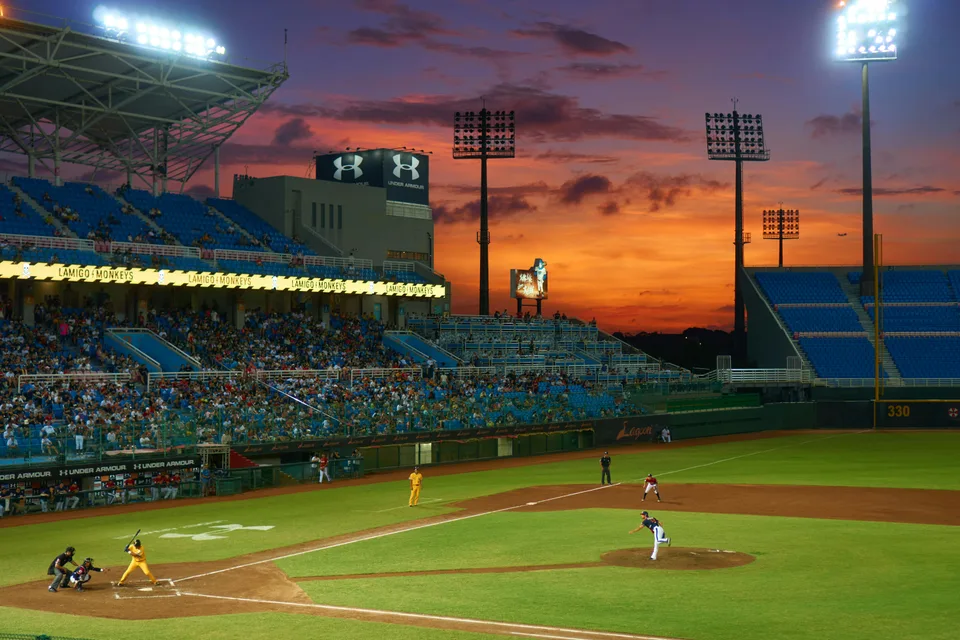
Through the first four days of the 2026 season — 47 games — players issued 175 challenges and won 94 of them. That's a 53.7% overturn rate, almost identical to the spring training mark of 52.2% across 4.1 challenges per game. The system's reported margin of error is roughly one-sixth of an inch.
The headline cases tell the strategic story:
- Best margin: Cal Raleigh (Seattle Mariners) won a full-count sweeper challenge by 0.2 inches — a pitch the human umpire called a strike that was a sliver outside.
- MVP performance: Eugenio Suárez (Cincinnati Reds) hit back-to-back successful challenges with bases loaded and two outs against Boston, each pitch about an inch off the plate.
- Worst challenge: Matt Wallner (Minnesota Twins) challenged a pitch that was 4.8 inches inside the strike zone — more than a full baseball-diameter beyond the boundary.
- Worst umpire miss the system caught: Tripp Gibson called a strike on an 0-2 splitter that was 4.3 inches outside.
How the early-season numbers compare to spring training:
| Metric | Spring 2025 | Opening weekend 2026 |
|---|---|---|
| Challenges per game | 4.1 | 3.7 |
| Overturn rate | 52.2% | 53.7% |
| Average review duration | 13.8 seconds | ~14 seconds |
| Added game time per game | ~57 seconds | ~52 seconds |
| Fan positive reception | 72% | Not yet polled |
Two takeaways stand out. First, the system added about a minute to game length — not a serious problem for a sport that just spent two years cutting time-of-game with the pitch clock. Second, the overturn rate is high enough that umpires are not just being verified — they're being meaningfully corrected. More than half of the calls players actually choose to challenge get reversed.
Catchers just became the most important players on the field
The single most surprising stat from opening weekend: catchers won 64.1% of their challenges (59 of 92), while hitters won only 42.3% (33 of 78), and pitchers managed just 2 successes in 5 attempts. Mike Trout went 3-for-4 challenging from the batter's box. The Twins led the league with 11 challenges.
The spread is not random. Catchers have the best view of the pitch relative to the zone — they're framing every pitch all game long. Their spatial intuition for the strike zone is more refined than anyone else on the field, including the umpire standing behind them. The ABS data confirms it.
The strategic implication: framing — long the most undervalued catching skill — is being replaced or supplemented by challenge selection. The catcher who knows when to spend one of the team's two challenges is more valuable per inning than the catcher with the best framing run-value. This is a real role rewrite, and it's already showing up in early-season WAR estimates for receivers like Cal Raleigh, Will Smith, and Sean Murphy.
What MLB still got wrong
Three structural choices are already drawing fire from players and analysts who otherwise back the system.
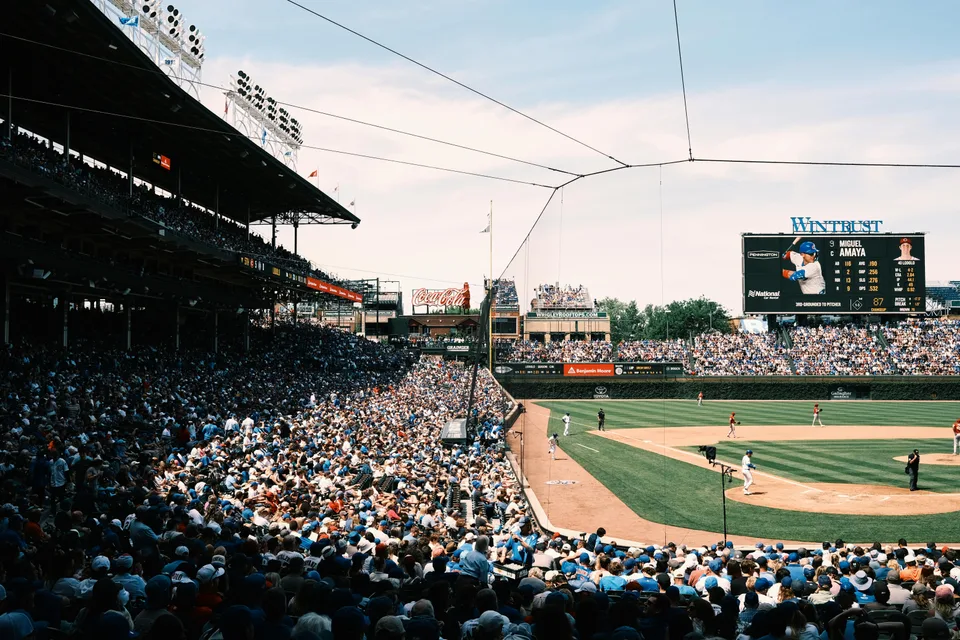
The two-dimensional zone. Hoby Milner of the Cubs has openly advocated for "a three-dimensional plate" rather than "one thin line." A pitch that catches the front edge of the plate but breaks completely out by the time it crosses the back edge is a strike under ABS. Hitters argue this rewards pitches they functionally cannot hit. The counter-argument: 3D enforcement would massively increase walks and game length, the exact problems Minor League testing identified as deal-breakers for full automation.
Two challenges may be too few. Yankees pitcher Will Warren wants three challenges per team, arguing that the current cap forces hitters to hoard them for the late innings rather than use them early, when wrong calls compound across at-bats. The 4.1 spring-training average is already bumping the ceiling.
Pitchers should not challenge. Athletics reliever Mark Leiter Jr. has said publicly that pitchers should be locked out, because they have the worst zone-visualization of the three eligible roles. The opening-weekend pitcher success rate (40%) supports the argument — pitchers waste challenges that could have decided later at-bats.
There's also a quieter concern from Angels catcher Travis d'Arnaud: framing is still a real skill, and replacing it with challenge selection narrows the catching position to a smaller talent funnel. The receivers who can frame and challenge well will dominate; the framing-only specialists who built careers on it now have a shorter useful life.
Why this matters beyond baseball
The challenge-only model is the most important pattern MLB exported in 2026. Full automation was always politically untenable — leagues protect the human face of officiating because it protects officiating careers and broadcasting drama. The ABS approach lets technology verify only when invoked, preserving most of the human authority while eliminating the worst-case missed calls.
That structure travels. The NFL has been quietly piloting Hawk-Eye for line-of-scrimmage measurement and has telegraphed a future expansion to challenge-based line judging. The NBA has tested optical replacement of out-of-bounds decisions. Tennis already runs full automation at majors but is exploring the challenge model for tournaments where the cost of a full Hawk-Eye install is prohibitive. The AAA Triple-A baseball circuit — MLB's R&D lab — is already piloting a hybrid system where some innings use challenge mode and others use full automation, gathering data on which fans prefer in a live ballpark.
VentureBeast.Tech has covered the underlying machine-learning shift inside sports tech in AI in talent scouting — the recruiting side of the same data infrastructure that powers ABS. The same sensor-and-model loop is reshaping consumer fitness too, as we covered in our omnichannel fitness strategy guide. The convergence is unmistakable: every part of professional sports operations, from player evaluation to live officiating, now runs through a measurement layer the league did not control five years ago.
The bottom line
The ABS Challenge System is the smartest first step MLB could have taken into officiating tech. It preserves the umpire role, it caps the time cost at under a minute per game, it pairs human judgment with verifiable ground truth on the highest-stakes pitches, and it has flipped catcher value evaluation in a single offseason. The 55% overturn rate is the real headline — players are not challenging at random, and the system is consistently right when they pull the trigger.
The next decisions are about edge cases, not the structure. Whether MLB moves to three challenges, whether pitchers retain the right to invoke one, and whether the 2D zone gets a partial-3D supplement for breaking pitches — those debates will shape the 2027 rulebook and set the template every other major league copies.
Frequently Asked Questions
How many ABS challenges does each team get per MLB game?
Two challenges per team per game. If a game goes to extra innings and a team has exhausted both, it receives one additional challenge for each subsequent extra inning. Only the batter, catcher, or pitcher can invoke one, by tapping the cap or helmet immediately after the pitch.
Who actually pays for the Hawk-Eye and 5G infrastructure?
MLB partners with T-Mobile, which provides the 5G "Advanced Network Solutions" transport, and Hawk-Eye Innovations supplies the camera array (the same hardware that already powers Statcast). T-Mobile is the publicly named technology sponsor. Hardware costs are absorbed at the league level rather than billed to individual clubs.
Is the ABS strike zone two-dimensional or three-dimensional?
Two-dimensional. The system evaluates the pitch at a single vertical plane — the front edge of home plate — measuring against a flat rectangle 17 inches wide, with the top at 53.5% of the batter's height and the bottom at 27%. There is no judgment of where the ball travels after that plane, which is why some breaking-ball calls remain controversial.
Which player position challenges most often, and which wins most?
Catchers issued the most challenges in the first four days of 2026 (92, leading every other position) and won 64.1% of them. Hitters issued 78 challenges with a 42.3% success rate. Pitchers issued only 5 challenges and went 2-for-5. Catchers' spatial intuition for the strike zone — built up through full-game pitch framing — translates directly into challenge accuracy.
When did the ABS Challenge System officially launch in MLB?
The Joint Competition Committee approved the rule in September 2025. The system debuted on Opening Night 2026 — April 13, 2026 — in the Giants-Yankees game broadcast on Netflix. Every regular-season MLB game has used it since.
Enjoying this article?
Get more strategic intelligence delivered to your inbox weekly.
Enjoyed this article?
VentureBeast.Tech is independent and reader-supported. If this saved you time, you can buy us a coffee — it keeps the research deep and the site ad-light.
Support us on Ko-fi

Comments (0)
No comments yet. Be the first to share your thoughts!