This article may contain affiliate links. We may earn a small commission at no extra cost to you if you make a purchase through these links.
Wearable ECG 2026: Apple, Withings, Samsung, Pixel Compared
Four FDA-cleared wrist ECGs in 2026 — Apple Watch, Withings ScanWatch 2, Samsung Galaxy Watch, Pixel Watch. Accuracy ranges 84-98%. Here's how to pick.
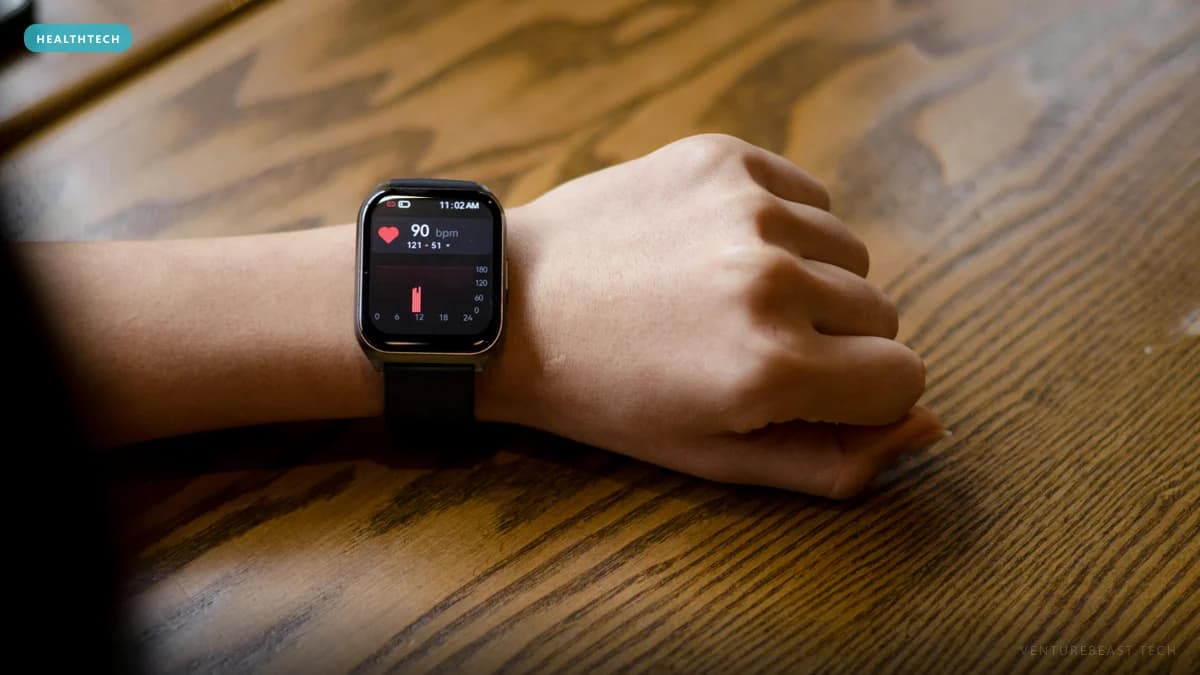
FDA-cleared consumer ECG wearables in 2026 have stabilized into a four-product market: Apple Watch Series 10, Withings ScanWatch 2, Samsung Galaxy Watch 7, and Google Pixel Watch 3. All four passed FDA 510(k) clearance for atrial-fibrillation detection. The published clinical accuracy ranges from 84% to 98% depending on the device and the study methodology. None of them is diagnostic — they are screening tools that flag rhythms warranting follow-up with a cardiologist and a real 12-lead ECG.
The category matured fast. Apple shipped the first consumer wrist ECG in 2018 (the Watch Series 4); within six years, every major smartwatch vendor has shipped an FDA-cleared equivalent. The 2026 conversation is no longer about whether wearable ECG works — it does. The conversation is which device fits which user, what the false-positive rate actually costs the healthcare system, and how broadcast cardiac-rhythm data integrates with downstream care.
The four FDA-cleared consumer ECG wearables compared
| Device | Vendor | ECG leads | Battery (typical) | Price (starting) |
|---|---|---|---|---|
| Apple Watch Series 10 | Apple | 1 (single-lead) | ~18 hours | $399 (USD) |
| Withings ScanWatch 2 | Withings | 2 channels (clinical-grade equivalent of leads I, II, III, aVR, aVF, aVL) | ~30 days | $349 |
| Samsung Galaxy Watch 7 | Samsung | 1 (single-lead) | ~40 hours | $299 |
| Google Pixel Watch 3 | Google + Fitbit | 1 (single-lead) | ~36 hours | $349 |
The Withings ScanWatch 2 is the technical standout — it records two channels of ECG data, capable of representing the equivalent of six standard 12-lead-ECG vectors (I, II, III, aVR, aVF, aVL) compared to the single-lead snapshots the other three produce. This puts ScanWatch in a slightly different clinical category: it can detect not just atrial fibrillation but also some bundle-branch blocks and other axis-deviation pathologies. The trade-off is hardware density and watch aesthetic — ScanWatch is a hybrid analog/digital design that prioritizes battery (30 days) and the clinical-grade ECG over a smartwatch operating system.
The accuracy question — what 84%–98% actually means
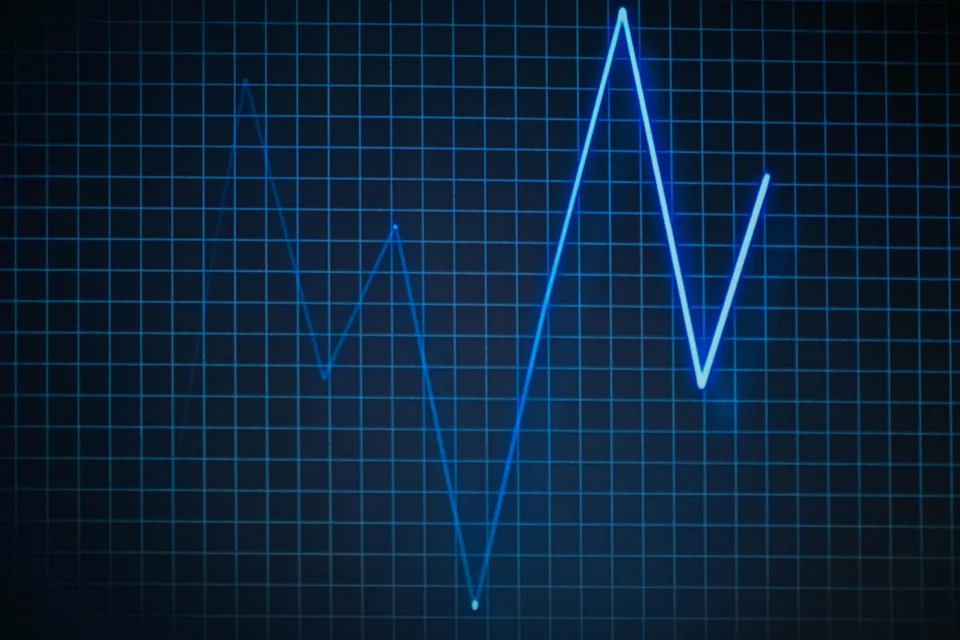
Two metrics matter for any AFib-detection device: sensitivity (does it catch true AFib events?) and positive predictive value (when it flags AFib, is it really AFib?). The Apple Heart Study published a 71% positive predictive value — i.e., when Apple Watch flagged a suspicious irregular rhythm, 71% of those flags corresponded to confirmed atrial fibrillation on follow-up 12-lead ECG. The remaining 29% were false positives.
The Withings ScanWatch 2 publishes higher accuracy (~94% PPV) on its dual-channel ECG, attributable to the additional sensor leads. Samsung and Google Pixel Watch report comparable single-lead accuracy to Apple. For asymptomatic AFib screening in a general population, the false-positive rate matters enormously — a 29% false-positive rate at population scale produces a flood of unnecessary cardiology referrals and downstream costs. For patients with known AFib monitoring use cases, the same false-positive rate is much less costly because the user already has a cardiologist baseline.
What the clinical validation evidence shows
The BASEL Wearable Study and several follow-up clinical validations have produced the most rigorous published evidence on consumer ECG accuracy. Across five FDA-cleared devices, the AFib detection accuracy clustered in the 84–98% range for symptomatic AFib in monitored populations. For asymptomatic AFib in general population screening (the harder problem), accuracy is materially lower — the underlying signal is just less consistent in incidental wear.
The pragmatic clinical takeaway from cardiology professional societies (the American Heart Association, the European Society of Cardiology, the Heart Rhythm Society) is that consumer wearables are appropriate for: (1) ongoing monitoring of patients with diagnosed AFib, (2) symptomatic patients who want to capture a rhythm strip when symptoms occur, and (3) high-risk populations (age 65+, structural heart disease, recent stroke). For asymptomatic young adults with no risk factors, the population-screening yield is too low to justify the false-positive cost.

How to choose between the four
The recommendation tree depends on the use case more than the device specifications:
- iPhone owner, smartwatch primary product: Apple Watch Series 10. The HealthKit integration with downstream apps and EHR systems (Epic MyChart, ECG export to PDF for cardiologist review) is the most polished.
- Battery life and clinical-grade ECG priority, willing to give up smartwatch OS: Withings ScanWatch 2. The 30-day battery and the dual-channel ECG are differentiated; pair with the Withings Health Mate app and most clinicians can interpret the export directly.
- Android phone, smartwatch primary: Samsung Galaxy Watch 7 if you have a Samsung phone (the ECG feature is exclusive to Samsung-handset pairing); Google Pixel Watch 3 if you prefer Pixel-style hardware. Both are clinically competent.
- Pediatric or adolescent use case: None of the four are FDA-cleared for pediatric ECG. Specialized pediatric monitors are the appropriate path.
The broader healthcare context, which we covered in our medication management analysis and Anthropic's biotech acquisition, is that AI is consolidating the cardiac-rhythm interpretation layer. Within 24 months, expect ML-based rhythm classification on consumer devices to extend beyond AFib to detect AV blocks, supraventricular tachycardia, and ventricular ectopy. The FDA-clearance pathway for these additional indications is in active development across all four vendors.
The bottom line
Consumer wearable ECG in 2026 is a settled product category. All four FDA-cleared devices are clinically competent for AFib screening within their published accuracy ranges. Differentiation now comes from ecosystem (Apple's polished iPhone integration), clinical depth (Withings' dual-channel ECG), battery life (Withings again, then Samsung), and price (Samsung undercuts the others by $50–100). For symptomatic patients and AFib-diagnosed patients, the screening value is real and clinically endorsed. For asymptomatic general-population screening, the cardiology societies remain skeptical for good reason — the false-positive cost is real and concentrated in the healthcare system, not the wearer.
Frequently Asked Questions
Is the Apple Watch ECG FDA-approved?
Yes — Apple Watch Series 4 was the first consumer wrist ECG to receive FDA 510(k) clearance in 2018. The Series 10 continues that clearance for single-lead ECG capture and atrial fibrillation detection in adults ages 22+. The clearance is for screening, not diagnostic use — Apple's published documentation directs users to consult a physician for any flagged result.
Which wearable has the most accurate ECG?
The Withings ScanWatch 2 has the highest published clinical accuracy among consumer wearables (~94% positive predictive value for AFib) because it records two channels of ECG data, equivalent to six clinical 12-lead-ECG vectors. Apple, Samsung, and Google Pixel Watch all record single-lead ECG with published accuracy in the 84–93% range. For most symptomatic and known-AFib users, all four are clinically appropriate.
Can a smartwatch ECG replace a real cardiologist visit?
No — and the FDA clearances explicitly state this. Wearable ECG is a screening tool, not a diagnostic replacement. A clinical 12-lead ECG (and depending on the case, a 24-hour Holter monitor or implantable loop recorder) remains the diagnostic standard. Wearables are most valuable as ongoing monitoring for diagnosed AFib, as a way to capture symptomatic events, and for high-risk screening — not as a substitute for cardiology evaluation.
How long does a wearable ECG reading take?
30 seconds. The standard protocol across all four FDA-cleared devices: the user touches the crown or contact button with the opposite hand, sits still, and the device records a 30-second single-lead (or dual-channel for Withings) ECG strip. The reading is then analyzed on-device or in the paired phone app, producing one of: sinus rhythm, atrial fibrillation flagged, inconclusive (often due to motion or poor contact), or low/high heart rate noted.
Does my Apple Watch ECG export to my doctor?
Yes — both Apple and Withings export PDF copies of ECG readings that can be emailed to a physician or uploaded to a patient portal like Epic MyChart. Samsung's Health app and Google's Fitbit app both support similar exports. Most U.S. cardiology practices now routinely receive wearable-derived ECG strips as part of patient pre-visit history. The clinical workflow is mature.
Enjoying this article?
Get more strategic intelligence delivered to your inbox weekly.
Enjoyed this article?
VentureBeast.Tech is independent and reader-supported. If this saved you time, you can buy us a coffee — it keeps the research deep and the site ad-light.
Support us on Ko-fi
Comments (0)
No comments yet. Be the first to share your thoughts!