This article may contain affiliate links. We may earn a small commission at no extra cost to you if you make a purchase through these links.
Sleep Tracker Shootout 2026: Eight Sleep, Oura, Whoop
Oura wins per-stage accuracy. Whoop wins coaching. Eight Sleep Pod 4 actively regulates bedroom temperature. Apple Watch is the entry tier. Pick by use case.

Four consumer products dominate the sleep-tracking market in 2026, and they're not all the same product category. Eight Sleep Pod 4 ($2,295+ mattress cover with active temperature regulation) reshapes the bedroom itself. Oura Gen 4 ring ($349 + $5.99/mo) is the most accurate wearable for sleep-stage classification. Whoop 5.0 ($30/mo bundled) leads on team-deployment scale and behavioral coaching. Apple Watch (existing hardware, free with Apple Fitness+) is the entry tier. The validation evidence against polysomnography is consistent enough to make a real recommendation for each use case.
The single most useful number every sleep tracker produces is total sleep time — Oura, Whoop, and Apple Watch all reach within 5–15 minutes of polysomnography for total sleep duration. Where they diverge is sleep-stage classification (light, deep, REM), where accuracy drops to roughly 65–79% across devices. The hardware difference matters less than the data-interpretation difference; the best tracker is the one whose surface produces behavior change in your specific case.
The four products compared
| Product | Total sleep time vs PSG | Sleep-stage accuracy | Bonus capability |
|---|---|---|---|
| Oura Gen 4 ring | ±5–10 min | ~79% wake/sleep + 65–70% stage classification (highest in category) | Body temperature deviation tracking |
| Whoop 5.0 band | ±10–15 min | 89% two-stage; 64% four-stage | Behavioral coaching integration |
| Eight Sleep Pod 4 | Claimed 99% PSG; less independent validation | Limited published evidence | Active temperature regulation (Auto Pilot) |
| Apple Watch (Ultra 2 / Series 10) | ±10–15 min | ~70% wake/sleep | Native iOS integration; FDA-cleared ECG |
The 2024 Brigham and Women's Hospital study established the Oura Ring's lead in per-stage classification, with sensitivities of 76–79.5% across four-stage discrimination — meaningfully above Whoop's 64% four-stage agreement (Cohen's kappa 0.47). Eight Sleep's claimed 99% PSG accuracy is from manufacturer testing, not independent peer review, and should be treated more cautiously than the Oura and Whoop numbers.
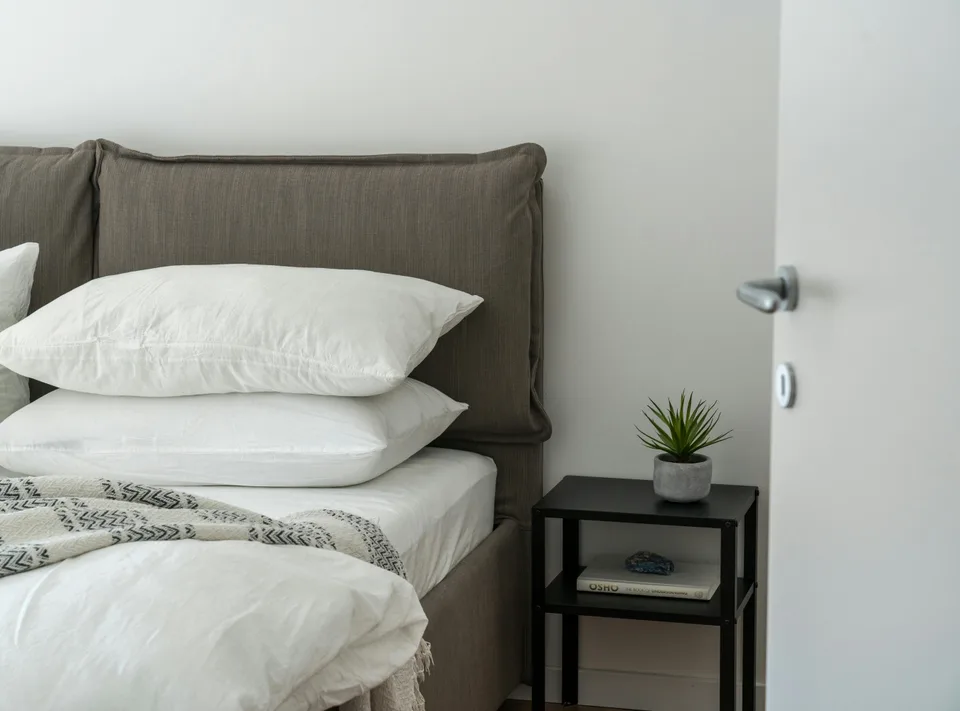
Eight Sleep Pod 4 — the bedroom-intervention bet
The Eight Sleep Pod 4 is a different product class than the wearables. It's a mattress cover (fitted over your existing mattress) with active water-circulating heating and cooling, plus integrated sensors that detect heart rate, respiration, and body movement during sleep. The cover automatically adjusts temperature throughout the night based on your sleep stage and biological signals. The headline thesis: sleep quality is heavily temperature-dependent, and most bedrooms are too warm for optimal deep-sleep architecture.
The published evidence for active temperature regulation as a sleep intervention is real — multiple sleep-medicine studies confirm core body temperature drop is a primary sleep-onset trigger, and bedroom temperatures of 65–68°F (18–20°C) optimize deep-sleep duration in healthy adults. Eight Sleep automates this without requiring you to engineer your bedroom thermostat or your bedding. For users who run hot at night, have a partner with different temperature preferences, or experience night sweats, the product delivers real subjective and measured improvements.
The cost is real — $2,295+ for the cover plus an optional subscription ($199/yr for full Auto Pilot features). Eight Sleep is the most expensive sleep-tech product in the category and the ROI case depends on actually solving a temperature-related sleep problem. For users without that specific problem, the wearable trackers are far better value.
Oura Gen 4 — the per-stage accuracy leader
Oura's ring form factor is the most accurate consumer sleep tracker on the market. The finger-based PPG (photoplethysmography) signal is cleaner than wrist-based sensing — more capillary density, less tissue noise, less motion artifact. Combined with multi-year algorithm refinement and the largest physiological dataset across millions of users, Oura's per-sleep-stage classification leads the category.
The trade-off is form factor — some users find the ring unfamiliar or take it off at night. The ring is unobtrusive for most people, but check sizing carefully before commitment (Oura ships a sizing kit free). The subscription model ($5.99/mo) is materially cheaper than Whoop's $30/mo, but the hardware is purchased separately ($349–$499 depending on finish).
For users where sleep is the primary signal — shift workers, parents of young children, anyone managing a sleep disorder, athletes optimizing recovery — Oura's accuracy advantage is decisive. We covered the broader Oura/Whoop/Garmin comparison in our recovery wearables tested analysis; for the sleep-specific use case, Oura is the clear winner.
Whoop 5.0 — coaching and behavioral structure
Whoop's sleep tracking is less accurate per-stage than Oura but more sophisticated on behavioral coaching. The Sleep Performance score, Sleep Need calculation (based on the prior day's strain plus baseline), and the structured "sleep coach" reminders are stronger than Oura's. For users who need help establishing sleep behavior — going to bed at a target time, achieving a target sleep duration — Whoop's product surface is better designed.
The subscription pricing ($30/mo bundled with hardware) is high but the bundle structure protects against the hardware-obsolescence risk that plagues most wearables. Whoop continuously upgrades hardware as new generations launch — included in the subscription. For a 4-year ownership horizon, Whoop's TCO is roughly $1,440 vs Oura's $349 hardware + $287 subscription = $636. The decision is workflow value vs cost.
Apple Watch — the entry tier
Apple Watch sleep tracking has improved substantially since the introduction of dedicated sleep tracking in watchOS 9 (2022). Series 10 and Ultra 2 produce sleep-duration accuracy in the 70% wake/sleep agreement range — useful for tracking trends, less useful for absolute analysis. The integration into Apple Health, the FDA-cleared ECG functionality (covered in our wearable ECG analysis), and the iOS ecosystem make it the practical entry tier for iPhone users.
The product gap with Oura and Whoop is real but small for most users. If you already own an Apple Watch, the marginal value of upgrading to Oura or Whoop specifically for sleep tracking is modest. If you don't own one, the dedicated sleep trackers offer materially better data for the use case.
The decision tree
- Sleep is the primary problem to solve, accuracy matters most: Oura Gen 4 ring. The per-stage classification advantage and the temperature-deviation signal are decisive.
- Bedroom is consistently too warm or partner has different temperature preference: Eight Sleep Pod 4. The active temperature regulation is the single most impactful sleep-tech intervention available.
- Need structured behavioral coaching to improve sleep habits: Whoop 5.0. The coaching surface is the best in the category for behavior change.
- iPhone user, already own or want a smartwatch: Apple Watch. Sufficient for trend tracking; not the best per-stage data but the iOS ecosystem advantage is real.
- Pursuing the maximum sleep optimization possible: Eight Sleep Pod 4 + Oura Gen 4 ring. The Pod regulates the environment; the ring measures the outcome. Total cost is real ($2,600+ year one) but the combined intervention is comprehensive.
The bottom line
The 2026 sleep tracker market has settled. Oura Gen 4 leads on wearable accuracy. Whoop 5.0 leads on behavioral coaching. Eight Sleep Pod 4 leads on environmental intervention. Apple Watch is the credible entry tier for iPhone users. None of these is universally right; the choice depends on whether you need data, coaching, environmental intervention, or all three. Trust total sleep time as the single most actionable number; treat per-stage classification as directional rather than absolute; and remember that the best sleep tracker is the one whose data surface actually changes your sleep behavior.
Frequently Asked Questions
Which sleep tracker is the most accurate against polysomnography?
Oura Gen 4 ring has the highest published per-stage classification accuracy among consumer wearables — 76–79.5% sensitivity across four sleep stages in the 2024 Brigham and Women's Hospital study. Whoop's four-stage agreement is 64% (Cohen's kappa 0.47). Eight Sleep Pod 4 claims 99% PSG accuracy from manufacturer testing but lacks independent peer-reviewed validation. For total sleep time (the most useful metric), all major consumer products are within 5–15 minutes of PSG.
Is Eight Sleep Pod 4 worth the $2,295+ cost?
For users whose primary sleep problem is temperature regulation — running hot at night, partner with different preferences, night sweats — yes. The active heating and cooling delivers real subjective and measured improvements. For users without a specific temperature-related sleep problem, a $349 Oura ring or $30/mo Whoop subscription delivers more value. The Pod 4 is the right product for a specific problem, not a general-purpose sleep solution.
What's the difference between Oura and Whoop for sleep tracking?
Oura is more accurate per-sleep-stage and tracks body temperature deviation as a unique signal. Whoop is more focused on behavioral coaching and integrates sleep performance into a broader recovery-and-strain training framework. For pure sleep optimization, Oura. For sleep as part of a training-load management system, Whoop. The hardware-and-subscription cost over 4 years runs roughly $636 for Oura vs $1,440 for Whoop.
Can a smartwatch replace a dedicated sleep tracker?
For most users, yes — Apple Watch, Garmin, and Samsung Galaxy Watch all produce useful sleep-tracking data. The per-stage classification accuracy is somewhat lower than dedicated sleep trackers (Oura, Whoop), but total sleep time and sleep timing are sufficiently accurate for trend tracking and behavior change. The dedicated trackers offer marginal improvement for users specifically focused on sleep optimization.
What's the best bedroom temperature for sleep?
65–68°F (18–20°C) is the range most consistently associated with optimal sleep architecture in published sleep-medicine research. The lower end of this range supports the natural core-body-temperature drop that triggers sleep onset and helps preserve deep-sleep duration through the night. Eight Sleep Pod 4 automates this regulation; manual approaches (cool bedroom thermostat, breathable bedding, lightweight blankets) achieve most of the same benefit at a fraction of the cost.
Enjoying this article?
Get more strategic intelligence delivered to your inbox weekly.
Enjoyed this article?
VentureBeast.Tech is independent and reader-supported. If this saved you time, you can buy us a coffee — it keeps the research deep and the site ad-light.
Support us on Ko-fi
Comments (0)
No comments yet. Be the first to share your thoughts!