This article may contain affiliate links. We may earn a small commission at no extra cost to you if you make a purchase through these links.
Esports Infrastructure 2026: Riot, ESL FACEIT, BLAST
The three companies behind global esports rebuilt anti-cheat, cloud production, and data licensing in 18 months. Here's how the stack now works.
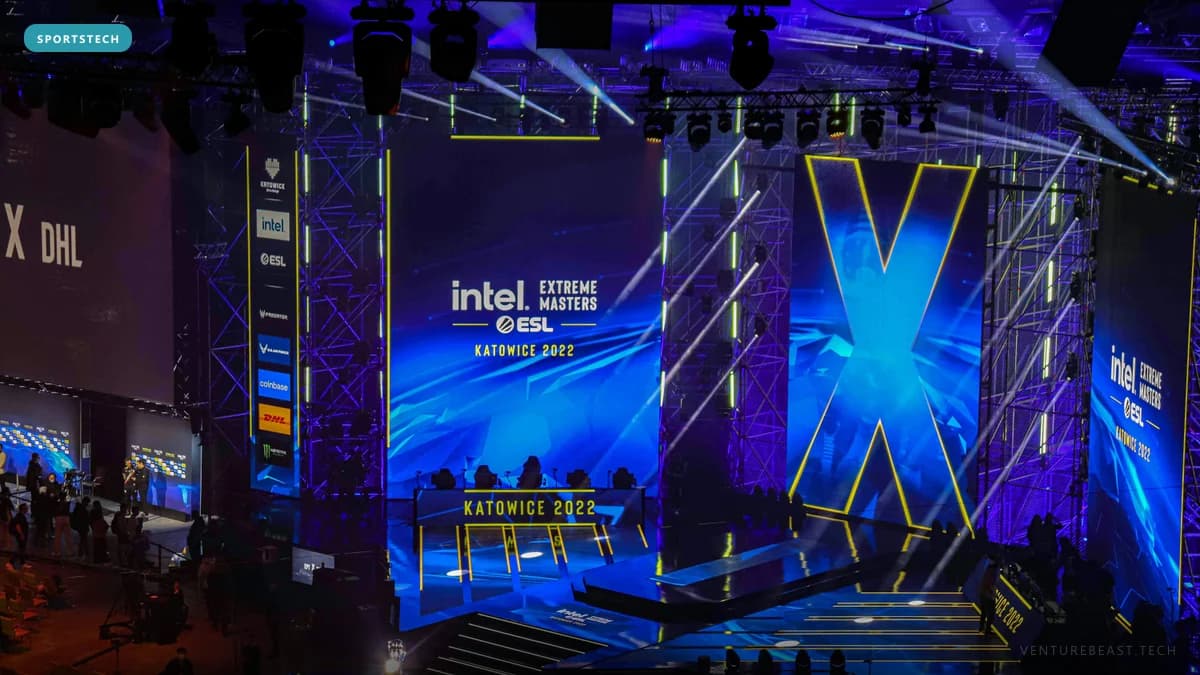
The three companies that hold the keys to global esports — Riot Games (League of Legends, VALORANT), the ESL FACEIT Group (Counter-Strike 2, Dota 2 majors, the ESL Pro League), and BLAST (Counter-Strike 2 majors, the BLAST Bounty platform) — have spent the last 18 months rebuilding the underlying infrastructure that runs competitive gaming. Server-side anti-cheat powered by behavioral AI, cloud-based remote production, and a new layer of data licensing to sportsbooks are the three pillars of the 2026 stack. The implications travel well beyond gaming.
For most observers esports infrastructure is invisible — the broadcast looks like a polished televised sport, and the anti-cheat technology is something only banned players ever talk about. But the work behind these three companies is consequential: it's where AI behavioral analysis, kernel-mode security, and cloud production are being battle-tested under conditions far more adversarial than any traditional sport faces. Whatever Riot, ESL FACEIT, and BLAST ship in 2026 will shape how every league handles cheating, broadcasting, and data licensing for the next decade.
The new anti-cheat stack — kernel stubs and behavioral AI
Anti-cheat is the most architecturally aggressive part of any esports platform, and 2026 has brought the biggest shift in years. Riot's published roadmap calls for a minimal kernel stub of under 50 kilobytes — only loaded for forensic snapshots — with the heavy detection work moved into user-mode processes powered by AI-driven behavioral analysis.
The shift away from heavyweight kernel-mode anti-cheat is significant. Vanguard (Riot's previous-generation anti-cheat) and Easy Anti-Cheat both ran continuously in kernel mode, which created a serious attack surface and broadly degraded system performance. The 2026 architecture keeps just enough kernel access to capture an evidence snapshot when a behavioral model flags suspicious play, then performs the actual cheat detection in less invasive user-mode code. The behavioral model is trained on per-player input patterns, mouse-movement kinematics, and game-state telemetry — a fingerprint of how the player actually plays.
ESL FACEIT runs a related but distinct stack on Counter-Strike 2 events, and BLAST has standardized on a hybrid approach for major tournaments. The common thread: server-side detection and AI behavioral analysis are doing the work that kernel hooks used to do, with materially less impact on the host machine. The arms race is not over — cheat developers respond to behavioral models by training their own — but the defender's position is genuinely stronger than it was 18 months ago.

Cloud-based remote production has become the default
Broadcasting an esports event with three commentary languages, eight observer cameras, six player POVs, and live data overlays used to require a 30-foot truck on-site at the venue. The 2026 pattern is increasingly different — a small remote crew at the venue handles only the bare minimum (cameras and audio capture) while the actual live production happens in a virtualized control room hosted on AWS, Google Cloud, or Microsoft Azure.
The technical foundation is dedicated low-latency cloud transport (AWS MediaConnect, Cisco IP Fabric for Media) plus virtualized video switchers (Grass Valley AMPP, Sony XVS-G1, vMix Pro in cloud VMs). At the SVG Esports Production Summit hosted at Riot's Seattle facility in mid-2025, Riot's Principal Infrastructure Engineer James Wyld walked through the company's transition. The results: production crews scale to wherever the talent lives instead of where the venue is, costs come down meaningfully, and last-minute talent or commentary changes happen without anyone moving.
The pattern has implications well beyond esports. The NBA, NFL, and Premier League broadcasting operations are all studying the cloud-production playbook that Riot, ESL FACEIT, and BLAST have already proven. The same sensor-and-model fabric we covered in the ball-tracking arms race and MLB's ABS rollout is now sharing infrastructure with esports broadcast. Anything that's cheaper to do in the cloud will be there within three years.
Data licensing — the under-discussed monetization shift
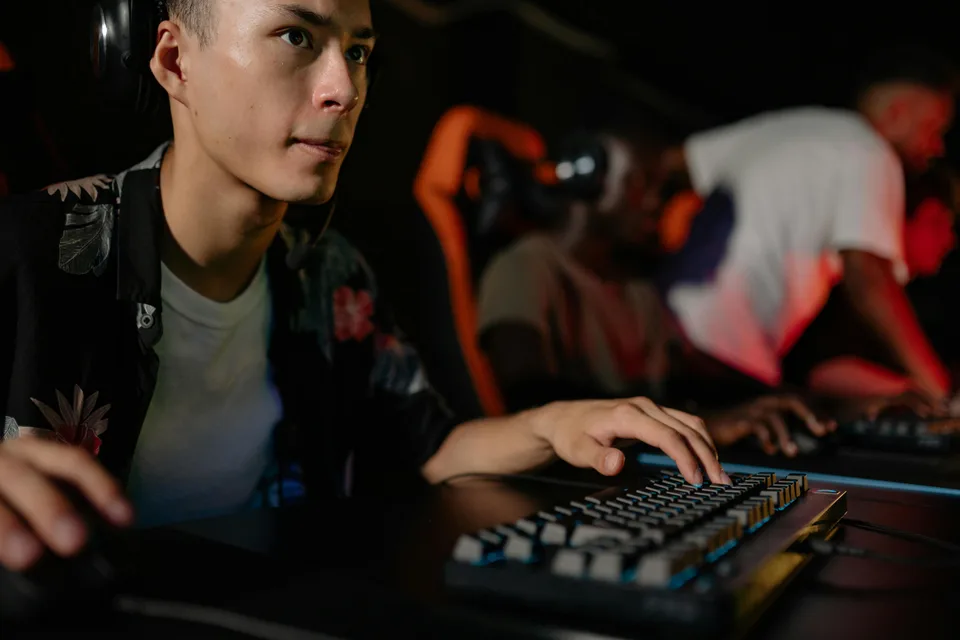
The third infrastructure layer that matters in 2026 is the data feed. GRID — an esports data platform — launched GRID Bet as a B2B data feed for licensed sportsbooks, leveraging exclusive partnerships with Riot, ESL FACEIT, and BLAST to deliver per-tick, per-event data on every major match. The model parallels what Sportradar and Stats Perform built for traditional sports a decade earlier.
The economics are interesting. Riot, ESL FACEIT, and BLAST hold the originating data rights. GRID acts as the aggregator and the technical layer that turns raw game-engine telemetry into a sportsbook-grade feed. Licensed operators (Bet365, DraftKings, FanDuel for esports markets, Pinnacle for the international circuit) consume the feed and pay per market they enable. Several jurisdictions that previously banned esports betting have opened up with the arrival of regulated, audited data feeds.
This is the part of the esports business model that scales independently of viewership. Even if any single title's audience plateaus or declines, the data licensing revenue grows as more sportsbooks enter more markets. For the three infrastructure holders, it diversifies revenue away from media-rights and sponsorship cycles. Watch for similar moves on traditional sports — the NFL's Next Gen Stats data licensing program is the same idea pointed at a different audience.
The competitive map — who runs what
| Holder | Flagship titles | Anti-cheat | Broadcast infra | Data licensing |
|---|---|---|---|---|
| Riot Games | League of Legends, VALORANT | Vanguard (next-gen, kernel stub + AI) | Cloud production from RBC Seattle | Direct licensing + GRID partnership |
| ESL FACEIT Group | Counter-Strike 2, Dota 2 majors | FACEIT AC + Valve VAC | Hybrid on-venue + cloud | GRID exclusive + ESL Pro League data |
| BLAST | Counter-Strike 2 majors, BLAST Bounty | Riot Vanguard (where applicable) + Valve VAC | Cloud-first remote production | GRID exclusive + BLAST Bounty platform |
The three companies don't really compete on titles — they compete on infrastructure capability per dollar spent. Riot's structural advantage is publisher status (it controls the game engine itself, giving it the deepest telemetry). ESL FACEIT's advantage is a 25-year operations history and the largest competitive tournament catalog. BLAST's advantage is the most cloud-native production stack and the BLAST Bounty platform's growing role as a competitive layer adjacent to the official tournament circuit.
What this means for traditional sports operators
Three lessons exported from esports to traditional leagues in 2026:
- Behavioral AI for cheating, doping, and rule enforcement. The same techniques esports uses to detect aimbots can be retrained for ball-tampering, blood-doping pattern detection, and biomechanics flags in traditional sports. Riot's data science team is working with Olympic federations on knowledge transfer.
- Cloud production is cheaper than the truck. Within three years, mid-tier traditional sports broadcasting (collegiate athletics, second-division European football, minor-league baseball) will run on the same cloud architecture esports built. The cost reduction is decisive when the audience economics don't justify a 30-foot truck per event.
- Data licensing is a structural revenue line. Sportsbook expansion is the next decade's biggest revenue tailwind, and the leagues with the cleanest, most-real-time data feeds will capture disproportionate share.
The bottom line
Esports infrastructure is not a niche concern. Riot Games, ESL FACEIT, and BLAST are running the most aggressive sensor-and-AI stack in any live competitive entertainment vertical, and the patterns they're proving in 2026 — kernel-stub anti-cheat with behavioral AI, cloud-first remote production, and structured data licensing — are spreading to every traditional league. The companies that built this infrastructure were not the obvious choice for traditional-sports executives a decade ago. They are now the operational benchmark.
Frequently Asked Questions
What is Riot Vanguard and how does it work in 2026?
Vanguard is Riot Games' anti-cheat system for VALORANT and (since 2024) League of Legends. The 2026 architecture keeps a minimal kernel stub under 50 kilobytes — only loaded for forensic snapshots when a behavioral model flags suspicious play — while moving most cheat detection into user-mode processes powered by AI behavioral analysis. The shift reduces performance overhead and the attack surface compared to legacy kernel-resident anti-cheat.
Who owns ESL FACEIT Group?
ESL FACEIT Group is owned by the Savvy Games Group, the Saudi Arabian Public Investment Fund (PIF) gaming arm. Savvy completed the acquisition of both ESL and FACEIT in 2022 and merged them into the ESL FACEIT Group umbrella. The combined entity runs the ESL Pro League, the IEM tournament series, and the FACEIT competitive matchmaking platform.
What is GRID Bet?
GRID Bet is a B2B esports data feed launched by GRID for licensed sportsbooks. It leverages exclusive partnerships with Riot Games, ESL FACEIT, and BLAST to deliver per-tick, per-event data from Counter-Strike 2, VALORANT, League of Legends, and Dota 2 matches. Licensed operators consume the feed under regulated frameworks similar to traditional sports data licensing from Sportradar or Stats Perform.
Why are esports tournaments moving to cloud-based broadcast production?
Cloud-based production eliminates the need for a 30-foot production truck on-site at each venue. A small crew handles cameras and audio at the tournament, while a virtualized control room — hosted on AWS, Google Cloud, or Microsoft Azure — runs the live broadcast remotely. Cost is meaningfully lower, the production crew can be located anywhere, and last-minute talent changes happen without travel. Riot, ESL FACEIT, and BLAST all adopted the model during 2024–2026.
How is esports anti-cheat different from traditional sports anti-doping?
Esports anti-cheat is real-time, behavioral, and AI-driven — it has to detect cheating during live competition without ruining the spectator experience. Traditional anti-doping is forensic, lab-based, and post-event. The infrastructure differences are large, but the underlying problem (detecting performance enhancement that violates the rules) is converging. Several Olympic federations are studying esports' behavioral-detection techniques for knowledge transfer to biomechanics and physiology screening.
Enjoying this article?
Get more strategic intelligence delivered to your inbox weekly.
Enjoyed this article?
VentureBeast.Tech is independent and reader-supported. If this saved you time, you can buy us a coffee — it keeps the research deep and the site ad-light.
Support us on Ko-fi


Comments (0)
No comments yet. Be the first to share your thoughts!