This article may contain affiliate links. We may earn a small commission at no extra cost to you if you make a purchase through these links.
Athlete Biometric Data Ownership: NFL, NBA, MLB Showdown
NFL players own their WHOOP data. NBA bans broadcast biometrics outright. MLB's CBA is silent. The 2026 negotiations rewrite the data-licensing market.
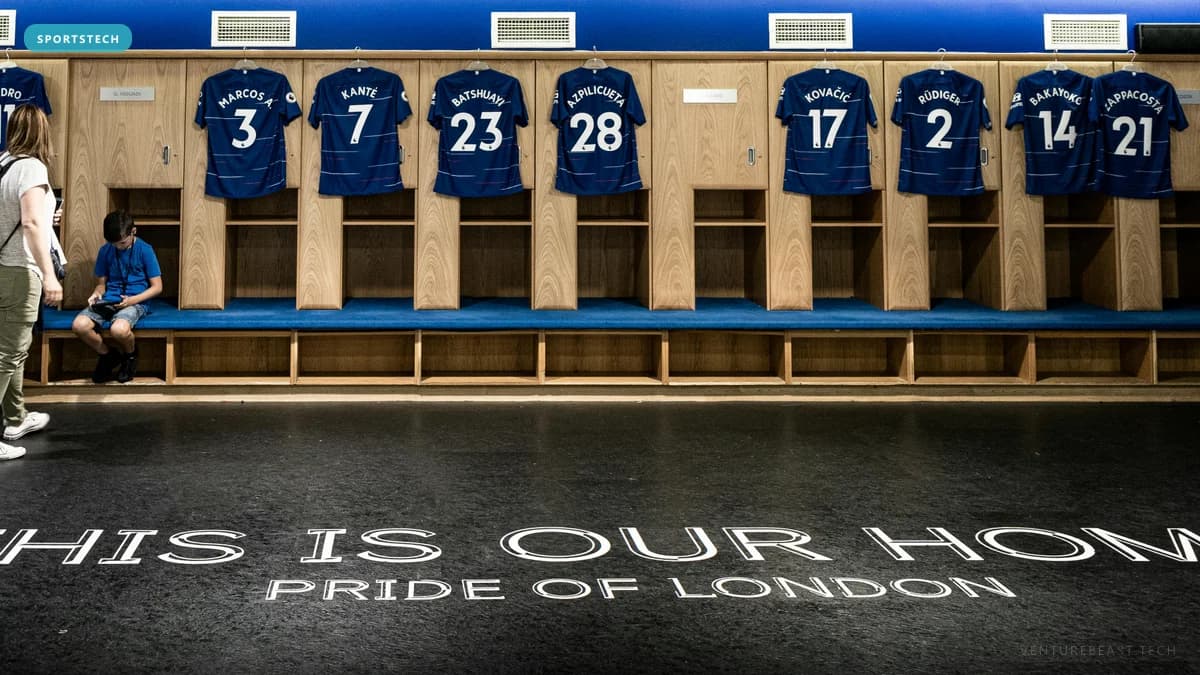
The NFL Players Association struck a 2017 deal with WHOOP that, for the first time in major U.S. pro sports, gave players direct ownership and commercialization rights over their own biometric data. The NBA's CBA flatly bans public release of player-collected data. MLB's CBA is functionally silent on ownership. Eight years later, with private 5G stadium networks streaming continuous biometrics and AI training models running on the data, the gap between the three leagues has become structurally consequential.
This is the union fight that doesn't make headlines but determines who gets paid in the next decade of sports data licensing. Wearable units already capture heart rate variability, sleep architecture, sprint counts, jump load, and increasingly biomechanics from camera-tracking systems like Hawk-Eye. That data is valuable — to teams for performance optimization, to broadcasters for live overlays, to sportsbooks for prop bets, and to AI training houses for the next generation of athletic-performance models. Whoever owns the data captures the value.
How each major league handles player biometric data in 2026
| League | CBA position on biometric data | Athlete ownership | Public-broadcast use | Commercialization |
|---|---|---|---|---|
| NFL | Explicit — players own WHOOP data via NFLPA OneTeam Collective deal | Yes (NFLPA-licensed) | Restricted (HR overlay pilots beginning 2026) | Yes — via NFLPA group licensing |
| NBA | Article 13 prohibits public release of player-collected data | Disputed — team-collected, player-restricted use | Banned for in-game wearable data | Largely blocked at union level |
| MLB | Silent — CBA does not specify ownership of Statcast/Hawk-Eye player data | Undefined; MLB Advanced Media holds operational control | Yes — Statcast metrics broadcast widely | Mostly via team contracts, not athletes |
| NHL | Limited guidance — wearable use restricted, ownership unaddressed | Undefined | Limited | Mostly absent |
| MLS | Most permissive — live HR planned for broadcast in 2026 | Team-controlled with player consent | Yes — earliest adopter | Limited but growing |
The NFL position is the outlier — and the one other unions are studying. The 2017 WHOOP–NFLPA agreement is the first time a players association in U.S. pro sports established player ownership of wearable data, paired with group licensing through the NFLPA's OneTeam Collective. The structure mirrors how NFL Players licensed their likeness rights for the EA Madden franchise — collective representation, individual opt-out, revenue redistributed across the membership.
Why the NBA went the opposite direction
The NBA's CBA explicitly prohibits the public release of biometric data collected through team-issued wearables. The reasoning is reportedly twofold. Player concerns about contract negotiations: if a player's recovery score, sleep quality, or HRV drops late in a contract year, team-side analytics could use that against the player in negotiations. Brand and endorsement concerns: a star whose biometrics reveal a chronic injury risk or training decline loses leverage in the apparel and endorsement markets.
The downside of the NBA position is that it functionally locks out the broadcast-monetization upside. When MLS players authorize live heart-rate broadcasts during matches — a deal currently being finalized for the 2026 season — the league captures a measurable engagement lift among casual fans who don't know much about possession statistics but can immediately understand "his heart rate is at 192 in this moment." NBA broadcasts can't do that.
What's at stake — the data licensing market
The licensing economics are not abstract. In the broadcast layer alone, ESPN, Apple TV+, and Amazon Prime Video have all signaled willingness to pay incremental rights fees for live biometric overlays. Sportsbooks are the more aggressive bidders — GRID's GRID Bet platform in esports proved that real-time biometric and gameplay data drives substantial sportsbook per-bet activation rates, and the same playbook is being adapted for traditional sports.
The AI training market is the larger and quieter prize. Companies like Driveline Baseball, Reboot Motion, KinaTrax, and now Big Tech players (Apple, Meta, Google all have undisclosed sports-biomechanics research programs) want continuous, high-frequency biometric data to train injury-prediction models, swing-fault diagnostics, and player-projection systems. The training data is more valuable than the resulting model — and a player who controls their own data stream can license it to multiple buyers, while a player whose data is team-property cannot.
The 2026 CBA fights to watch
Three negotiation windows over the next 36 months will reshape this market:
- MLB 2026: The current CBA expires in late 2026, and the MLBPA has signaled biometric data ownership as a priority. Statcast and Hawk-Eye data already power broadcast and sportsbook products; the MLBPA wants player-side revenue participation. The league's negotiating position is that the data is captured via league infrastructure (cameras, networks) on league-owned property and should remain league property. The likely outcome: a partial OneTeam-style player ownership for individual physiological data, with team-collected positional data remaining league property.
- NBA 2026/27: The NBA CBA runs through 2030 but biometric provisions can be reopened in side-letters. The NBPA is studying the NFL playbook closely. Expect a meaningful loosening of the data-release ban in exchange for licensing-revenue sharing.
- NHL 2026: The NHLPA is the least-organized player association on the biometric-data question. The likely outcome is an opt-in framework that mirrors NFL but lags two years behind in implementation.
Why this matters for sports-tech operators
If you're a sports-tech operator building products that consume biometric data — whether for broadcast augmentation, sportsbook activations, or AI model training — the league you're working in determines the data structure you'll inherit. Build for the NFL: assume player-licensed data with NFLPA group licensing fees baked in. Build for the NBA: assume restricted, on-property-only data with no broadcast or commercial use. Build for MLB: expect change, but bake in flexibility for either direction.
The deeper structural lesson: the leagues with the most permissive biometric frameworks (MLS, the European football organizations) are also the leagues seeing the fastest sports-tech innovation per dollar invested. Restrictive frameworks slow the application layer. The NBA's broadcast quality is excellent but its in-game data product is years behind what MLB Statcast has built. That gap is a direct consequence of CBA structure, not technical capability.
The bottom line
Athlete biometric data ownership is the next-decade equivalent of the 1990s player-likeness fight. It will not be settled in one CBA cycle, but the trajectory is clear: players want a share of the value the data creates, and leagues that resist will lose competitive ground in broadcast innovation and AI partnerships. Watch the MLB 2026 negotiation closely — its outcome will set the template every other U.S. league copies. For operators, hedge: build the same product to plug into both an NFL-style player-licensed feed and an NBA-style restricted feed, and accept that whichever framework wins, you'll have to support both for the next 5 years.
Frequently Asked Questions
Who owns an NFL player's WHOOP data?
The individual player owns their WHOOP data under the 2017 NFLPA agreement. Players can license that data through the NFLPA's OneTeam Collective group licensing program, which redistributes revenue across the union membership similar to the way EA Madden likeness rights are licensed. Players retain individual opt-out rights.
Why can't the NBA broadcast player heart rate during games?
The NBA collective bargaining agreement (Article 13) explicitly prohibits public release of biometric data collected through team-issued wearables. The restriction was negotiated by the NBPA out of concern that real-time biometrics would expose players to contract-negotiation disadvantages and brand/endorsement risk. The provision is currently expected to be revisited in the next CBA reopener.
Does MLB own Statcast data on players?
The current MLB CBA is silent on ownership of Statcast and Hawk-Eye-derived player tracking data. MLB Advanced Media operates the infrastructure and controls commercial use. The MLBPA has signaled biometric data ownership as a priority for the 2026 CBA negotiation, with the expected outcome a hybrid where individual physiological data goes to players while team-positional data remains league property.
What about college athletes — who owns their biometric data?
College athlete biometric data is the most unsettled corner of the market. Most NCAA Division I programs collect comprehensive wearable data, but ownership defaults to the institution. The post-House-settlement landscape (see our NIL marketplaces analysis) opens the door for college athletes to assert data-licensing rights, but no major college sports CBA exists to formalize it. State-level athlete-rights legislation is filling some of the gap.
Can broadcasters show live biometrics in MLS or international football?
MLS is finalizing a 2026 broadcast deal that includes live heart rate display during matches — the most permissive framework in any major North American league. Several European football leagues (Bundesliga, La Liga) allow similar uses under existing player-image-rights agreements. The Premier League is more restrictive, requiring per-player consent for any broadcast display of physiological data.
Enjoying this article?
Get more strategic intelligence delivered to your inbox weekly.
Enjoyed this article?
VentureBeast.Tech is independent and reader-supported. If this saved you time, you can buy us a coffee — it keeps the research deep and the site ad-light.
Support us on Ko-fi
Comments (0)
No comments yet. Be the first to share your thoughts!