This article may contain affiliate links. We may earn a small commission at no extra cost to you if you make a purchase through these links.
NIL Marketplaces 2026: Opendorse, INFLCR, MOGL, Athliance
The four NIL marketplaces that matter, the House settlement reshaping them, and how Opendorse, INFLCR, MOGL, Athliance now compare for 2026.
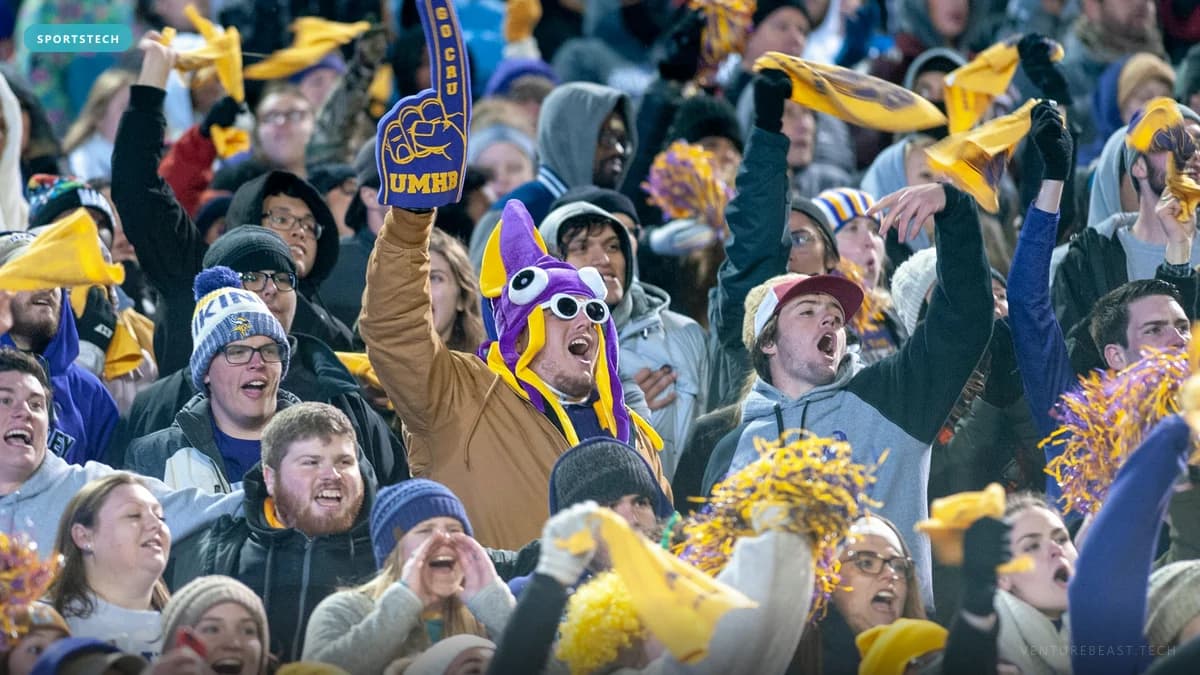
The college Name-Image-Likeness market is on the brink of its second structural reset. The first reset happened in July 2021 when the NCAA, under Supreme Court pressure, allowed college athletes to monetize NIL for the first time. The second is happening now, in 2026, as the House v. NCAA revenue-sharing settlement shifts hundreds of millions of dollars from booster collectives into direct school-to-athlete payments. The marketplace platforms that brokered the first wave — Opendorse, INFLCR, MOGL, Athliance — are scrambling to redefine their role for the second.
Five years in, NIL is no longer a curiosity. Opendorse alone has distributed compensation to more than 115,000 athletes across every Division I sport, plus expanding NAIA and high-school footholds. INFLCR is the de facto social-media-monetization layer at most Power Four football programs. The annual market sits at roughly $1.7 billion in disclosed deals as of the 2025–26 academic year, and that figure understates the real total because high-school NIL and below-the-radar collective payments often skip the marketplaces entirely.
This is the operator's map: who the four major platforms actually are, what they do differently, and where the second-wave money is going to land.
The four platforms that matter in 2026
| Platform | Founded / HQ | Core product | Take rate | Distinct strength |
|---|---|---|---|---|
| Opendorse | 2012 / Lincoln, NE | NIL marketplace + payment rails | ~10–20% per deal | Largest distribution footprint; 115k+ athletes |
| INFLCR (Teamworks) | 2017 / Birmingham, AL | Social-media monetization + compliance | SaaS license to schools, athlete tier free | Compliance automation; deepest Power Four football presence |
| MOGL | 2021 / Boston, MA | Brand-side dealmaking platform | ~15% per deal | Brand discovery, AI matching, smaller-market athletes |
| Athliance | 2020 / Austin, TX | Compliance + payments back-office | SaaS, no per-deal cut | Schools and collectives operating side |
The four platforms split into two pairs by business model. Opendorse and MOGL are dealmakers that take a percentage of every NIL transaction they originate. INFLCR and Athliance are SaaS-and-compliance plays that license to athletic departments rather than skimming deal value. Each model has different exposure to the revenue-sharing settlement — the dealmaker model loses if athletic departments capture more of the disclosure flow internally; the SaaS model wins because departments need more compliance tooling, not less.

What the House settlement actually changes
The House v. NCAA settlement, expected to take full effect for the 2025–26 academic year, allows Division I schools to share up to roughly $20–22 million per year in direct revenue with athletes. That cap rises annually with the broader athletic department budget. The settlement is not strictly an NIL framework — it's a pay-for-play allocation — but it sits next to the existing NIL marketplace and reshapes its economics.
Three consequences are already visible. First, booster collectives are losing their monopoly on top-of-market football and men's-basketball deals. A five-star quarterback who in 2024 received $500,000 from a Texas A&M-aligned collective will in 2026 receive a similar amount, but routed through the school directly under the revenue-sharing cap, then supplemented by smaller, more compliant brand NIL deals through Opendorse or INFLCR. The center of gravity moves to the athletic department.
Second, NIL marketplaces are repositioning as compliance-and-distribution infrastructure rather than as collective-replacement brokers. Opendorse's recent product roadmap emphasizes athletic-department integration, payment tracking, and 1099 reporting at scale — exactly the work an in-house compliance team would otherwise have to build. INFLCR's parent company Teamworks already sells the underlying roster management software to most Power Four programs, which gives INFLCR a structural advantage.
Third, the long tail (smaller schools, women's sports, Olympic sports) is becoming relatively more valuable to brand partners. Football and men's basketball NIL is now expensive enough that smaller programs and lower-revenue sports look attractive on cost-per-engagement metrics. MOGL has aggressively targeted this segment, building AI-based brand-matching for athletes whose social followings are smaller but whose engagement is higher.
Who's winning, and on what dimension
By raw distribution scale, Opendorse leads — 115,000+ athletes, deals at every Division I program, expansion to NAIA and select high schools. By per-school depth, INFLCR leads — its compliance automation and social-monetization tooling is the most embedded inside Power Four athletic departments, and the Teamworks integration is hard to displace. By brand discovery and matching quality, MOGL leads — its catalog of small and mid-size brand partners is broader than competitors, and its AI matching has produced reportedly higher deal-completion rates per pitched athlete. By the unglamorous back-office work that the House settlement will demand, Athliance leads — schools and collectives that need to track every payment for IRS and Title IX reporting will license Athliance specifically for the audit trail.
The structural risks to all four platforms
Three risks shadow the entire category. The athletic departments could in-source. A Big Ten or SEC school that hires 2–3 full-time NIL operations staff and runs payments through an internal portal does not need Opendorse's percentage cut. The platforms' counterargument is that the per-deal compliance, payment-rail, and audit-trail overhead is non-trivial — but it's not impossible to build, and the largest athletic departments have the budget. Some Yale Daily News reporting already documents smaller institutions choosing the platform route precisely because they cannot afford to build in-house.
Regulation could shrink the market. Federal NIL legislation has been floated repeatedly by both parties. The most disruptive version would set a uniform federal framework that preempts the patchwork of state laws — potentially capping deal sizes, restricting collective payments, or imposing standardized disclosure. Any of these would reduce the gross value of the addressable market, which the dealmaker platforms would feel first.
Player-side aggregation. Agents and dedicated player representatives are starting to negotiate directly with brands and athletic departments, cutting out the marketplaces entirely. The high-end of the market — five-star football recruits, top-five WBB players, the household-name swimmers and gymnasts — already operates outside the platforms. As the middle of the market matures, more representation will follow.
What this means for operators
For brand-side teams considering NIL: start with MOGL if you need scale and discovery, Opendorse if you need a turn-key distribution channel with payment compliance built in. For athletic departments: INFLCR if you're a Power Four football or men's basketball program already on Teamworks, Athliance if you need a back-office audit trail without the per-deal cut. For everyone: assume the platform you pick today will look different in 18 months as the House settlement plays out. Build the relationship around the team and roadmap, not just the current product.
The deeper pattern, which we covered in our analysis of AI in talent scouting and our breakdown of fitness app monetization, is that every part of the college and professional sports operations stack — recruiting, training, performance, branding, monetization — is consolidating onto data infrastructure that did not exist five years ago. The NIL marketplace is just the most visible piece of it for the consumer-facing side. The teams that win the next decade will be the ones that integrate this layer rather than treating it as a separate workflow.
The bottom line
NIL marketplaces are entering their second act. The first act was distribution — proving that an Instagram post by a Heisman candidate could move $100,000 of brand spend in real time. The second act is compliance, audit, and integration with the post-settlement athletic department. The platforms that thrive will be the ones that solve the operations problem better than schools can in-house. The dealmaker percentages will compress; the SaaS licenses will expand. Watch for consolidation moves — at least one major acquisition in this category is likely before the 2026–27 academic year.
Frequently Asked Questions
Which NIL marketplace pays the most to athletes?
Opendorse processes the largest gross deal volume by a significant margin — over 115,000 athletes compensated across every Division I sport. Per-deal value is highest for football and men's basketball through booster-collective channels routed through any platform, with five-figure individual deals common at Power Four programs. MOGL produces higher engagement-rate ROI for smaller athletes through AI matching.
How does Opendorse make money?
Opendorse charges a percentage take rate (typically 10–20%) on each deal it originates between brands and athletes. The company also licenses workflow software to athletic departments and collectives for compliance, payment rails, and 1099 reporting. As the House revenue-sharing settlement reshapes the market, Opendorse's product roadmap is shifting toward department-side infrastructure.
What is the House v. NCAA settlement and how does it affect NIL?
The House v. NCAA settlement allows Division I schools to share roughly $20–22 million per year in direct revenue with their athletes, beginning in the 2025–26 academic year. It does not replace NIL marketplaces, but it shifts the top of the market from booster collectives to direct school payments, repositioning platforms as compliance-and-distribution infrastructure rather than collective-replacement brokers.
Are NIL marketplaces required to comply with NCAA rules?
Yes. All NIL deals brokered through Opendorse, INFLCR, MOGL, or Athliance must comply with NCAA NIL policy, the relevant state NIL law, and individual school compliance rules. INFLCR and Athliance both built their product positioning around compliance automation specifically — automated deal review, disclosure tracking, and 1099 reporting — to reduce school and athlete risk.
What is the difference between INFLCR and Opendorse?
Opendorse is a marketplace that takes a percentage of each brokered deal, with the largest athlete distribution footprint in the industry. INFLCR is a SaaS platform that licenses to athletic departments for social-media monetization and compliance — it doesn't take a cut of individual deals. INFLCR has the deeper Power Four football integration via parent company Teamworks; Opendorse has the wider athlete reach.
Enjoying this article?
Get more strategic intelligence delivered to your inbox weekly.
Enjoyed this article?
VentureBeast.Tech is independent and reader-supported. If this saved you time, you can buy us a coffee — it keeps the research deep and the site ad-light.
Support us on Ko-fi

Comments (0)
No comments yet. Be the first to share your thoughts!