This article may contain affiliate links. We may earn a small commission at no extra cost to you if you make a purchase through these links.
Solid-State Battery Race 2026: Toyota, QuantumScape, CATL
Toyota has government certification to start solid-state production in 2026. QuantumScape ships samples the same year. Mass-market EVs land around 2030.

Solid-state batteries — the long-promised next-generation EV battery technology offering higher energy density and improved safety over today's liquid-electrolyte lithium-ion cells — finally have concrete, converging production timelines rather than perpetually-receding promises. Toyota has received Japanese government certification to begin solid-state production in 2026, with commercial EVs targeted for 2027-2028. QuantumScape expects to ship sample cells for testing in 2026, with its own commercial production window also landing in 2027-2028. The industry-wide consensus has crystallized around 2027 as the first milestone for small-batch solid-state EVs, with genuine mass-market volume production expected around 2030.
The technology's appeal is straightforward: solid-state batteries replace the liquid or gel electrolyte in conventional lithium-ion cells with a solid material, which theoretically enables higher energy density (more range per pound of battery), faster charging, and substantially reduced fire risk since there's no flammable liquid electrolyte to leak or combust. The industry-wide target of roughly 500 Wh/kg by 2030 compares to today's best production lithium-ion cells at roughly 250-300 Wh/kg — a potential doubling of energy density that would meaningfully change EV range and vehicle packaging.
Toyota's certified production timeline
Toyota's position is the most concretely dated in the industry. In February 2026, Idemitsu partnered with Toyota specifically to advance commercialization of next-generation all-solid-state batteries, supporting Toyota's stated objective of introducing solid-state-equipped EVs between 2027 and 2028. Critically, Toyota has already received Japanese government certification to begin actual solid-state production in 2026 — a regulatory milestone that moves the company's timeline from aspirational roadmap to certified production plan, a meaningfully stronger signal than most competitors' public statements.
Toyota and CATL are separately targeting a joint prototype solid-state battery with approximately 400 Wh/kg energy density by 2027 — an intermediate step below the industry's 2030 mass-market target of 500 Wh/kg, but still a substantial improvement over current production lithium-ion cells.
QuantumScape's sample-cell milestone
QuantumScape's recent battery breakthrough sent the company's stock up 20%, reflecting genuine investor confidence in the company's technical progress toward safer, higher-density EV batteries. The company's disclosed timeline: sample cells shipping for third-party testing in 2026, with commercial production potentially beginning between 2027 and 2028 — contingent on both regulatory approvals and, critically, the manufacturing-scaling challenge every solid-state battery company faces.
QuantumScape's approach differs technically from Toyota's — the company has pursued a lithium-metal anode solid-state design that promises higher theoretical energy density than some competing approaches, though the manufacturing precision required (tolerances measured in microns) has proven genuinely difficult to replicate reliably at production scale, a challenge IEEE Spectrum has characterized as "production hell" across the industry broadly, not specific to any single company.
CATL's condensed-matter stepping stone
CATL, the world's largest EV battery manufacturer by volume, has taken a notably different strategic approach: rather than betting entirely on a fully solid-state design from the outset, the company's condensed-matter battery (announced in 2023) represents an intermediate stepping-stone technology — not fully solid-state, but incorporating some of the same material-science advances toward the eventual full-solid-state goal. This hedge-and-iterate strategy reflects CATL's position as the dominant incumbent volume manufacturer; the company has more to lose from a risky all-or-nothing bet on unproven full-solid-state manufacturing than challenger companies like QuantumScape, which have comparatively little existing production volume to protect.
Why "production hell" is the real story, not the chemistry
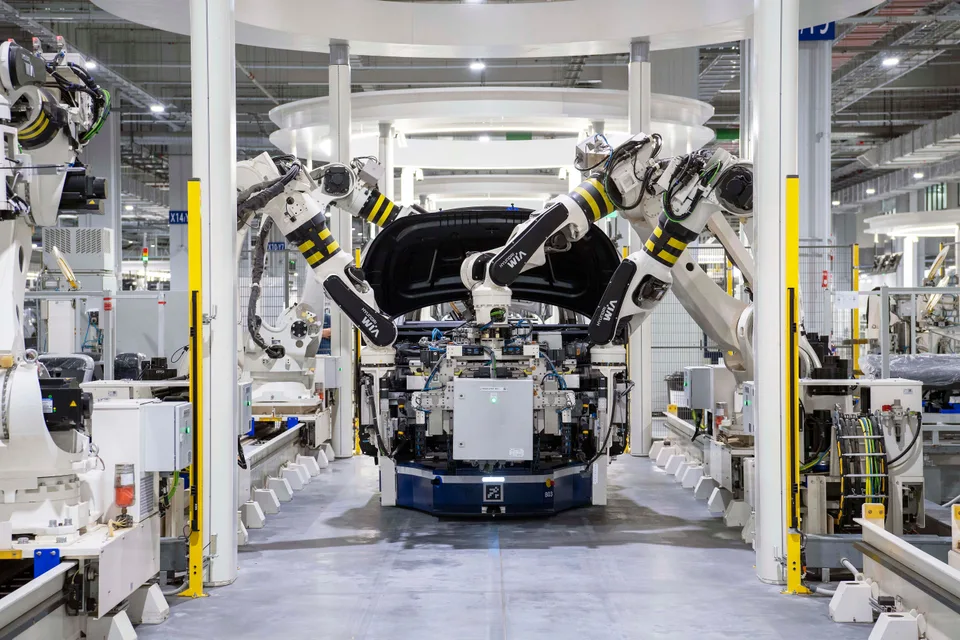
The underlying solid-state battery chemistry has been reasonably well understood in research settings for years — the genuine, industry-wide bottleneck is manufacturing at gigafactory scale. Solid-state cells require extremely precise manufacturing conditions with tolerances measured in microns, and the transition from a working lab-scale cell (which every serious competitor in this space has already demonstrated) to reliable, consistent, defect-free production at the gigawatt-hour scale needed for meaningful EV volume is where every company in the category has struggled and continues to struggle.
This is the same fundamental engineering-scale challenge that has shaped multiple prior battery-technology transitions, and it's the primary reason industry analysts consistently push mass-market timelines out to 2030 even as individual companies announce encouraging lab and pilot-scale milestones for 2026-2028. Sample cells and small-batch prototype production (2026-2027) reliably happen faster than genuine volume manufacturing (2030), because the manufacturing-precision problem doesn't scale linearly with production volume — it gets disproportionately harder.
What this means for EV buyers and the broader industry
For consumers, the realistic guidance is: expect the first solid-state-equipped production vehicles in small numbers around 2027-2028 (likely from Toyota, given its certified production timeline), with genuine mass-market availability and meaningful price parity with today's lithium-ion EVs not arriving until closer to 2030. This tracks with the broader compute-and-hardware infrastructure buildout pattern we've covered in humanoid robotics — genuinely transformative hardware technologies tend to follow a similar arc: encouraging lab results years before, followed by a multi-year "production hell" period where manufacturing scale-up proves harder than the underlying technology, before eventual genuine mass-market arrival.
The manufacturing-precision bottleneck also echoes the quantum computing scaling challenge we covered in quantum computing's commercial milestones — in both categories, the underlying physics and chemistry are increasingly well understood, but reliable manufacturing at genuine production scale remains the multi-year engineering gap between lab demonstration and commercial product.
The bottom line
The solid-state battery race has moved from speculative research promise to genuine, dated production commitments in 2026 — Toyota's certified 2026 production start and 2027-2028 commercial EV target is the most concrete timeline in the industry, with QuantumScape's 2026 sample-cell shipment and CATL's hedged condensed-matter stepping-stone strategy representing two different but comparably serious approaches to the same underlying manufacturing challenge. The industry-wide 2030 target for genuine 500 Wh/kg mass-market volume production remains the realistic horizon for most consumers, even as 2027 brings the first small-batch solid-state EVs to market. The chemistry works; scaling the manufacturing precision to gigafactory volume is the actual multi-year engineering problem still being solved.
Frequently Asked Questions
When will solid-state battery EVs actually be available to buy?
Small-batch solid-state EVs are expected around 2027, with Toyota targeting 2027-2028 for its first solid-state-equipped commercial vehicles, backed by Japanese government production certification received in 2026. Genuine mass-market volume production and broader availability across the EV industry is expected closer to 2030, when companies are targeting roughly 500 Wh/kg energy density at production scale.
What makes solid-state batteries better than current lithium-ion EV batteries?
Solid-state batteries replace the flammable liquid or gel electrolyte in conventional lithium-ion cells with a solid material, enabling higher energy density (more range per pound of battery), potentially faster charging, and substantially reduced fire risk. The industry-wide 2030 target of roughly 500 Wh/kg would roughly double the energy density of today's best production lithium-ion cells (250-300 Wh/kg).
Why is solid-state battery manufacturing so difficult?
Solid-state cells require extremely precise manufacturing conditions with tolerances measured in microns. While the underlying chemistry has been demonstrated successfully at lab scale by multiple companies, scaling that precision reliably to gigawatt-hour production volumes — the "production hell" the industry broadly faces — is a substantially harder engineering problem than the initial chemistry breakthrough, and it's the primary reason mass-market timelines extend to 2030 even as smaller pilot-scale milestones land in 2026-2027.
What is CATL's condensed-matter battery?
CATL's condensed-matter battery, announced in 2023, is an intermediate stepping-stone technology incorporating some solid-state-adjacent material science advances without being a fully solid-state design. It reflects CATL's strategic position as the world's largest EV battery manufacturer by volume, hedging between its substantial existing lithium-ion production infrastructure and the eventual full-solid-state transition, rather than making an all-or-nothing bet like smaller challenger companies.
Is Toyota ahead of QuantumScape in the solid-state battery race?
Toyota has the more concretely dated timeline — Japanese government production certification received in 2026 and a targeted 2027-2028 commercial EV launch, working with Idemitsu on production and CATL on a joint 400 Wh/kg prototype target for 2027. QuantumScape's timeline (sample cells in 2026, commercial production potentially 2027-2028) is comparably ambitious but less concretely certified by regulatory milestones as of 2026. Both face the same underlying gigafactory-scale manufacturing-precision challenge.
Enjoying this article?
Get more strategic intelligence delivered to your inbox weekly.
Enjoyed this article?
VentureBeast.Tech is independent and reader-supported. If this saved you time, you can buy us a coffee — it keeps the research deep and the site ad-light.
Support us on Ko-fi


Comments (0)
No comments yet. Be the first to share your thoughts!