This article may contain affiliate links. We may earn a small commission at no extra cost to you if you make a purchase through these links.
Humanoid Robots 2026: Figure, Optimus, Unitree Compared
Figure bills BMW $25/robot-hour for 40 deployed units. Tesla admits Optimus is still R&D. Unitree sells the G1 on Amazon for $17,990. Here's the reality.
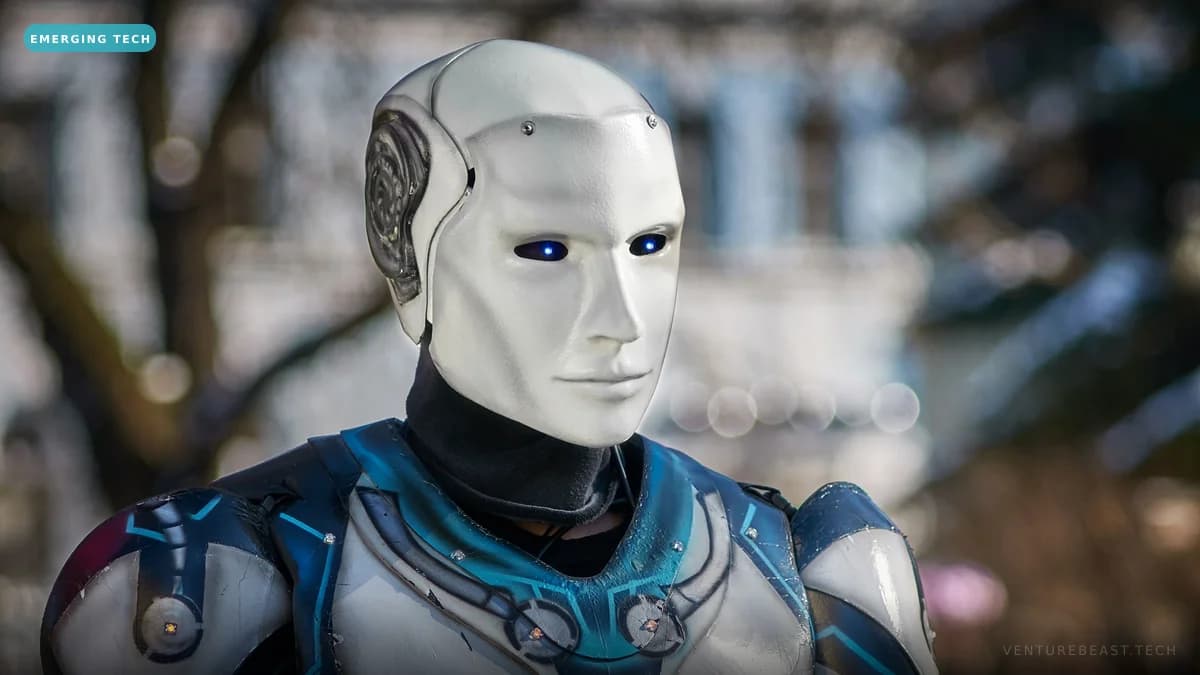
Humanoid robots stopped being a prototype category in early 2026. Figure AI has 40 Figure 03 units commercially deployed and billing BMW's Spartanburg plant roughly $25 per robot-operating-hour — not a pilot, a paid commercial contract at the world's largest single automotive assembly plant. Unitree's G1 humanoid is listed on Amazon for $17,990, purchasable by anyone. Tesla, by contrast, has been unusually candid that its Optimus robots remain in an R&D phase generating training data rather than performing productive factory labor — a genuinely different position from its two competitors' public claims.
The gap between these three companies' actual deployment status — not their marketing claims, their actual disclosed contracts and admissions — is the most useful lens for understanding where humanoid robotics genuinely stands in 2026, as opposed to where the sector's most aggressive PR would have you believe it stands.
Figure AI — the clearest commercial deployment
Figure's 40-unit Figure 03 fleet deployed at BMW's Spartanburg plant in January 2026 is the most concrete, verifiable commercial humanoid-robot deployment in the industry. BMW is paying roughly $25 per robot-operating-hour — a real commercial billing arrangement, not a pilot program or a demo. Figure's manufacturing side has scaled accordingly: the company's BotQ factory is now producing one new robot every 90 minutes, indicating genuine production-line manufacturing capacity rather than hand-built prototype units.
The $25/hour figure is worth sitting with. It positions Figure 03 robots as directly cost-competitive with human factory labor in many U.S. manufacturing contexts when you account for the absence of benefits, shift limitations, and the ability to run continuous multi-shift operation. Whether the robots' actual task throughput and error rate match human workers closely enough to justify that pricing at scale is the open commercial question — but the fact that BMW is paying for it at all, on a per-hour billing basis, is a meaningfully different signal than a company merely announcing a pilot.
Tesla Optimus — the honest admission
Tesla's position on Optimus in early 2026 is notable specifically for its candor. Tesla permanently discontinued the Model S and Model X in early 2026 and converted those Fremont factory production lines to build humanoid robots — a serious manufacturing commitment. But on the Q4 2025 earnings call in January 2026, Elon Musk acknowledged directly that the Optimus robots currently operating inside Tesla's own factories exist to generate training data for the underlying AI models, not to perform genuinely productive labor. He characterized the program as still in the R&D phase.
This is a materially different public position than Tesla's earlier Optimus messaging, which leaned heavily on demonstrations suggesting near-term general-purpose household and factory capability. The Q4 2025 admission suggests the company is recalibrating public expectations ahead of what it likely anticipates will be a longer timeline to genuine commercial deployment than earlier marketing implied — a pattern consistent with how Tesla has historically managed expectations around Full Self-Driving timelines.
Unitree — the consumer/prosumer entry point
Unitree has taken a different strategic path entirely: making a walking, programmable humanoid directly purchasable. The Unitree G1 is listed on Amazon for $17,990 — an order of magnitude cheaper than what industry analysts estimate Figure's or Tesla's units cost to produce, reflecting Unitree's Chinese manufacturing base and a lighter-capability feature set targeted at researchers, developers, and prosumer robotics enthusiasts rather than heavy industrial deployment.
In March 2026, Unitree open-sourced UnifoLM-VLA-0, a vision-language-action model that lets the G1 perform household tasks from natural-language commands — a meaningfully different go-to-market strategy than Figure's industrial-contract approach or Tesla's internal-deployment approach. By open-sourcing the underlying control model, Unitree is effectively crowdsourcing capability development across a much broader developer community than either U.S. competitor's closed-development approach allows.
Side-by-side reality check
| Figure AI (Figure 03) | Tesla (Optimus) | Unitree (G1) | |
|---|---|---|---|
| Deployment status | Commercial — 40 units billing BMW at $25/robot-hour | Internal only — explicitly R&D/training-data phase per Musk | Direct consumer/prosumer sale on Amazon |
| Manufacturing scale | BotQ factory: 1 new robot per 90 minutes | Converted Model S/X Fremont lines to Optimus production | Established Chinese manufacturing base |
| Price/cost model | ~$25/robot-operating-hour (BMW contract) | Not commercially sold | $17,990 purchase price |
| Software strategy | Closed, proprietary | Closed, proprietary | Open-sourced UnifoLM-VLA-0 (March 2026) |
| Target use case | Heavy industrial/automotive manufacturing | Long-term factory + eventual consumer | Research, development, household tasks |
What this means for enterprise adoption planning
The honest 2026 assessment: Figure AI is the only one of the three companies with a genuine, verifiable, paid commercial deployment at meaningful scale. Tesla's Optimus program is real but explicitly not yet commercially productive by the company's own admission. Unitree has taken the humanoid category furthest toward consumer accessibility, but at a lower capability tier suited to research and development rather than heavy industrial tasks.
For manufacturing and logistics operators evaluating humanoid robotics in 2026, the practical guidance is: Figure's per-hour billing model is the only one with real-world unit economics you can benchmark against existing labor costs today. Tesla's timeline remains genuinely uncertain by its own leadership's admission. Unitree is the accessible entry point for organizations wanting to experiment with the technology at low capital commitment before making a larger industrial bet.
The underlying AI capability driving all three companies' progress — vision-language-action models that translate natural-language instructions into physical robot behavior — draws on the same foundation-model research advances we've tracked in Nvidia's AI infrastructure boom and the broader AI chip landscape. Humanoid robotics is, in a real sense, downstream of the same compute buildout powering large language models.
The bottom line
Humanoid robotics crossed from research demonstration into genuine commercial product category during 2025-26, but unevenly across the three leading companies. Figure AI's BMW deployment is the clearest evidence the technology works well enough for someone to pay real money for it on a per-hour basis. Tesla's candor about Optimus still being in R&D is a useful reality check against the sector's more aggressive marketing. Unitree's low-cost, open-source approach may prove to be the category's actual mass-market on-ramp, even if it's not solving the same heavy-industrial problems Figure is targeting. Watch Figure's BMW contract renewal and expansion terms in 2026-27 as the single clearest signal of whether humanoid robots' unit economics genuinely work at industrial scale.
Frequently Asked Questions
Is Figure AI's humanoid robot actually working at BMW?
Yes — Figure deployed 40 Figure 03 units commercially at BMW's Spartanburg, South Carolina plant (the world's largest single automotive assembly facility) in January 2026, with BMW paying roughly $25 per robot-operating-hour. This is a real, billed commercial deployment rather than a pilot program or demonstration.
Is Tesla's Optimus robot doing real work in Tesla factories?
Not yet, according to Tesla's own leadership. On the Q4 2025 earnings call in January 2026, Elon Musk stated that Optimus robots currently operating inside Tesla factories are generating training data for the underlying AI models rather than performing genuinely productive labor, characterizing the program as still in the R&D phase — despite Tesla having converted its Model S/X production lines at Fremont to Optimus manufacturing.
How much does the Unitree G1 humanoid robot cost?
The Unitree G1 is listed for $17,990 on Amazon — significantly cheaper than what industry analysts estimate Figure's or Tesla's humanoid units cost to produce. It's positioned for researchers, developers, and prosumer robotics use rather than heavy industrial deployment, reflecting a lighter capability tier than the industrial-grade competitors.
What is UnifoLM-VLA-0?
UnifoLM-VLA-0 is a vision-language-action AI model that Unitree open-sourced in March 2026, enabling its G1 humanoid robot to perform household tasks from natural-language commands. Open-sourcing the model is a strategically different approach from Figure's and Tesla's closed, proprietary software development, potentially crowdsourcing capability improvements across a broader developer community.
Which humanoid robot company is closest to widespread commercial deployment?
Figure AI currently has the clearest, most verifiable commercial deployment — a real paid contract with BMW billing per robot-operating-hour, and manufacturing capacity scaled to produce one new robot every 90 minutes at its BotQ factory. Tesla's Optimus remains in an internal R&D phase by the company's own admission, and Unitree's G1 targets a lower-capability consumer/prosumer market rather than heavy industrial deployment.
Enjoying this article?
Get more strategic intelligence delivered to your inbox weekly.
Enjoyed this article?
VentureBeast.Tech is independent and reader-supported. If this saved you time, you can buy us a coffee — it keeps the research deep and the site ad-light.
Support us on Ko-fi
Comments (0)
No comments yet. Be the first to share your thoughts!