This article may contain affiliate links. We may earn a small commission at no extra cost to you if you make a purchase through these links.
Sleep as Training: How Elite Athletes Score Sleep in 2026
Whoop now equips Ferrari F1 drivers. NFL and NBA teams mandate sleep wearables. Sleep restriction cuts training adaptation 10-20%. The science is locked in.
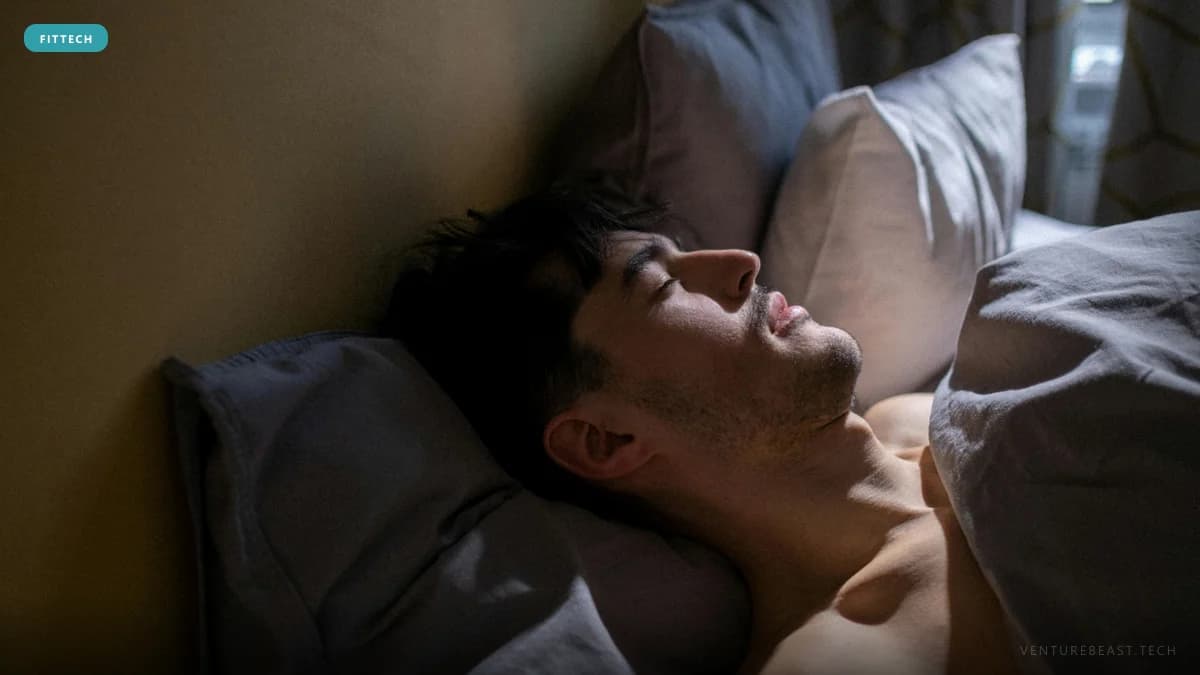
Elite-team performance staff in 2026 treat sleep the way they treat training load — as a manipulable input with measurable performance consequences, not a passive recovery byproduct. The shift was made possible by consumer wearables that produce actually-useful sleep data (Oura Gen 4 leads accuracy, Whoop leads team-deployment scale), the maturing sports-science literature linking sleep restriction to objectively measurable performance decrements, and a generation of professional athletes who grew up with the data. In January 2026, Whoop became Ferrari Formula One's official health-and-fitness wearable, deploying devices across drivers and crew — a high-visibility validation of the sleep-as-performance-stat thesis.
The performance case is no longer controversial. Athletes sleeping fewer than seven hours per night exhibit measurably lower growth hormone and testosterone levels, elevated cortisol, slower recovery from soft-tissue injury, and impaired reaction time and decision quality during competition. The 2024 systematic reviews in basketball, soccer, and endurance sports converge on a single conclusion — sleep restriction within the normal "I'm a bit tired" range (4–6 hours for a few nights) produces measurable training-adaptation decrements on the order of 5–15% across multiple performance metrics.
The sleep-performance evidence base
Three sets of findings drive the 2026 elite-team practice. Sleep duration and total training adaptation. A 2022 systematic review in Current Sleep Medicine Reports found chronic sleep restriction (less than 7 hours nightly) reduces measurable training-induced strength and endurance gains by 10–20% over multi-week training programs. The mechanism is hormonal — sleep is when the largest single pulse of growth-hormone secretion occurs, and sleep is the recovery window where the body completes protein synthesis from the day's training stimulus.
Sleep quality and in-game performance. A 2022 basketball-specific review documented that a single night of poor sleep (less than 6 hours) reduces free-throw accuracy by 6–8%, three-point accuracy by 4–6%, and sprint times by 2–4% in the following day's competition. Reaction-time degradation is particularly stark — sleep-restricted athletes show 200–400ms slower decision-response times in basketball-specific scenarios.
Sleep consistency over absolute duration. A 2024 study published in PMC on wrist-worn wearables in athletes found sleep consistency (going to bed and waking up at similar times) was a stronger predictor of training-adaptation outcomes than total sleep duration. An athlete sleeping 7.5 hours every night outperforms an athlete averaging 8 hours but with 90-minute night-to-night variation.
How elite teams are operationalizing sleep
The 2026 elite-team sleep playbook has four pillars:
- Mandatory team-wide sleep tracking. Most major-league teams (NFL, NBA, MLB, MLS, F1) issue Whoop bands or Oura rings to athletes as part of equipment. Compliance with daily wear is contractually expected. Aggregated team data is reviewed by performance staff weekly.
- Travel-window sleep protection. West-Coast-to-East-Coast NFL games, NBA back-to-back road swings, and international F1 race weekends are all sleep-restriction risk windows. Teams now travel with hotel-bedroom blackout setups, melatonin protocols, and pre-arrival sleep-shift schedules to minimize jet-lag impact. The NBA's 2023 schedule adjustments (reducing four-game-in-five-night sequences) were specifically driven by sleep-research lobbying.
- Bedroom-environment optimization. Athletes' home and team-hotel rooms are increasingly engineered for sleep — Eight Sleep cooling mattress covers (covered in our recovery wearables tested analysis), blackout curtains, white-noise machines, and dedicated thermostats targeting 65–68°F. Some teams have begun specifying sleep-environment requirements in hotel contracts.
- Sleep-restriction triage during games and travel. Performance staff use objective sleep data to make playing-time decisions in some cases — an athlete whose 7-day rolling sleep average is meaningfully below baseline may have minutes restricted in the next game, especially in playoff scenarios.

What recreational athletes should actually take from this
The professional-team protocols are aggressive and overkill for most amateurs. But three principles translate cleanly to recreational athletes pursuing real performance:
- Consistency over duration. Going to bed at 11pm and waking at 7am every night (8 hours) is better than going to bed at 10pm one night and 2am another (averaging 7 hours but with high variance). Most consumer wearables (Oura, Whoop, Garmin) report sleep consistency separately from duration — pay attention to it.
- Prioritize sleep around training stimulus. The night after a hard training session is when adaptation happens. Sacrificing sleep on rest days has less performance cost than sacrificing sleep on hard-training nights. If you can only protect 4–5 nights per week, protect them around your hardest sessions.
- Bedroom-environment basics. Cool (65–68°F), dark, quiet. The interventions that elite athletes obsess over reduce to these three principles. Eight Sleep cooling covers and Oura's body-temperature signals are useful, but the basics of "cold, dark, quiet" produce most of the gain.
What sleep tech can and can't do
Sleep wearables — Oura Gen 4 (best per-stage accuracy at 91.7% sleep/wake against polysomnography), Whoop, Garmin — measure sleep with sufficient accuracy to track trends and inform behavior change. They cannot diagnose sleep disorders. If a wearable consistently shows fragmented sleep, low deep-sleep percentage, frequent awakenings, or signs consistent with sleep apnea (sudden HR spikes, oxygen-saturation drops if the device supports it), the appropriate response is a sleep-medicine consultation — not "buy a different wearable."
The most consequential 2026 development is the integration of sleep data into training-prescription algorithms. Whoop's recovery score weights sleep heavily; Oura's readiness score does the same. Garmin's Training Readiness uses sleep as a primary input. The wearable doesn't just measure — it adjusts training prescription based on what it measured. For users who follow these prescriptions, the loop is self-reinforcing: poor sleep generates a lower readiness score, which prescribes a lighter training day, which protects the user from compounding fatigue.
The bottom line
Sleep-as-training is a real shift, not a marketing gloss. The 2024–25 wave of professional-team protocols, the F1-Ferrari-Whoop partnership, and the maturing sports-science evidence base have moved sleep from "important if you can" to "deliberately engineered, daily-measured, training-prescription input." For recreational athletes, the operational takeaway is consistency over duration and protection of sleep on hard-training nights. The wearable data is useful as a feedback loop; the basics (cold, dark, quiet, consistent) deliver most of the performance gain on their own. As we covered in our HRV training analysis, sleep and HRV are the two most useful single signals for amateur training-load management — both freely accessible with current consumer hardware.
Frequently Asked Questions
How much sleep do elite athletes actually get?
The professional-team protocol target is 8–9 hours per night for athletes during in-season — substantially above the 7-hour general-population minimum recommended by the American Academy of Sleep Medicine. The actual achieved sleep duration varies — NFL players average around 7.5 hours; NBA players sleep less during the regular season because of travel and game timing (often closer to 6.5–7 hours). Teams target the higher end of the range; consistent achievement is the challenge.
Which sleep tracker is best for athletes?
Oura Gen 4 leads on per-sleep-stage classification accuracy (91.7% sleep/wake agreement against polysomnography, 75.5–90.6% across REM, deep, and light stage classification). Whoop leads on team-deployment scale and structured-coaching workflow. Garmin offers the deepest integration with training prescription. For an individual athlete optimizing sleep specifically, Oura. For a team, Whoop. The performance staff at most elite teams uses some combination of all three across their roster.
Does sleep restriction really affect performance that much?
Yes — the published evidence is consistent. Chronic sleep restriction (less than 7 hours nightly over multiple weeks) reduces measurable strength and endurance training adaptations by 10–20%. Acute sleep restriction (single night under 6 hours) reduces free-throw accuracy by 6–8% and reaction time by 200–400 ms in basketball-specific scenarios. The hormonal mechanism (lower growth hormone and testosterone, elevated cortisol) is well-established.
What is the best bedroom temperature for athletic recovery?
65–68°F (18–20°C). This range supports the natural core-body-temperature drop that triggers sleep onset and preserves deep-sleep architecture through the night. Eight Sleep and ChiliPad-style cooling mattress covers automate this temperature regulation. The 2026 elite-team protocols specify hotel-room temperature in team contracts where possible.
Is the Whoop-Ferrari partnership meaningful for performance, or just sponsorship?
Both. The January 2026 deal is a sponsorship with measurable performance integration — Whoop devices are deployed across Ferrari drivers and crew, with physiological data integrated into team training and recovery protocols. F1 drivers face unique sleep-and-jet-lag challenges across the 24-race season, and Ferrari's adoption signals the broader trend of sleep-data integration into Formula One performance management. Other F1 teams (Mercedes, Red Bull) have similar partnerships in less public form.
Enjoying this article?
Get more strategic intelligence delivered to your inbox weekly.
Enjoyed this article?
VentureBeast.Tech is independent and reader-supported. If this saved you time, you can buy us a coffee — it keeps the research deep and the site ad-light.
Support us on Ko-fi
Comments (0)
No comments yet. Be the first to share your thoughts!