This article may contain affiliate links. We may earn a small commission at no extra cost to you if you make a purchase through these links.
Satellite Direct-to-Cell 2026: Starlink vs AST SpaceMobile
T-Mobile uses Starlink. AT&T and Verizon use AST SpaceMobile. Both deliver texting and emergency SOS, not broadband. Kuiper isn't actually in this race.
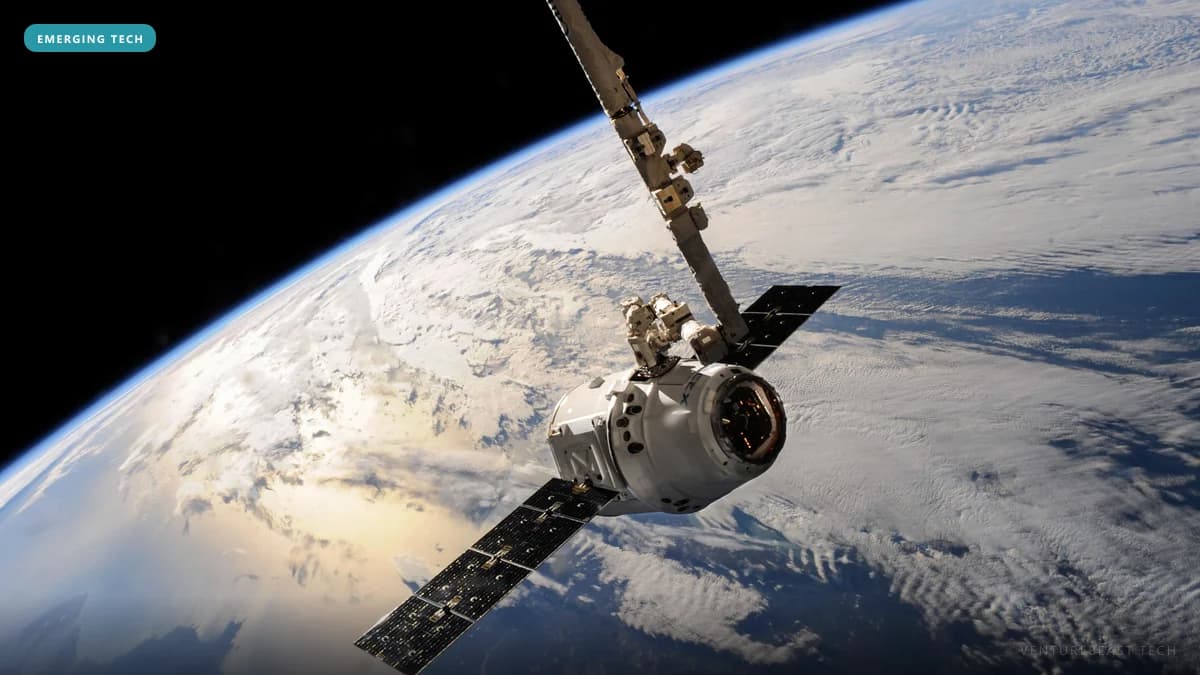
Direct-to-cell satellite connectivity — the ability for an ordinary, unmodified smartphone to send texts and make calls via satellite when outside terrestrial cell coverage — has split into a clean two-sided race in the U.S.: Starlink partnered with T-Mobile (branded T-Satellite), and AST SpaceMobile partnered with AT&T and Verizon. As of early 2026, both services primarily deliver messaging and emergency connectivity rather than full broadband data — the modest bandwidth available via either satellite path is genuinely no substitute for terrestrial LTE, and neither company claims otherwise.
It's worth separating this category clearly from the broader satellite broadband internet race (Starlink vs Amazon's Project Kuiper vs OneWeb, competing to replace home/business internet in underserved areas) — direct-to-cell is solving a fundamentally different problem: keeping an ordinary phone connected for basic messaging when it would otherwise have zero signal, not replacing home broadband.
Starlink + T-Mobile: T-Satellite
T-Mobile's T-Satellite service, powered by Starlink's satellite constellation, is available to any compatible phone regardless of network carrier — a notable interoperability decision that extends basic emergency connectivity beyond just T-Mobile's own subscriber base. T-Mobile is offering 911 texting coverage to all customers on all carriers for free, treating basic emergency satellite messaging as a public-safety feature rather than a carrier-exclusive premium add-on, even as the broader T-Satellite messaging and image-sending service remains tied to T-Mobile plans or compatible partner-carrier agreements.
The technical approach relies on Starlink's existing low-earth-orbit satellite constellation — the same satellites providing broadband internet service — retrofitted with additional capability to communicate directly with unmodified cell phones on standard cellular frequencies, rather than requiring a dedicated satellite phone or special hardware.

AST SpaceMobile + AT&T/Verizon: the serious challenger
AST SpaceMobile is widely regarded as the most serious direct competitor to Starlink in the satellite-to-phone space, built around the company's distinctively large "BlueBird" satellites — significantly bigger antenna arrays than Starlink's satellites, engineered specifically to achieve stronger direct-to-phone signal strength from orbit. AT&T and Verizon subscribers access space connectivity through the AST SpaceMobile network, splitting the major U.S. carrier landscape cleanly: T-Mobile customers get Starlink-powered service, AT&T and Verizon customers get AST SpaceMobile-powered service.
This carrier-exclusive bifurcation means a phone's direct-to-cell satellite capability is determined by which network the SIM is provisioned on, not by the phone hardware itself — most modern flagship smartphones (recent iPhone and Android models) have the baseband hardware capable of connecting to either satellite network, but actual service access depends on the carrier agreement in place.
Where Amazon Kuiper actually fits — a different race entirely
Amazon's Project Kuiper, despite frequent mention alongside Starlink and AST SpaceMobile in satellite-industry coverage, has not explicitly announced a direct-to-cell phone service comparable to what SpaceX/T-Mobile or AST SpaceMobile are building. Kuiper's LEO satellite constellation is instead built primarily to compete with Starlink's core broadband internet business — providing home and business internet service via a dedicated satellite dish, the same product category as traditional Starlink service, not the direct-to-ordinary-phone capability that's the focus of the direct-to-cell race specifically.
This distinction matters for accurate industry analysis: comparing Kuiper to Starlink makes sense in the broadband-internet-replacement category (alongside OneWeb and other LEO broadband constellations), but Kuiper is not currently a competitor in the direct-to-cell messaging/emergency-connectivity category where AST SpaceMobile is Starlink's actual rival.

What the service actually delivers today
Both Starlink/T-Mobile's and AST SpaceMobile's direct-to-cell offerings, as of early 2026, are honest about their current limitations. The services deliver text messaging, image sending, and emergency/SOS connectivity reliably — the core "stay reachable when off-grid" use case works. Full broadband data (streaming video, large file downloads, video calls) remains modest compared to terrestrial LTE or 5G, and neither company markets direct-to-cell as a broadband replacement. The realistic use case in 2026 is: hiking a remote trail, driving through a rural dead zone, or being on open water, where the alternative isn't "slower internet" — it's "zero connectivity at all."
Why the "carriers may be losing" narrative exists
Some industry commentary has framed the direct-to-cell race as an existential threat to traditional carrier business models — if satellite-to-phone connectivity eventually matches terrestrial coverage quality, the argument goes, why would a customer need a traditional carrier's tower infrastructure at all? The more grounded 2026 reality is that direct-to-cell is currently additive infrastructure that carriers themselves are partnering into (T-Mobile with Starlink, AT&T/Verizon with AST SpaceMobile), not a disruptive outside threat displacing them. Every major carrier has chosen to partner with a satellite provider rather than compete against one, which suggests the industry consensus is complementary coverage extension, not existential disruption — at least at current bandwidth and cost levels.
This connects to the broader stadium and venue connectivity infrastructure we covered in stadium 5G and fan experience — private terrestrial 5G remains the right tool for high-density, high-bandwidth environments, while satellite direct-to-cell fills the opposite end of the coverage spectrum: extremely low-density, zero-existing-infrastructure areas where building terrestrial towers was never going to be economical.
The underlying satellite manufacturing scale required for both networks connects to the broader compute and hardware infrastructure boom we've covered in Nvidia's AI infrastructure gold rush — LEO satellite constellations, AI data centers, and 5G stadium networks are all part of the same 2020s infrastructure buildout cycle, competing for many of the same component suppliers and engineering talent.
The bottom line
Direct-to-cell satellite connectivity has matured into a genuine, carrier-endorsed feature in 2026 rather than an experimental novelty — Starlink/T-Mobile and AST SpaceMobile/AT&T-Verizon have split the major U.S. carrier landscape between them, and basic emergency messaging works reliably in areas that previously had zero cell coverage. The service remains firmly in the "emergency and basic messaging" tier rather than a broadband replacement, and Amazon Kuiper — despite frequent comparison — is actually competing in the separate broadband-satellite-internet category, not the direct-to-cell race. Expect bandwidth improvements over the next several years as satellite constellations mature, but don't expect direct-to-cell to replace terrestrial data connectivity anytime soon.
Frequently Asked Questions
Which carriers offer direct-to-cell satellite service?
T-Mobile offers T-Satellite, powered by Starlink, available to compatible phones regardless of carrier for basic emergency 911 texting. AT&T and Verizon subscribers access direct-to-cell satellite connectivity through AST SpaceMobile's network instead. The two satellite providers have split the major U.S. carrier landscape between them rather than competing for the same carrier partnerships.
Is Amazon Kuiper a direct-to-cell satellite competitor to Starlink?
No — Amazon's Project Kuiper has not announced a direct-to-cell phone service comparable to Starlink/T-Mobile or AST SpaceMobile. Kuiper competes with Starlink in the separate broadband satellite internet category (dish-based home/business internet), not in the direct-to-ordinary-phone messaging and emergency connectivity category.
Can direct-to-cell satellite replace my regular cell service?
No, not in 2026. Both major direct-to-cell services (Starlink/T-Mobile and AST SpaceMobile/AT&T-Verizon) primarily deliver text messaging, image sending, and emergency connectivity. Broadband data speeds available via either service remain modest compared to terrestrial LTE or 5G, and neither company markets the service as a full connectivity replacement — it's designed to fill coverage gaps, not replace terrestrial cell towers.
Do I need a special phone for direct-to-cell satellite connectivity?
No special satellite phone is required — most recent flagship smartphones (recent iPhone and Android models) have baseband hardware capable of connecting to direct-to-cell satellite networks using standard cellular frequencies. Actual service access depends on your carrier's satellite partnership agreement (T-Mobile with Starlink, or AT&T/Verizon with AST SpaceMobile) rather than requiring special hardware purchases.
What is AST SpaceMobile's BlueBird satellite?
BlueBird is AST SpaceMobile's satellite design, notable for significantly larger antenna arrays than Starlink's satellites, engineered specifically to achieve stronger direct-to-phone signal strength from orbit. This makes AST SpaceMobile the most serious technical competitor to Starlink specifically in the direct-to-cell phone connectivity category.
Enjoying this article?
Get more strategic intelligence delivered to your inbox weekly.
Enjoyed this article?
VentureBeast.Tech is independent and reader-supported. If this saved you time, you can buy us a coffee — it keeps the research deep and the site ad-light.
Support us on Ko-fi

Comments (0)
No comments yet. Be the first to share your thoughts!