This article may contain affiliate links. We may earn a small commission at no extra cost to you if you make a purchase through these links.
Stadium 5G 2026: SoFi, Allegiant, Intuit Dome Connectivity
SoFi, Allegiant, and Intuit Dome rebuilt the stadium-tech baseline: private 5G, Wi-Fi 6+, and IoT mesh per venue. T-Mobile now runs all 29 MLB parks.
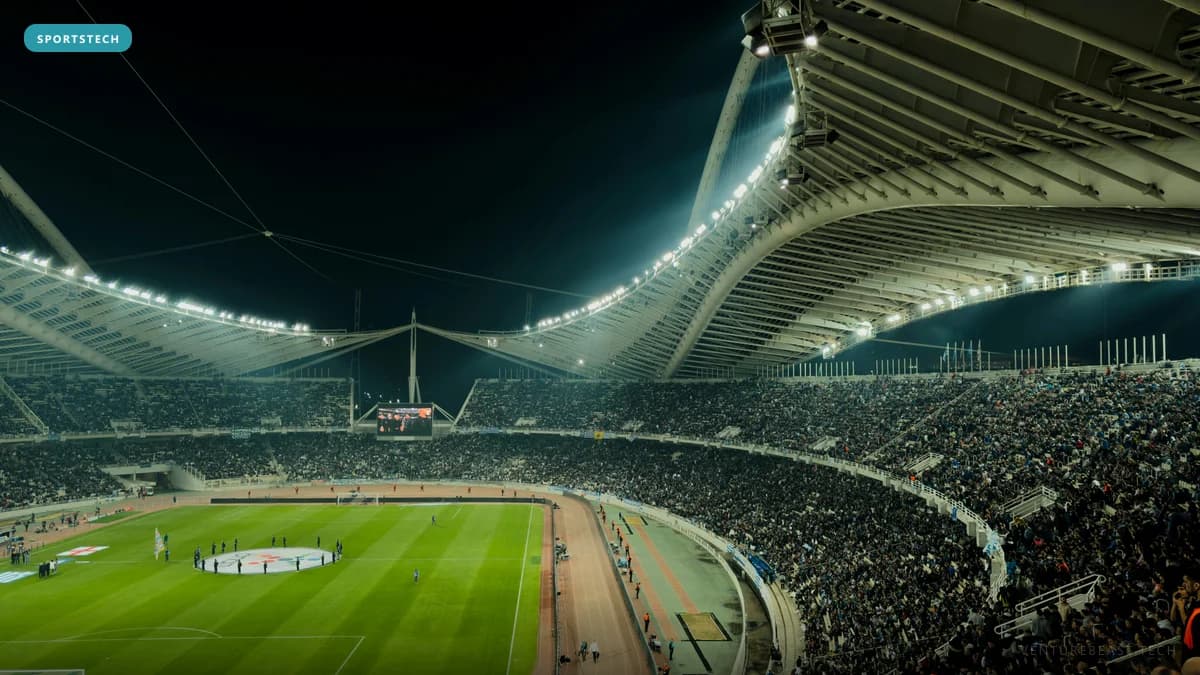
SoFi Stadium opened in 2020 with 56 5G antennas, 268 speakers, and Wi-Fi 6 baked into the steel — the first major U.S. venue purpose-built for a connected fan experience. Six years later, every major new American stadium ships with similar infrastructure, and T-Mobile has rolled out fully private 5G networks across all 29 U.S. MLB ballparks as of 2026. The "connected stadium" stopped being a marketing line and became the operational baseline.
The economics that drove this shift are unromantic. Fans bring phones; phones need bandwidth; carrier networks collapse under tens of thousands of simultaneous video uploads. The Super Bowl LV at Raymond James Stadium broke that ceiling — 65,000 fans, multi-terabyte traffic, and a cellular network that buckled. Stadium operators learned the same lesson the airlines learned a decade earlier: if you want connected customers, you build your own network. The 2026 stadium tech stack is the result.
What "connected stadium" actually means in 2026
Three infrastructure layers run in parallel inside the major venues today:
- Private 5G: Operator-owned cellular network running on either mid-band (n41, 2.5GHz) or mmWave spectrum, deployed by Verizon, AT&T, or T-Mobile under multi-year venue contracts. T-Mobile's MLB-wide rollout uses Ericsson hardware on a local tranche of n41 spectrum — the same spectrum band powering its consumer 5G but locked to the venue.
- Wi-Fi 6 / 6E: 2,000–3,000 access points per major stadium, providing the redundant high-density network that 5G alone can't deliver in the seating bowl. SoFi Stadium reports 24+ TB of Wi-Fi traffic on event day, more than double the figure from 2022.
- IoT mesh: Thousands of low-power devices — turnstile counters, environmental sensors, vending displays, security cameras — running on private 5G slices or LoRaWAN. FIFA's 2026 World Cup deployment plan calls for every turnstile to report counts via private wireless to a central operations dashboard.
The combination is what enables the use cases. Mobile ordering, in-seat replays, AR overlays, contactless entry, dynamic concession pricing, and per-seat camera angles all depend on every device having reliable bandwidth simultaneously — which only works if the venue owns the network.
The three flagship venues — and how they differ
| Venue | Opened | 5G stack | Signature feature |
|---|---|---|---|
| SoFi Stadium (LA) | 2020 | Verizon 5G UWB + Wi-Fi 6 | 360° in-seat camera, video-board halo screen |
| Allegiant Stadium (LV) | 2020 | AT&T multi-band 5G + Wi-Fi 6 | Dual-end retractable field, mobile-first concessions |
| Intuit Dome (LA, Clippers) | 2024 | T-Mobile private 5G + Wi-Fi 6E | The "Wall" 17,000-seat steep upper bowl + facial-recognition entry |
Intuit Dome — the Clippers' new home opened in 2024 — is the most aggressive bet on tech-as-feature in the U.S. sports tech market. Steve Ballmer's team specced the venue around a 5,000-square-foot scoreboard, biometric ticketing, and the largest concentration of LED panels in any indoor arena. The "Wall" — a 17,000-seat steep upper bowl wrapping the visitors' bench — is engineered as a single noise weapon that's been measured at 110+ dB during Clippers home games.
SoFi Stadium's signature is the in-seat 360° camera that lets fans pull up a view from anywhere in the stadium via the SoFi mobile app. The feature was a marketing line for two years before usage stats showed real engagement — by 2024, more than 40% of SoFi event attendees opened the app during the game.
Allegiant Stadium (Raiders) leaned hardest into mobile-first concessions. Mobile order-ahead is the default at the venue's 500+ food vendors, with seat-side delivery via runner apps. The result: average concessions revenue per attendee is reportedly 30–40% higher than at comparable NFL venues built pre-2018.
The MLB rollout — and what it unlocks
T-Mobile's deployment of fully private 5G across all 29 U.S. MLB ballparks (Toronto's Rogers Centre uses Rogers Wireless infrastructure) is the largest private-5G install in U.S. sports history. The rollout uses Ericsson hardware and local n41 spectrum, and crucially, it underpins the MLB ABS Challenge System — Hawk-Eye's pitch-tracking data has to travel from the camera array to the umpire-display and broadcast graphic in under 100 milliseconds, which is below what a typical consumer cellular slice can guarantee.
The same network also powers Statcast pitch-tracking, broadcast augmentation overlays, ballpark operations dashboards, and the new in-seat ordering pilots at five MLB venues (Yankee Stadium, Dodger Stadium, Wrigley Field, Petco Park, and Globe Life Field). Per-stadium revenue lift from the operations side hasn't been disclosed publicly, but T-Mobile's investor materials describe the MLB deal as the proof point for its broader stadium-and-arena private-5G push.
Where the next decade's stadium tech goes
Three vectors will define the next round. First, biometric entry. Intuit Dome already uses facial recognition for premium-tier entry; SoFi has tested it at suite level. The wider rollout is held up by state-level biometric privacy laws (Illinois, Texas, Washington especially), but the technology is shipped and is operational at multiple venues.
Second, AR/VR overlay broadcasts. Apple Vision Pro got most of the early attention but Meta Quest 3 has been the bigger commercial story in stadium AR experiments — both the NBA and NFL have piloted in-stadium VR seats that overlay player-tracking data on the live action. The latency requirements for a credible AR experience are punishing; private 5G is the only network architecture that can deliver them today.
Third, esports/traditional convergence. The same broadcast tech we covered in esports infrastructure 2026 — cloud production, remote commentary, multi-camera virtual control rooms — is migrating from gaming arenas into NFL and NBA venues. SoFi already runs Rams home games through a partially cloud-hosted production stack. Within five years, the on-venue production truck will be a backup, not the primary.
The bottom line
Stadium connectivity is no longer a differentiator at the top of the U.S. sports market — it's the floor. Any NFL or MLB venue built without private 5G, Wi-Fi 6+, and a comprehensive IoT mesh is now a renovation candidate. The next decade's competition is at the application layer: who builds the better in-app camera angle, the faster concessions experience, the more credible AR overlay. The networks were Phase 1; the products that ride on them are Phase 2, and the leading venues — SoFi, Intuit Dome, Allegiant — are testing what works while the rest of the league catches up to baseline infrastructure.
Frequently Asked Questions
Which carriers run private 5G networks inside major U.S. stadiums?
All three U.S. carriers — Verizon, AT&T, and T-Mobile — operate private 5G inside major venues, typically on multi-year exclusive or dual-carrier deals. T-Mobile holds the MLB league-wide private 5G contract across all 29 U.S. ballparks. Verizon is dominant at SoFi Stadium and several other NFL venues; AT&T at Allegiant Stadium and AT&T Stadium. Most major arenas now run dual-carrier infrastructure for redundancy.
What is the difference between private 5G and consumer 5G at a stadium?
Consumer 5G shares spectrum and capacity across all macro cellular users in the area; at a sold-out NFL game with 65,000+ phones, that capacity collapses. Private 5G uses a local slice of dedicated mid-band spectrum (n41 for T-Mobile's MLB deal) that is reserved for the venue alone. The network is operated, secured, and prioritized by the stadium operator, not the carrier's national core.
How much does it cost to build a fully connected stadium?
Full private 5G plus Wi-Fi 6/6E plus IoT mesh infrastructure adds roughly $40–80 million to a new stadium build cost, depending on venue size and feature set. SoFi Stadium's total reported price was approximately $5 billion, with the connectivity stack representing single-digit percentages of that. Retrofits to existing 30+-year-old venues are typically $20–50 million projects.
What stadiums are hosting the 2026 FIFA World Cup in the U.S., and how are they connecting?
The 2026 FIFA World Cup uses 11 U.S. venues, including SoFi Stadium, MetLife Stadium, AT&T Stadium, and Hard Rock Stadium. FIFA's announced plan requires every turnstile to be private-wireless-connected and reporting to an aggregated operations dashboard. Most host venues already had private 5G installed; the smaller venues are upgrading specifically for the tournament.
Will biometric entry replace tickets at major stadiums?
Eventually, yes — at the premium and suite tier this is already happening at Intuit Dome and selectively at SoFi Stadium. The wider rollout is held up by state-level biometric privacy laws (especially Illinois's BIPA, Texas's CUBI Act, and Washington's HB 1655). Most U.S. venues now offer biometric entry as opt-in alongside traditional barcode tickets. Full replacement is more like a 5–10 year horizon, not 1–2.
Enjoying this article?
Get more strategic intelligence delivered to your inbox weekly.
Enjoyed this article?
VentureBeast.Tech is independent and reader-supported. If this saved you time, you can buy us a coffee — it keeps the research deep and the site ad-light.
Support us on Ko-fi
Comments (0)
No comments yet. Be the first to share your thoughts!