This article may contain affiliate links. We may earn a small commission at no extra cost to you if you make a purchase through these links.
Pixel 11 Verdict: Tensor G6, Less RAM, $100 More
Google's Pixel 11 lineup costs $100 more than the Pixel 10, and the base Pixel 11 Pro and Pro XL drop to 12GB of RAM. Here's what that means for buyers.

The Pixel 11 series costs $100 more than the Pixel 10 at every price point, and the Pixel 11 Pro and Pro XL now start with 12GB of RAM instead of 16GB. Google's Tensor G6 is a real step up in AI compute, but it is built on a 3nm process rather than the 2nm node many expected. The lineup is a clear example of the AI-driven memory shortage reaching the phone in your pocket: you pay more and, on the Pro models, get less memory.
That does not make the Pixel 11 a bad phone. It does change who should buy which model. Google announced the Pixel 11, Pixel 11 Pro and Pixel 11 Pro XL on August 12, 2026, with shelf availability on August 20, alongside the $1,899 Pixel 11 Pro Fold. This analysis compares Google's own launch figures and Google Store spec sheets against last year's Pixel 10 lineup, then puts the changes in the context of the 2026 memory market. All prices and specs are as of September 2026.
What exactly changed between the Pixel 10 and Pixel 11?
Every model went up by $100. What you get for that money depends on the model. According to Google's Pixel 11 announcement, the Pixel 11, 11 Pro and 11 Pro XL start at $899, $1,099 and $1,299. The Pixel 10 announcement from August 2025 listed $799, $999 and $1,199 for the same three tiers. The base storage and RAM figures below come from the Google Store tech-spec pages for each phone.
| Model | Pixel 10 launch (base config) | Pixel 11 launch (base config) | Net change at the entry price |
|---|---|---|---|
| Pixel (standard) | $799 · 128GB · 12GB RAM | $899 · 256GB · 12GB RAM | +$100, double storage, same RAM |
| Pro (6.3-inch) | $999 · 128GB · 16GB RAM | $1,099 · 256GB · 12GB RAM | +$100, double storage, 4GB less RAM |
| Pro XL (6.8-inch) | $1,199 · 256GB · 16GB RAM | $1,299 · 256GB · 12GB RAM | +$100, same storage, 4GB less RAM |
| Pro Fold | $1,799 · 256GB · 16GB RAM | $1,899 · 256GB · 16GB RAM | +$100, same storage, same RAM |
Read the table by the last column. The standard Pixel 11 and Pixel 11 Pro at least double their base storage to 256GB, so the $100 buys something you can measure. The Pro XL gets nothing measurable at the entry price: the same 256GB, 4GB less RAM, and $100 more. The Pro Fold keeps 16GB of RAM on every storage tier but still goes up by $100.
To get 16GB of RAM on a Pixel 11 Pro or Pro XL, you now have to buy the 512GB or 1TB version. The Google Store spec page lists 12GB for the 256GB models and 16GB for the 512GB and 1TB models. Last year's Pixel 10 Pro spec page lists 16GB of RAM on every storage tier, from 128GB up to 1TB. The standard Pixel 11 stays at 12GB on both of its storage options.
Why did Google cut RAM and raise prices at the same time?
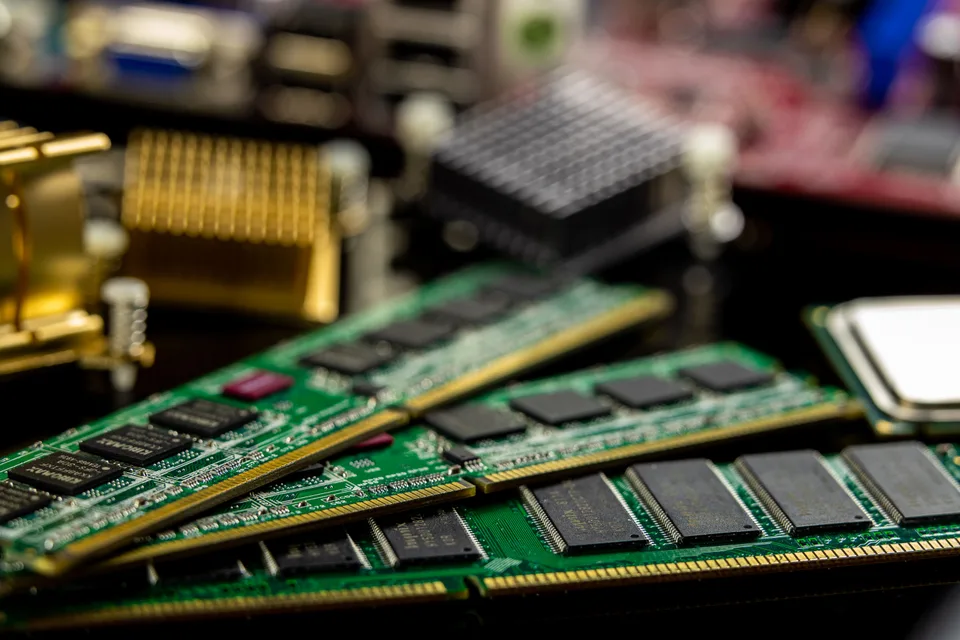
Google has said openly that memory costs are the reason. In a July 24, 2026 interview with 9to5Google, Shakil Barkat, Google's Vice President of Devices and Services, said "there's never been an increase in memory prices like the world's going through right now." According to the same report, Barkat pointed to Morgan Stanley data putting RAM at $2.80 per gigabyte in 2025 and $12 per gigabyte in 2026. 9to5Google describes that as a sixfold increase, but the two figures work out to roughly 4.3 times. The data comes from Morgan Stanley via 9to5Google, not from Google's own bill of materials.
Industry analysts give the same picture. The Counterpoint Research forecast published May 31, 2026 names "a memory supply crisis, driven by capacity reallocation toward AI-focused HBM and server DRAM" as the primary driver of a projected 13.9% fall in 2026 smartphone shipments, to 1.08 billion units. HBM is the high-bandwidth memory stacked next to AI accelerators. TrendForce's July 3, 2026 pricing outlook expects DRAM contract prices to rise another 13–18% quarter over quarter in Q3 2026. It also expects smartphone vendors "to raise retail prices in the third quarter to offset persistently high LPDRAM costs."
This was predicted. In December 2025, IDC's analysis of the memory shortage said that new flagships would likely stay at 12GB of RAM rather than move up to 16GB. Google went further than holding still: the Pro models went backwards from 16GB.
Here is some rough arithmetic using the Morgan Stanley figure. At $12 per gigabyte, the 4GB Google removed from the base Pro models is worth about $48 in memory. That is illustrative only, because contract prices differ from spot prices and Google does not publish its costs. Still, it shows why a 4GB cut is one of the few levers a phone maker can pull without redesigning the device. The shortage is also the backdrop to a wider AI infrastructure boom, covered in our analysis of NVIDIA's $4 trillion milestone.
Is the Tensor G6 a worthwhile upgrade?
On Google's numbers, yes, for AI tasks. Google says the Tensor G6 has an upgraded CPU delivering "25% faster web browsing and 15% quicker app launches," and "50% more TPU compute" (TPU is Google's dedicated AI processor). Combined with the latest Gemini Nano model, Google says the phone "processes on-device AI tasks up to 3.5 times faster while using up to 3.5 times less energy." Google's footnotes say these figures compare against Tensor G5 at launch, and the on-device AI figure is based on internal data from pre-production devices, so treat them as the manufacturer's claims until independent benchmarks confirm them. For background on why Google keeps investing in its own AI silicon, see our explainer on Google's TPU strategy.
The process node is where expectations fell short. Before launch, the Tensor G6 was widely expected to use TSMC's 2nm process. After launch, GSMArena reported, citing Taiwan's Central News Agency, that Google's VP of Hardware Peng Yu-chun confirmed "the Tensor G6 inside all the Pixel 11 series smartphones is based on TSMC's 3nm process." Google's own launch post does not name a process node. A mature 3nm process is not a flaw in itself. It does mean the efficiency gains have to come from the chip's design and Google's software, not from a smaller manufacturing process.
Here the Tensor G6 and the RAM cut are connected. Barkat told 9to5Google that Google has a "dedicated effort" to reduce memory requirements across Android and the app ecosystem so devices can "have less RAM while maintaining a great user experience." In other words, Google is betting that faster on-device AI plus leaner software can make up for the missing 4GB. That is plausible. It is also a promise, not something you can measure on day one.

Does 12GB of RAM actually matter on a phone?
For most people today, probably not. Last year's standard Pixel 10 already shipped with 12GB, and the Pixel 11 matches it. Where 12GB matters is time. Google promises seven years of OS, security and Pixel Drop updates on the Pixel 11 series. A phone bought in 2026 is expected to run whatever on-device Gemini models Google ships through the early 2030s. On-device language models have to stay in RAM while they run, so the gap between 12GB and 16GB is more likely to show up in year five than in the first week.
That creates an awkward mismatch. Google's reason for the long update promise is that you can keep a Pixel for most of a decade. Its reason for the RAM cut is that software will need less memory over time. Both may turn out true, but if you plan to keep a phone for five years or more, the memory decision is a bet on Google's engineering roadmap. If that worries you, the 512GB Pro or Pro XL is the only way to get 16GB outside the Fold. It costs more than the $1,099 or $1,299 entry price.
Is the Pixel 11 still good value compared with last year?
Less than before. Pixels have long been sold as cheaper than an iPhone or Galaxy flagship, with Google's software doing the heavy lifting. Across the market, prices are going up. Counterpoint reported on July 31, 2026 that global smartphone average selling prices rose 17% year over year in Q2 2026 to $400, and it attributed the growth partly to "memory-driven price hikes across Android OEM portfolios." Google raising prices puts it in line with the market. But a $1,299 Pro XL with less RAM than its predecessor is harder to sell as the smart-money choice.
There is also a practical alternative. As of September 10, 2026, the Google Store still lists the Pixel 10 Pro from $999 with 16GB of RAM on every storage tier. For buyers who care more about memory headroom than the Tensor G6's AI speed-up or the new camera sensors, last year's Pro is a legitimate option while stock lasts. The same logic applies to other long-lived devices. Our look at the Galaxy Z Fold 7 and the foldable market covers how premium buyers weigh spec sheets against price.
Which Pixel 11 should you buy?
- Pixel 11 ($899): the best-balanced model. RAM is unchanged at 12GB, base storage doubles to 256GB, and Google says it has a new, larger 48-megapixel main sensor. It is the only non-foldable model where the $100 increase is fully matched by more hardware. Buy it if you are coming from a Pixel 8 or older.
- Pixel 11 Pro ($1,099): good, with a caveat. You get the compact 6.3-inch Pro screen, the upgraded 48-megapixel telephoto, Pro Zoom up to 120x, and six months of Google AI Pro included. The 256GB model has 12GB of RAM. If you keep phones for five-plus years, look at the 512GB tier for 16GB.
- Pixel 11 Pro XL ($1,299): the weakest value change. Same base storage as the Pixel 10 Pro XL, 4GB less RAM, and $100 more. Buy it for the 6.8-inch display and battery. Google says it gets 15 hours of battery life from 15 minutes of wired charging. Don't expect more phone for the money.
- Pixel 11 Pro Fold ($1,899): the only model that kept 16GB throughout. Every storage tier has 16GB of RAM, but it still costs $100 more than the Pixel 10 Pro Fold did.
- Pixel 10 Pro owners: skip this year. You would pay more for a phone with less RAM. The Tensor G6 AI gains do not justify that trade on their own.
Pixels are also good for health features on the wrist and phone. If that is part of your decision, our comparison of wearable ECG across Apple, Withings, Samsung and Pixel covers that ecosystem.
What should you watch next?
Three things will decide whether the Pixel 11's trade-off looks sensible or short-sighted. First, independent benchmarks of the Tensor G6: Google's claimed 3.5x on-device AI gain needs outside confirmation. Second, whether Google's promised Android memory-efficiency work shows up in Pixel Drops over the next year. Third, the memory market itself. TrendForce expects price increases to moderate in Q3 2026, but not to reverse. If DRAM prices stay high into 2027, 12GB may become the new flagship floor across Android, and the Pixel 11 Pro will look early rather than stingy.
The bottom line: the Pixel 11 is a better phone than the Pixel 10 on cameras, charging and AI speed, and a worse deal on memory per dollar. Buy the standard Pixel 11 for value. Buy a 512GB Pro if you want 16GB and plan to keep the phone for the full seven years. Think twice about the base Pro XL.
Frequently Asked Questions
How much does the Pixel 11 cost?
As of September 2026, Google lists the Pixel 11 from $899, the Pixel 11 Pro from $1,099, the Pixel 11 Pro XL from $1,299 and the Pixel 11 Pro Fold from $1,899. Each is $100 more than the equivalent Pixel 10 model at launch. The Pixel 11, Pro and Pro XL went on sale on August 20, 2026, and the base models start at 256GB of storage.
How much RAM does the Pixel 11 Pro have?
The 256GB Pixel 11 Pro and Pro XL have 12GB of RAM. The 512GB and 1TB versions have 16GB, according to the Google Store spec page. Every Pixel 10 Pro configuration had 16GB. The standard Pixel 11 has 12GB on both storage tiers, and the Pixel 11 Pro Fold has 16GB on every tier.
Is the Tensor G6 a 2nm or 3nm chip?
It is a 3nm chip. GSMArena, citing Taiwan's Central News Agency, reported that Google VP of Hardware Peng Yu-chun confirmed the Tensor G6 is made on TSMC's 3nm process. It had been widely expected to move to 2nm. Google's launch post does not name a process node, but it claims 50% more TPU compute than the Tensor G5.
Why is the Pixel 11 more expensive?
Google blames memory costs. Shakil Barkat, Google's VP of Devices and Services, told 9to5Google that memory prices have never risen as fast as they are rising now. Analysts including Counterpoint Research and TrendForce link the shortage to memory makers shifting capacity toward AI data center memory, which has pushed up the cost of the DRAM used in phones.
Should I upgrade from a Pixel 10 Pro?
For most owners, no. A Pixel 11 Pro at $1,099 has less base RAM than the Pixel 10 Pro. The gains are the Tensor G6's faster on-device AI, the upgraded cameras and faster wireless charging (up to 25W, versus 15W on the Pixel 10 Pro, per the Google Store spec pages). Upgrading makes more sense from a Pixel 8 or older, where the jump in chip, cameras and battery is much bigger.
Enjoying this article?
Get more strategic intelligence delivered to your inbox weekly.
Enjoyed this article?
VentureBeast.Tech is independent and reader-supported. If this saved you time, you can buy us a coffee — it keeps the research deep and the site ad-light.
Support us on Ko-fi


Comments (0)
No comments yet. Be the first to share your thoughts!