This article may contain affiliate links. We may earn a small commission at no extra cost to you if you make a purchase through these links.
Oura's IPO and the Whoop Chase: Wearables Go Public
Oura's S-1 shows $1.2B in nine-month revenue and 5M paid members. Whoop eyes its own IPO. What public markets mean for wearable subscribers.

Oura filed to go public on September 3, 2026, and its S-1 answers the question that has hung over subscription wearables for years: can a $399 ring plus a $5.99-a-month membership become a durable business? The filing says yes on growth and cash flow. But it also shows that roughly 80% of Oura's revenue still comes from selling hardware, and that is the number public investors will watch most closely. Whoop, which says it is about 18 months from its own listing, is already testing a different answer: sell health services to people who don't wear a Whoop at all.
For members of either service, the IPO race matters more than it looks. Once a wearable company answers to quarterly earnings, pricing, feature gating, data policy and regulatory risk all become things it has to disclose and defend in public. Below is what the filing actually shows, what is still only reported, and what changes for the people paying the subscriptions.
What did Oura's S-1 actually disclose?
Oura Inc. filed its registration statement with the U.S. Securities and Exchange Commission on September 3, 2026. The S-1 on SEC EDGAR says the company has applied to list on Nasdaq under the ticker "OURA," with Goldman Sachs, Morgan Stanley and J.P. Morgan as lead underwriters. The price range and share count are still blank in this preliminary filing, so no valuation has been set by the company.
The figures below come straight from the filing and cover the nine months ended June 30:
| Metric (nine months to June 30) | 2025 | 2026 |
|---|---|---|
| Total revenue | $697.6M | $1,214.5M (+74%) |
| Hardware revenue | $588.7M | $974.0M |
| Membership revenue | $108.8M | $240.5M |
| Net income | $1.6M | $60.8M |
| Rings sold | 1.8M | 3.1M |
| Paid members (at June 30) | 2.5M | 5.0M |
Three more disclosures matter. Oura reports net cash from operating activities of $328.0 million for the period. It puts weighted-average 12-month paid member retention at about 85%, and its daily-to-monthly active user ratio at about 65%. And the headline "loss" some outlets reported is an accounting artifact: net loss attributable to common stockholders was $924.3 million because of a $985.0 million deemed dividend to preferred stockholders. That charge is the amount Oura paid to repurchase preferred stock above its carrying value, not an operating cost. The same item produced a $182.8 million loss to common stockholders in the prior-year period. The operating business made money.

Is the $16 billion valuation confirmed?
No. The valuation is reported, not filed. According to TechCrunch, citing Bloomberg, Oura was eyeing a September listing that could value it at more than $16 billion and raise up to $3 billion. Oura told TechCrunch it could not comment on the report. The same TechCrunch piece notes Oura's September 2025 Series E, an $875 million round at a $10.9 billion valuation.
Treat the $16 billion figure as a bankers'-book number until a price range appears in an amended S-1. The filing does give you the tools to judge it, though. Revenue, cash generation and retention are all now on the record.
Why does an 80/20 hardware split matter to public investors?
Hardware revenue was $974.0 million of $1,214.5 million, or about 80%. Membership revenue was $240.5 million, about 20%. That is the single most important ratio in the filing, and it cuts two ways.
The bull case: Oura sold 3.1 million rings in nine months, and every ring sold is a potential $69.99-a-year membership (the U.S. annual price on Oura's site as of September 2026). The paid base doubled to 5.0 million in a year. If 85% of members stick around for 12 months, membership revenue compounds while hardware sales stay lumpy.
The bear case: Oura's own risk factors name "our dependence on sales of Oura Ring and subscriptions to Oura Membership for substantially all of our revenue." Hardware revenue depends on upgrade cycles and holiday quarters, and it faces direct competition from Samsung's Galaxy Ring and Ultrahuman. We covered that fight in our smart ring war breakdown. Public markets pay more for recurring revenue than for devices, so Oura has every incentive to push the membership share of revenue up.
For members, that incentive is the part to watch. The quickest ways to raise membership revenue are to raise the price, move features behind higher tiers, or add paid add-ons. None of these is announced, but all of them are standard moves for a newly public subscription company that needs to show steady margin growth.
How is Whoop positioning for its own IPO?
Whoop is running the same race from a different starting point. Rather than selling the band separately, it sells membership tiers that include the device. On March 31, 2026, Whoop announced a $575 million Series G at a $10.1 billion valuation, led by Collaborative Fund. The company said it had more than 2.5 million members and exited 2025 at a $1.1 billion bookings run rate, up 103% year over year, and that it planned more than 600 new roles in 2026.
Note the metric. Bookings run rate is not recognized revenue. It is the annualized value of subscriptions sold at a point in time, which means you cannot compare it line-for-line with Oura's audited revenue. That gap will close only when Whoop files its own S-1.
On timing, CEO Will Ahmed told Bloomberg in August that Whoop is on track for an IPO in roughly 18 months, in an interview syndicated by Yahoo Finance. The same report says Whoop plans to lease about 107,000 square feet next to its Fenway-area headquarters in Boston, with room for roughly 1,000 more employees, though the lease was not yet final. In the March TechCrunch coverage, Ahmed described the company as doing "a lot of the no-regrets work to be a public company."
| Oura | Whoop | |
|---|---|---|
| IPO status (September 2026) | Public S-1 filed Sept 3; Nasdaq "OURA" | CEO targets roughly 18 months out |
| Last private valuation | $10.9B (Sept 2025) | $10.1B (March 2026) |
| Paid members | 5.0M (S-1, June 30, 2026) | 2.5M+ (company, March 2026) |
| Scale metric | $1,214.5M revenue, nine months (audited filing) | $1.1B bookings run rate exiting 2025 (company-reported) |
| U.S. consumer price | Ring 5 from $399 + $5.99/mo or $69.99/yr | $199 / $239 / $359 per year by tier, per Engadget |
Why did Whoop open Advanced Labs to non-members?
On August 18, 2026, Whoop made Advanced Labs available without a wearable membership and added GRAIL's Galleri multi-cancer early detection test. Advanced Labs combines blood testing, clinician-reviewed results and AI-powered insights across cardiovascular, metabolic, hormonal and inflammatory health. Whoop says testing starts at about $150. Quest Diagnostics runs the U.S. testing, and Galleri, which is designed to detect cancer signals associated with more than 50 types of cancer, is available through a single blood draw at nearly 2,000 Quest locations.
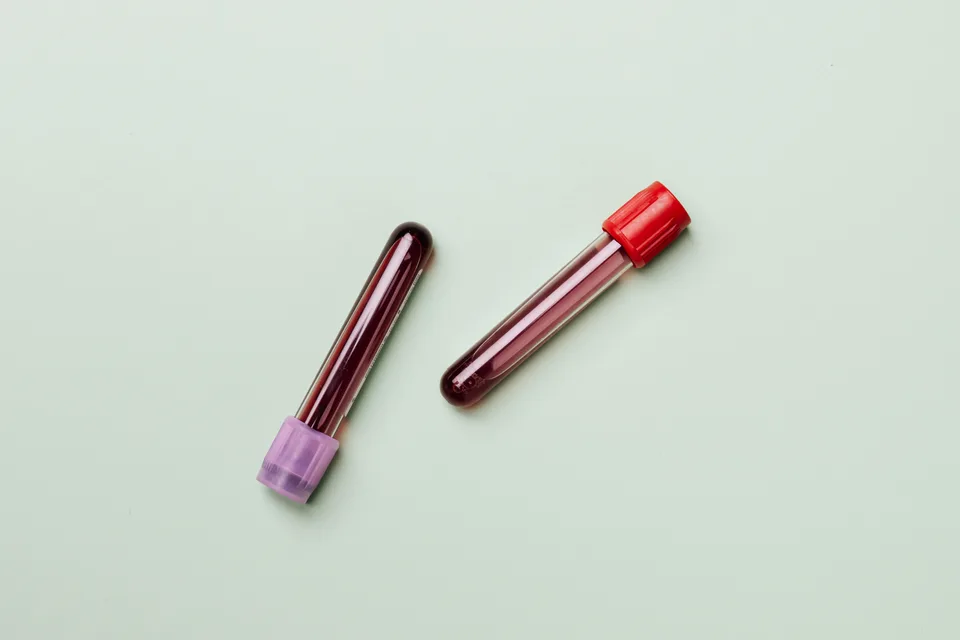
Read against the IPO timeline, this is a revenue-diversification move. A company whose revenue depends entirely on memberships tied to one band has a ceiling set by how many people want that band. Selling lab panels to Oura, Garmin and Apple Watch owners breaks that link. It also answers the same question Oura's filing raises from the other direction: how much of a wearable company's value sits in the device, and how much in the health services built on top of it?
Our view: this is the more interesting strategic bet of the two, and the riskier one. Lab testing carries clinical, privacy and regulatory exposure that sleep scores do not. It also puts Whoop in competition with direct-to-consumer lab companies, not just other wearable makers.
What does public scrutiny change for users?
Public companies must list their material risks in writing, and Oura's list reads like a guide to what users should watch.
- Accuracy claims. The S-1 flags "our products' ability to provide accurate metrics and data to our members, and litigation and regulatory proceedings relating to claims we make about that accuracy." TechCrunch reported a proposed class action over sleep-tracking accuracy claims filed in San Francisco in late August 2026. Once a company is public, lawsuits like that become disclosures that affect the share price, not just legal costs.
- The medical-device line. Oura says it markets certain products "as general wellness products that we believe are not actively subject to the medical device regulatory requirements," and its filing describes a Blood Pressure Signals feature that tracks blood-pressure-related patterns in nighttime data over 30 days. Whoop has already been tested on this line. The FDA sent it a warning letter on July 14, 2025, saying its Blood Pressure Insights feature was being marketed without clearance. On June 17, 2026, the FDA said it did not intend to enforce device requirements for the modified product, citing updates to its General Wellness guidance issued January 6, 2026.
- Data. Oura lists "noncompliance with or changes in U.S. and international laws and regulations regarding privacy, data protection, and security" as a risk. Health data is the core asset of both companies, and a public company's data practices face closer scrutiny from regulators, analysts and plaintiffs' lawyers.
- Pricing. Oura's U.S. membership is $5.99 a month today. Public-market margin pressure is the most common reason subscription prices rise, so members should expect any change to be discussed on an earnings call first.
There is an upside for members as well. Retention, active-use rates and revenue per member are now audited public numbers. If Oura's 85% retention figure slips in future filings, users will see it, and so will the company's product team. For a sense of how these devices actually perform against each other, see our recovery wearables comparison and our sleep tracker shootout.
What should you watch next?
- The amended S-1 price range. This is the first number from the company itself that will show whether the reported $16 billion-plus valuation holds.
- The membership share of revenue. If it rises from 20% faster than ring sales grow, Oura is turning into a subscription company. If it stays flat, it is still mostly a hardware company.
- Pricing and tier changes. Watch for new Oura membership tiers or add-ons after the listing, and for whether Whoop keeps Advanced Labs pricing where it is as non-members arrive.
- Regulatory moves on health features. Blood pressure is the feature both companies are pushing. Oura's is labeled a wellness feature, and Whoop's was only resolved after an FDA warning letter. How the FDA treats the next generation of these features will shape what both companies can sell.
- Whoop's first audited numbers. Until it files, compare Whoop's bookings run rate with Oura's revenue cautiously.
The bottom line: Oura's filing shows a profitable, fast-growing company that still makes most of its money from selling rings. Whoop is betting that health services, not devices, drive the next valuation increase. For people who pay for either service, the IPO race brings more transparency and more pressure to monetize, and both will show up first in the membership price.
Frequently Asked Questions
When is the Oura IPO?
Oura filed a public S-1 with the SEC on September 3, 2026, and has applied to list on Nasdaq as "OURA." The filing does not yet set a price range or date. TechCrunch, citing Bloomberg, reported that Oura was aiming for a September listing, and Oura told TechCrunch it could not comment on the report. The date becomes firm only when the offering is priced.
Is Oura profitable?
Yes, on a net income basis. The S-1 reports net income of $60.8 million for the nine months ended June 30, 2026, and $328.0 million in operating cash flow. A reported $924.3 million loss to common stockholders comes from a $985.0 million deemed dividend to preferred stockholders, the premium Oura paid to repurchase preferred stock, not from operating losses.
Do I need a Whoop membership to use Whoop Advanced Labs?
No. Since August 18, 2026, Whoop has offered Advanced Labs without a wearable membership, so owners of Oura, Garmin or Apple Watch devices can buy blood testing directly. Whoop says testing starts at about $150, with U.S. testing run by Quest Diagnostics. Lab results are informational and are not a substitute for care from your own clinician.
Will my Oura membership price go up after the IPO?
Nothing has been announced. As of September 2026, Oura's U.S. membership is $5.99 a month or $69.99 a year. Membership made up about 20% of revenue in the filing, and newly public subscription companies often raise prices or add tiers to grow margins. Watch earnings calls and any amended filings for signals.
When will Whoop go public?
Whoop has not filed. CEO Will Ahmed told Bloomberg in August 2026 that the company is on track for an IPO in roughly 18 months. Whoop raised $575 million at a $10.1 billion valuation in March 2026 and is expanding its Boston headquarters and headcount, both typical steps before a listing.
Enjoying this article?
Get more strategic intelligence delivered to your inbox weekly.
Enjoyed this article?
VentureBeast.Tech is independent and reader-supported. If this saved you time, you can buy us a coffee — it keeps the research deep and the site ad-light.
Support us on Ko-fi


Comments (0)
No comments yet. Be the first to share your thoughts!