This article may contain affiliate links. We may earn a small commission at no extra cost to you if you make a purchase through these links.
Concussion Tech 2026: Helmets, Q-Collar, ImPACT Compared
Three concussion-prevention layers — Riddell AXIOM helmets, the FDA-cleared Q-Collar, and ImPACT cognitive testing — compared head-to-head for 2026.
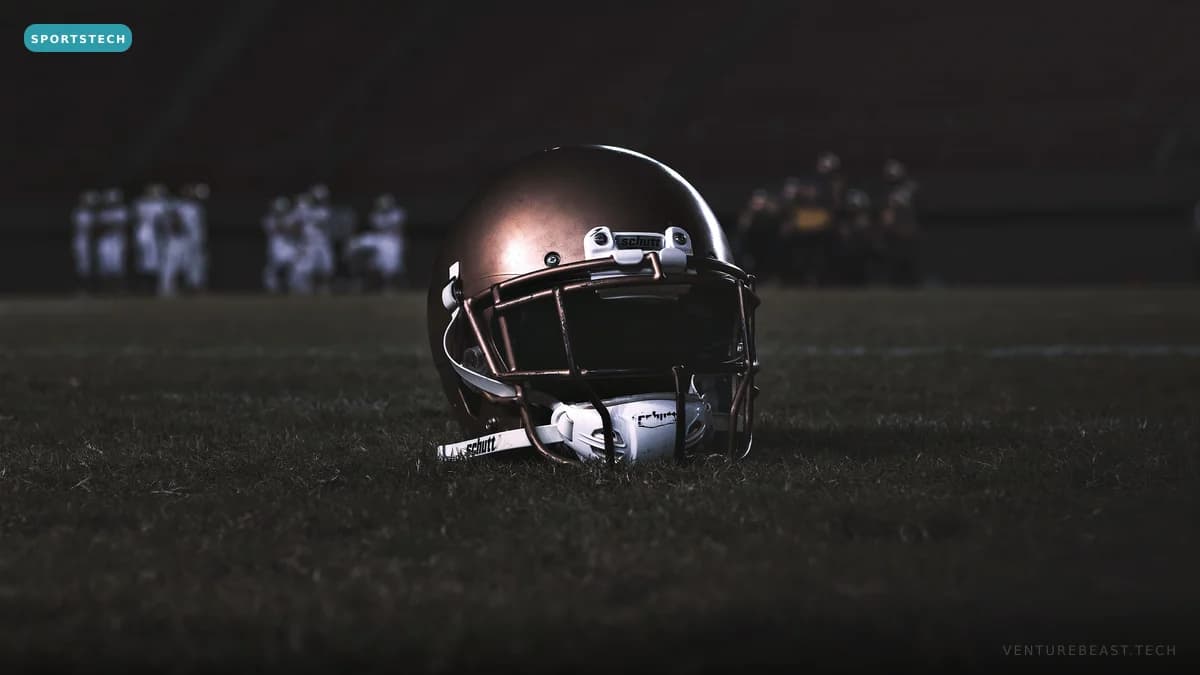
Three categories of concussion-prevention technology now run in parallel through American football, hockey, lacrosse, and increasingly youth contact sports: structural impact reduction (Riddell AXIOM smart helmets, Vicis ZERO2 models), vascular pre-loading (Q-Collar, the FDA-cleared compression collar), and cognitive baseline + post-impact testing (ImPACT, the Sport Concussion Assessment Tool). Each category attacks a different part of the concussion problem; none of them on its own is sufficient.
The 2026 NFL season also brings a regulatory shift — effective this year, all helmets outside the top-performing tier are flagged "Not Recommended" in the NFL/NFLPA lab testing protocol. The categorical shift removes around 20 helmet models from the league's permitted-equipment list. That decision will reshape the high-school and college helmet markets within 24 months, because lower-level programs typically buy whatever the NFL is wearing.
Layer 1: Smart helmets — Riddell AXIOM and the new structural class
Riddell's AXIOM is the production version of the company's previous-generation Speedflex platform, with two material additions: a tunable lattice liner that absorbs rotational impact more efficiently, and an embedded InSite sensor array that telemeters impact data to a sideline tablet during practices and games. Riddell's InSite Analytics subscription product is the cloud-side companion that tracks impact exposure per player across a full season.
Competing helmet vendors in 2026:
- Riddell AXIOM: Tunable lattice liner, integrated InSite sensors, NFL-approved at the top performance tier. Dominant market share in NFL and college.
- Vicis ZERO2 / ZERO2 Matrix: Soft-shell deformable outer layer that absorbs initial impact before reaching the harder inner shell. Acquired by Schutt in 2020; relaunched as the Matrix variant in 2024.
- Schutt F7 LX1: Hybrid materials approach, lighter weight than AXIOM, popular in college and high school.
- LIGHT Helmets PRO7 / VICIS-style soft-shell: Newer entrant, similar deformable-outer philosophy.
The lab-test data the NFL publishes is the primary evaluation signal. The top performance tier — eligible for NFL play in 2026 — includes AXIOM, Schutt F7 LX1, LIGHT PRO7, and Vicis ZERO2 Matrix. Below-tier helmets are still legal at the high-school and youth level for now, but most state-level athletic associations have signaled they'll mirror the NFL's "Not Recommended" designation within 2–3 seasons.
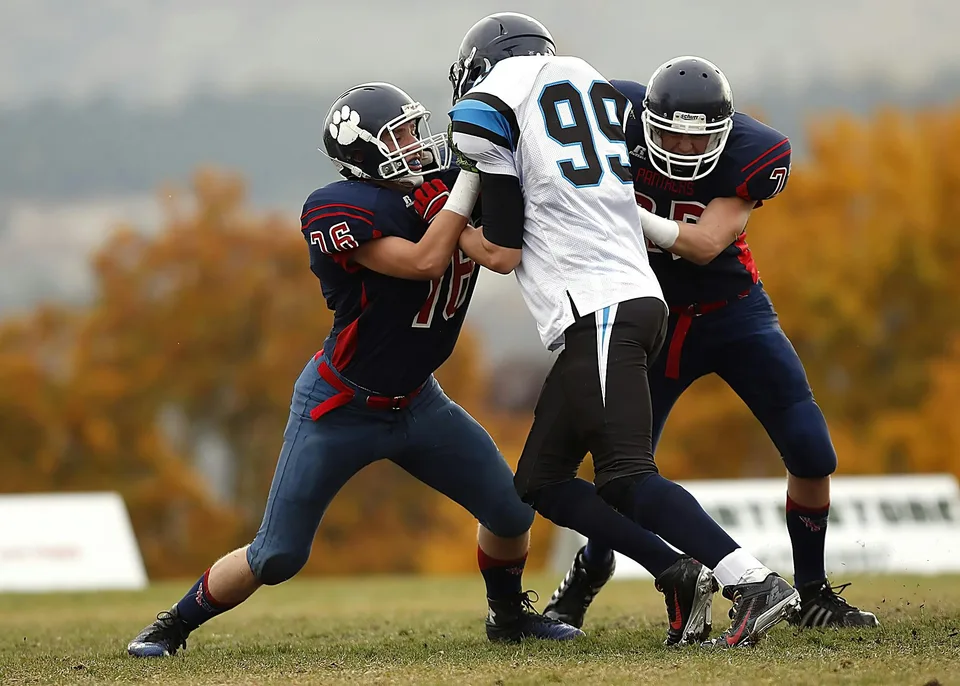
Layer 2: Q-Collar — the FDA-cleared compression device
The Q-Collar is a fabric-and-silicone neck collar with an embedded metal spring that applies gentle compression to the internal jugular veins. The mechanism: by slightly restricting venous outflow from the brain, the collar increases intracranial blood volume, which reduces the space the brain has to slosh inside the skull during an impact — the "bubble wrap" analogy the company uses.
The Q-Collar received FDA clearance in February 2021 as a Class II medical device. Clinical studies — most notably the Cincinnati Children's Hospital trial — showed reduced biomarkers of brain injury in collar wearers vs controls across a youth football season. The data is more compelling than skeptics expected, though the effect size remains debated among independent researchers.
By 2026, the Q-Collar is worn by a meaningful fraction of NFL players (publicly: 30+ players including starting quarterbacks and skill-position players), most NHL skaters at the major-team level, and a growing share of NCAA Division I football programs. The user-side cost is around $200 retail; team-level bulk pricing is materially lower. The compelling case is that it's additive — it doesn't replace anything, it stacks with the helmet and concussion protocol.
Layer 3: Baseline + post-impact cognitive testing
ImPACT (Immediate Post-Concussion Assessment and Cognitive Testing) is the cognitive baseline test most American football, hockey, and lacrosse organizations use. The athlete takes an ImPACT baseline before the season; if a head impact occurs, the athlete retakes the test and the system compares cognitive performance against the baseline to flag concussion signals. ImPACT is FDA-cleared as a medical device for concussion assessment.
The 2026 evolution is real-time AI-augmented baseline testing. SCAT-6 (Sport Concussion Assessment Tool, 6th edition) — the international consensus baseline — added neuroimaging-derived biomarker integration in its 2024 release. Several startups (notably Synaptive Medical, CN Bio, and BrainScope) ship handheld EEG-and-cognitive devices that produce a sideline-level assessment in under 10 minutes. The trend: away from paper-and-pencil baseline testing, toward continuous wearable monitoring plus on-demand sideline diagnostics.
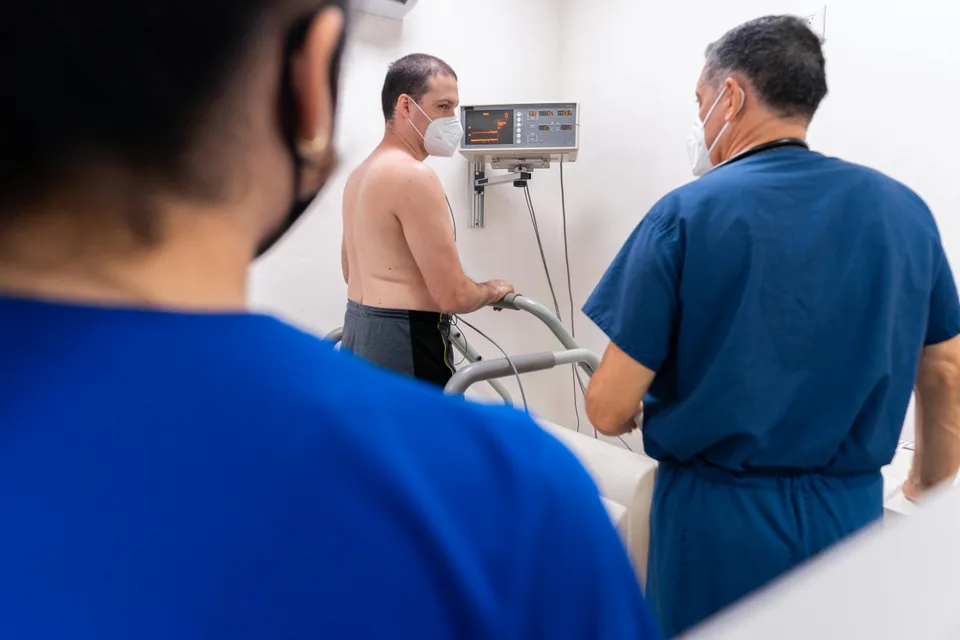
What the evidence actually supports
The honest answer in 2026: each layer has empirical support, but the gold-standard randomized-controlled trial for concussion reduction in a real-game setting does not exist for any of these technologies. The reason is unethical to randomize — you can't deliberately give one group of athletes worse protective equipment to study outcomes — so the field relies on observational and biomarker-based evidence.
The strongest evidence: better lab-test performance (NFL helmet tier) correlates with lower in-game concussion rates by approximately 30% across multi-season data. The Q-Collar trial showed reduced brain-injury biomarkers but not directly reduced clinical concussion rates. ImPACT and SCAT-6 are effective diagnostic tools, not protective ones. The combination — top-tier helmet + Q-Collar + rigorous baseline testing — is what the most safety-aware programs deploy, but the marginal contribution of each layer to the overall outcome is still being measured.
How NFL helmet rules cascade to youth football
The 2026 NFL "Not Recommended" designation matters disproportionately for youth football. Most high schools and select-level programs buy helmets that the NFL also uses; the league's lab-test rankings are the de facto national consumer guide. Within two seasons, lower-level programs are expected to phase out the now-banned models, accelerating the lifecycle on the entire installed base.
The cost issue is real. AXIOM and ZERO2 Matrix retail at $1,000–$1,500 per helmet at the consumer tier. Bulk team purchases run $600–$900. For a high-school program equipping 80–120 athletes, the equipment-replacement cost is $60,000–$110,000. Federal and state-level grant programs (notably the Heads Up Football initiative and the Concussion in Sport Act state implementations) help close the gap, but funding remains uneven across districts. The deeper pattern, similar to what we covered in athlete biometric data ownership, is that elite-pro safety infrastructure cascades down to youth sports — but the equity question of who pays for the cascade is unsettled.
The bottom line
Concussion-prevention technology in 2026 is a three-layer stack: structural (helmet), vascular (Q-Collar), and diagnostic (ImPACT/SCAT-6). No single layer is sufficient; the combined deployment is the standard of care at the NFL and top NCAA tier. The 2026 helmet-testing categorical shift is the most consequential single regulatory move in a decade — it will pull markets toward the top-performance helmets and accelerate replacement cycles. For youth and high-school programs, budget for $60,000–$110,000 in 4-year helmet-replacement cycles plus $20,000–$40,000 in Q-Collar fitting and concussion-baseline software. For governing bodies, the next decision is whether to mandate the top-tier helmet at amateur levels — the technology argues for it; the equity question argues for slower transitions paired with subsidies.
Frequently Asked Questions
Is the Q-Collar approved by the FDA?
Yes — the Q-Collar received FDA Class II medical device clearance in February 2021. It is the first device approved by the FDA specifically to help protect athletes from sport-related head impacts. Clinical trials by Cincinnati Children's Hospital and other independent researchers showed reduced biomarkers of brain injury in collar wearers compared with non-wearer controls across full football seasons.
Which football helmet is rated safest by the NFL in 2026?
The NFL's annual lab-testing protocol ranks helmets into performance tiers. As of 2026, the top tier (eligible for NFL play with no restrictions) includes Riddell AXIOM, Schutt F7 LX1, LIGHT PRO7, and Vicis ZERO2 Matrix. Helmets outside this group are flagged "Not Recommended" and prohibited from NFL play starting the 2026 season.
What is ImPACT testing and when is it used?
ImPACT (Immediate Post-Concussion Assessment and Cognitive Testing) is an FDA-cleared cognitive baseline test. Athletes complete a baseline assessment before the season measuring memory, processing speed, and visual-motor skills. After a suspected head impact, the athlete retakes the test, and the comparison flags potential concussion signs. ImPACT is used by most NFL teams, major college programs, and many high-school athletic departments as part of standard concussion protocols.
How much does a Q-Collar cost?
Consumer retail pricing for the Q-Collar is approximately $199. Team-level bulk purchases for high-school, college, and professional programs are materially lower. The collar is a one-time purchase per athlete (each is sized to the individual) with no consumables or subscription. Most insurance plans do not cover it because it is classified as protective equipment rather than therapeutic.
Do smart helmets like the Riddell AXIOM prevent concussions or just detect them?
Both, in different ways. The structural design of the AXIOM (tunable lattice liner, NFL-top-tier lab performance) provides physical concussion-impact reduction. The InSite sensor array does not prevent impacts — it detects and telemeters them to a sideline tablet, alerting trainers when an athlete absorbs an unusually severe hit so the concussion protocol can be triggered immediately. The two functions are complementary and the AXIOM is the platform for both.
Enjoying this article?
Get more strategic intelligence delivered to your inbox weekly.
Enjoyed this article?
VentureBeast.Tech is independent and reader-supported. If this saved you time, you can buy us a coffee — it keeps the research deep and the site ad-light.
Support us on Ko-fi
Comments (0)
No comments yet. Be the first to share your thoughts!