This article may contain affiliate links. We may earn a small commission at no extra cost to you if you make a purchase through these links.
Choosing the Right Agentic Design Pattern: A Decision-Tree Approach
Over-engineering agent architectures is the fastest way to kill an AI project. This 5-question decision tree helps operators choose between ReAct, Reflection, Planning, and Multi-Agent patterns for production scale.
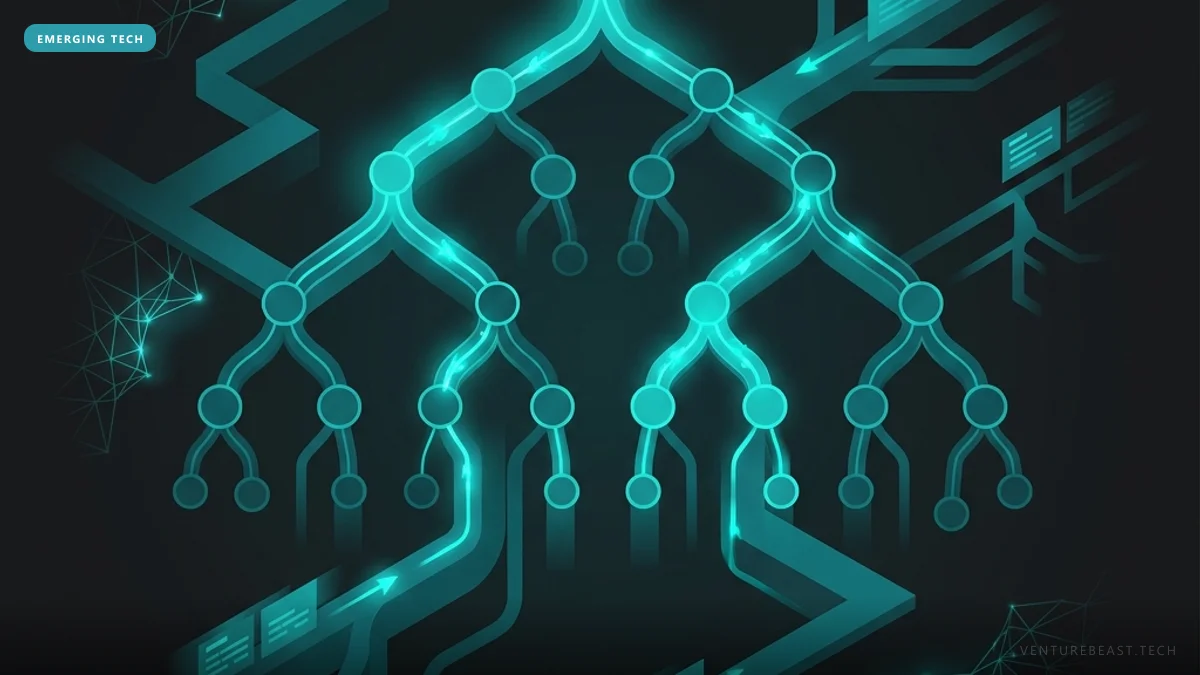
Over-engineering agent architectures is the fastest way to kill an AI project. We see it constantly: a team builds a massive multi-agent system with six different specialized personas just to summarize a PDF, resulting in an unmaintainable, slow, and fragile solution. Conversely, under-engineering leads to systems that break the moment they hit edge cases in production. The solution isn't intuition—it's a systematic approach to architecture selection.
Agentic systems have evolved past simple prompting. Today, they rely on robust architectural patterns like ReAct, Reflection, and Planning to operate autonomously. But choosing the right pattern is a critical design decision. To navigate this complexity, operators are adopting a decision-tree framework that maps specific task properties directly to the optimal agent architecture.

The 5-Question Decision Tree Framework
Before writing a single line of orchestration code in a tool like Claude Code, answer these five questions to traverse the architectural decision tree:
- Is the solution path known? If the task follows a predictable sequence, simple logic might suffice. If unpredictable, agentic reasoning is required.
- Is tool access required? Does the system need to fetch external data or interact with APIs?
- Can the task structure be articulated upfront? Tasks that can be broken down require a Planning architecture, whereas dynamic tasks benefit from ReAct.
- Does output quality outweigh speed? If yes, incorporating Reflection (self-correction loops) is mandatory.
- Does specialization necessitate a multi-agent system? If a task requires distinct skill sets (e.g., a "researcher" and a "coder"), distribute it. Otherwise, keep it single-agent.
The 4 Destination Patterns
Based on your answers to the decision tree, you will land on one of four primary agentic patterns:
1. Single Agent + ReAct
The ReAct (Reason + Act) pattern is the foundational building block for most AI agents. The agent interleaves reasoning with execution in a continuous loop, observing the results of each action before deciding what to do next. It is perfect for dynamic tasks where the agent must adapt to new information in real-time, such as navigating a new API or extracting information from a dynamic webpage.
2. Planning Agent + ReAct
When the task is complex but structured, separate the strategy from the execution. A Planning agent creates a multi-step roadmap upfront, and then delegates the individual steps to a ReAct execution loop. This prevents the agent from getting lost in the weeds on long-horizon tasks.
3. Single Agent + Reflection
When accuracy is paramount, add a Reflection layer. This meta-cognitive pattern forces the agent to critique its own output against a defined rubric, identify errors, and refine the result before returning it to the user. While it increases latency, it drastically improves reliability for tasks like code generation or data analysis.
4. Multi-Agent Specialist System
The most complex pattern, Multi-Agent systems distribute work across specialized personas. This reduces prompt complexity for any single agent and allows you to use different foundation models for different roles. As noted in our Google Gemini 3 Agent Skills strategy report, multi-agent orchestration is the future of enterprise AI, but it should only be used when a single agent cannot maintain the necessary context or skill depth.
Signals of Architectural Failure
How do you know if you've chosen the wrong pattern? Watch for these signals in production:
- Excessive looping: If your ReAct agent loops indefinitely without making progress, it likely lacks a high-level plan. You need to upgrade to Planning + ReAct.
- High latency on simple tasks: If a basic retrieval query takes 30 seconds, you might have over-engineered a Reflection or Multi-Agent system where simple RAG would work.
- Stagnant quality in Reflection: If the reflection cycles fail to improve the output, your critic prompt is too weak or the foundation model lacks the capability to self-correct.
The Bottom Line
Stop treating agent architectures as one-size-fits-all. By applying a structured decision tree to every new AI initiative, operators can match the architectural complexity to the specific demands of the task. Start with a single ReAct agent. Scale to Planning or Reflection only when you hit the limits of single-step reasoning, and reserve Multi-Agent architectures for tasks that genuinely require diverse specializations. In the era of agentic AI, the best architecture is the simplest one that consistently delivers the desired outcome.
Enjoying this article?
Get more strategic intelligence delivered to your inbox weekly.
Enjoyed this article?
VentureBeast.Tech is independent and reader-supported. If this saved you time, you can buy us a coffee — it keeps the research deep and the site ad-light.
Support us on Ko-fi

Comments (0)
No comments yet. Be the first to share your thoughts!