This article may contain affiliate links. We may earn a small commission at no extra cost to you if you make a purchase through these links.
CGMs for Fitness 2026: Lingo vs Stelo vs Levels
Lingo at $49 for 14 days. Stelo at $99 for 2 sensors. Levels at $199/mo for coaching. The data is useful for endurance athletes — and overrated for everyone else.
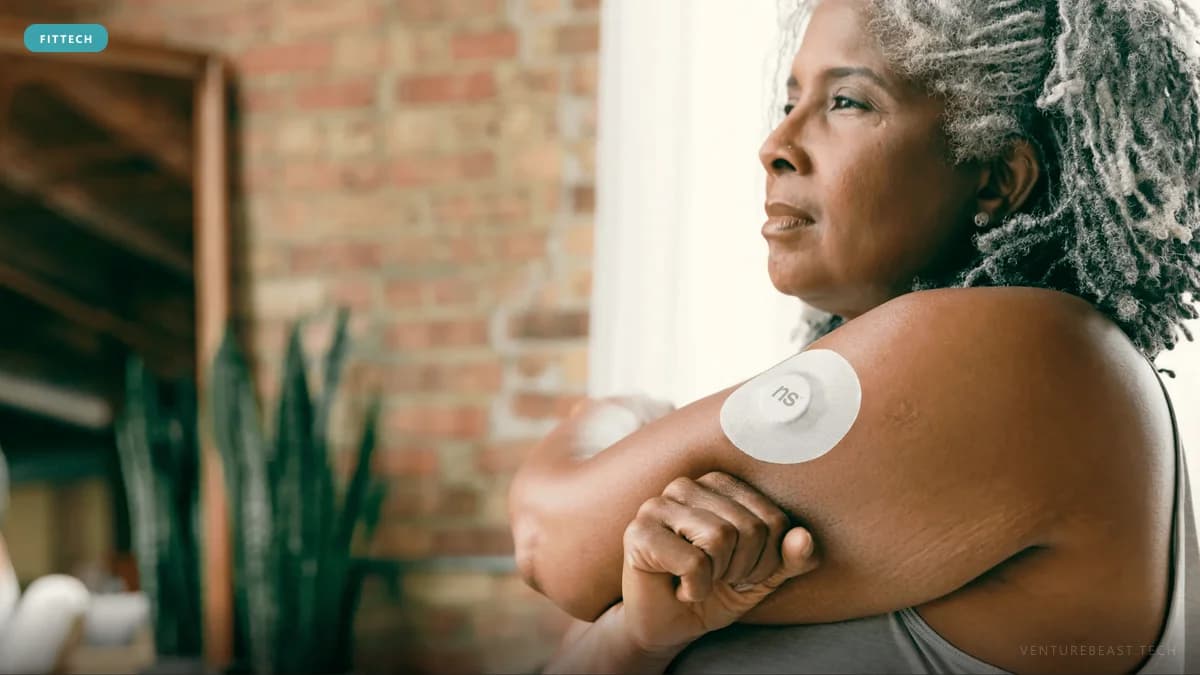
Continuous glucose monitors (CGMs) — until 2024, a prescription-only device for diabetics — became an over-the-counter consumer product. Abbott Lingo (the fitness/wellness-positioned product, $49 for 14-day single sensor) and Dexcom Stelo (the general-wellness product, $99 for two 15-day sensors) launched OTC in the U.S. in 2024–25 and now compete directly with the prescription-required, subscription-priced Levels coaching service. The fitness use case is the marketing pitch — track post-meal glucose spikes, time training to glucose response, optimize nutrition. The science is more complicated than the marketing.
Stelo's published accuracy is 93% against gold-standard laboratory blood glucose tests, a credible result for a consumer-tier product. The technology underneath both Lingo and Stelo is essentially the prescription Dexcom and FreeStyle Libre platforms, repackaged for non-diabetic users with simplified data presentation. The hardware is solved. The question is whether the data actually helps a non-diabetic athlete or general-wellness user make better decisions — and on that, the published evidence is mixed.
The three CGM products compared
| Product | Vendor | Pricing | Wear time per sensor | Marketing focus |
|---|---|---|---|---|
| Abbott Lingo | Abbott | $49 / 14 days, $89 / month, $249 / 12 weeks | 14 days | Fitness / athletic performance / nutrition optimization |
| Dexcom Stelo | Dexcom | $99 / 2× 15-day sensors, $89/mo subscription | 15 days (longest on market) | General wellness / metabolic awareness |
| Levels Health | Levels (uses Dexcom or Abbott sensors) | $199/mo membership + sensors | 10–15 days depending on sensor | Premium coaching + analytics + nutrition coaching |
Lingo's $49 single-sensor entry point is the lowest barrier in the category — a user can try CGM for 14 days for under $50 to see if the data is useful before committing to a subscription. Stelo's 15-day wear time is the longest available; the two-sensor pack at $99 gives a full month of coverage for $50/sensor. Levels is the premium tier — same underlying sensor technology, but bundled with structured nutrition coaching and deeper analytics for users willing to pay roughly 4× the hardware-only cost.
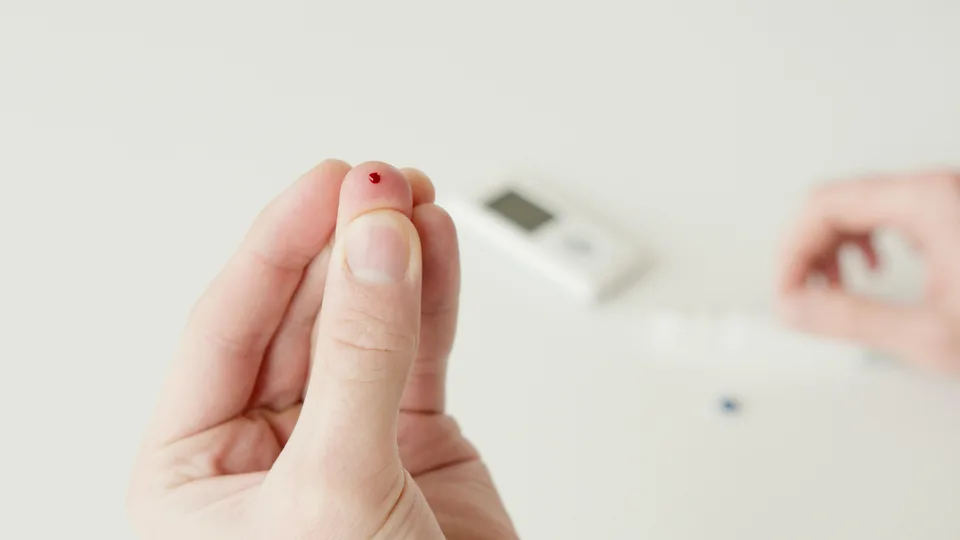
What the data actually shows in a non-diabetic user
Three findings consistently emerge from a 2-week CGM trial in a healthy non-diabetic user:
- Post-meal glucose spikes are highly individualized. The same meal — say, a banana and oatmeal — can produce a spike to 160 mg/dL in one user and 110 mg/dL in another. The personal-response variability is real, and identifying which foods spike your particular metabolism is the most useful single output of a 2-week CGM trial.
- Pre-workout fueling and post-workout recovery patterns become visible. An athlete who chronically bonks during long efforts can use CGM data to identify whether glycogen depletion or insulin-response mismanagement is the cause. A user who feels sluggish 90 minutes after meals can identify whether reactive hypoglycemia (sudden drop) is happening.
- Sleep and stress effects on glucose are surprisingly large. Cortisol from poor sleep or psychological stress raises baseline glucose. Most users see overnight glucose patterns shift meaningfully with sleep restriction — providing a more visceral feedback loop than the abstract recovery metrics in recovery wearables.
What the data does not support in the published evidence:
- "Glucose stability optimization improves general athletic performance" — the published evidence in non-diabetic athletes is weak. Some elite endurance athletes use CGM in race conditions, but the population-level performance benefit hasn't been demonstrated.
- "CGM identifies pre-diabetic risk in low-risk populations" — possibly, but a one-time HbA1c blood test at an annual physical is more reliable than CGM trends for this specific use.
- "Glucose 'spikes' are inherently bad" — within normal-physiological ranges (post-meal peak under 180 mg/dL in non-diabetics), some glucose excursion is normal and not concerning. The CGM-marketing tendency to alarm-state every spike over 140 is medically unsupported.

Who should actually use a CGM
- Endurance athletes managing race-day or long-training-day fueling: Yes — the data is genuinely useful for tuning glycogen-depletion timing and post-effort recovery. Lingo's fitness positioning is appropriate here.
- Users with metabolic syndrome risk factors (waist circumference, family history of T2D, elevated HbA1c near pre-diabetic threshold): Yes — CGM is more sensitive to glucose-handling abnormalities than periodic blood tests. Stelo is appropriate; consult a physician for interpretation.
- Users curious about how their body responds to specific foods: Yes, for a 2–4 week trial. After that, the marginal information is low.
- Healthy non-diabetic users with no specific use case: Probably not. The data is interesting for two weeks, then becomes background noise. The cost (~$50–$90/month sustained) is not justified by the actionability of the data.
- Users prone to eating-disorder behavior or excessive food-monitoring anxiety: No. The constant glucose-trace feedback can amplify disordered eating patterns. The medical community has raised legitimate concerns about CGM use in this population.
The Levels Health premium tier
Levels charges $199/month for a coaching-and-analytics layer on top of the same underlying CGM hardware. The product includes structured nutrition coaching, a more sophisticated analytics dashboard, and deeper interpretation of glucose-response patterns. For users who want a guided introduction to the data — and especially for users who would otherwise need to figure out interpretation alone — Levels' coaching adds real value.
The pragmatic question is whether the coaching is worth 2–4× the hardware-only cost. For nutrition-anxious or time-poor users who want a structured 90-day experience that produces specific dietary recommendations, Levels can be worth it. For self-directed athletes and metabolically-literate users, the raw Stelo or Lingo data plus an iOS app and some self-study delivers most of the value at a fraction of the cost.
The broader context, as covered in our HRV training analysis and recovery wearables tested, is that consumer biometric data is reaching the point where serious users can self-direct interpretation. The coaching tier becomes optional rather than required for sophisticated buyers, while the entry-level products serve curious users.
The bottom line
OTC CGMs are a real product category in 2026 — Lingo for fitness-focused users, Stelo for general wellness, Levels for coaching-supported deep dives. The data is genuinely useful for endurance athletes, users with metabolic-syndrome risk factors, and short-term curiosity trials. The data is largely not useful as a chronic-use product for healthy non-diabetic users with no specific question to answer. Run a 2–4 week trial; if the data hasn't surfaced an actionable pattern by then, the chronic-use cost isn't justified. Save the spend for a wearable that produces continuously actionable data.
Frequently Asked Questions
Do I need a prescription for Lingo or Stelo?
No — both Abbott Lingo and Dexcom Stelo received FDA over-the-counter clearance in 2024–25 and are sold without a prescription in the U.S. Both are marketed for non-diabetic users interested in general metabolic awareness or fitness optimization, not for diabetes management. Diabetic users requiring CGM for clinical care still need prescription Dexcom G7 or FreeStyle Libre 3 systems.
How accurate is the Dexcom Stelo CGM?
Stelo's published accuracy is 93% against gold-standard laboratory blood glucose tests. This is credible for a consumer-tier OTC device. Prescription CGMs targeting diagnosed diabetics (Dexcom G7, FreeStyle Libre 3) target slightly higher accuracy because their data drives insulin-dosing decisions. For non-diabetic awareness use, 93% accuracy is fully sufficient.
What is the difference between Lingo and Stelo?
Both use similar underlying biosensor technology (Lingo from Abbott's FreeStyle Libre platform, Stelo from Dexcom's CGM platform). Lingo is marketed for fitness, athletic performance, and nutrition optimization; Stelo is marketed for general wellness and metabolic awareness. Stelo's 15-day per-sensor wear time is longer than Lingo's 14 days. Pricing is similar at roughly $50 per sensor. The choice often comes down to ecosystem preference and which mobile-app interface the user prefers.
Will a CGM help me lose weight?
Possibly, indirectly. CGM data can identify which specific foods spike your individual glucose, which can inform dietary choices. For users motivated to act on the data (substituting low-glycemic options, timing meals around exercise, reducing late-evening eating), 2–4 weeks of CGM monitoring can produce real dietary behavior change that contributes to weight loss. The CGM itself doesn't produce weight loss; the behavior change it enables can. Use it as a 2–4 week tool, not as a chronic monitoring solution.
Are there risks to wearing a CGM as a non-diabetic?
The physical risks are minimal — minor skin irritation at the sensor site is the most common complaint. The behavioral risk is real for users prone to disordered eating or food-monitoring anxiety — the constant glucose feedback can amplify those patterns. Medical professionals working in eating-disorder treatment have raised concerns about consumer CGM marketing to populations not appropriately screened for these risks. If you've struggled with disordered eating, consult a clinician before starting CGM monitoring.
Enjoying this article?
Get more strategic intelligence delivered to your inbox weekly.
Enjoyed this article?
VentureBeast.Tech is independent and reader-supported. If this saved you time, you can buy us a coffee — it keeps the research deep and the site ad-light.
Support us on Ko-fi
Comments (0)
No comments yet. Be the first to share your thoughts!