This article may contain affiliate links. We may earn a small commission at no extra cost to you if you make a purchase through these links.
VO2 Max at Home 2026: Apple, Garmin, Whoop Accuracy
Garmin's Firstbeat algorithm wins at 5.7% MAPE. Apple Watch is 13.31% off. None of the wearables direct-measure VO2 — get a lab test for absolute truth.
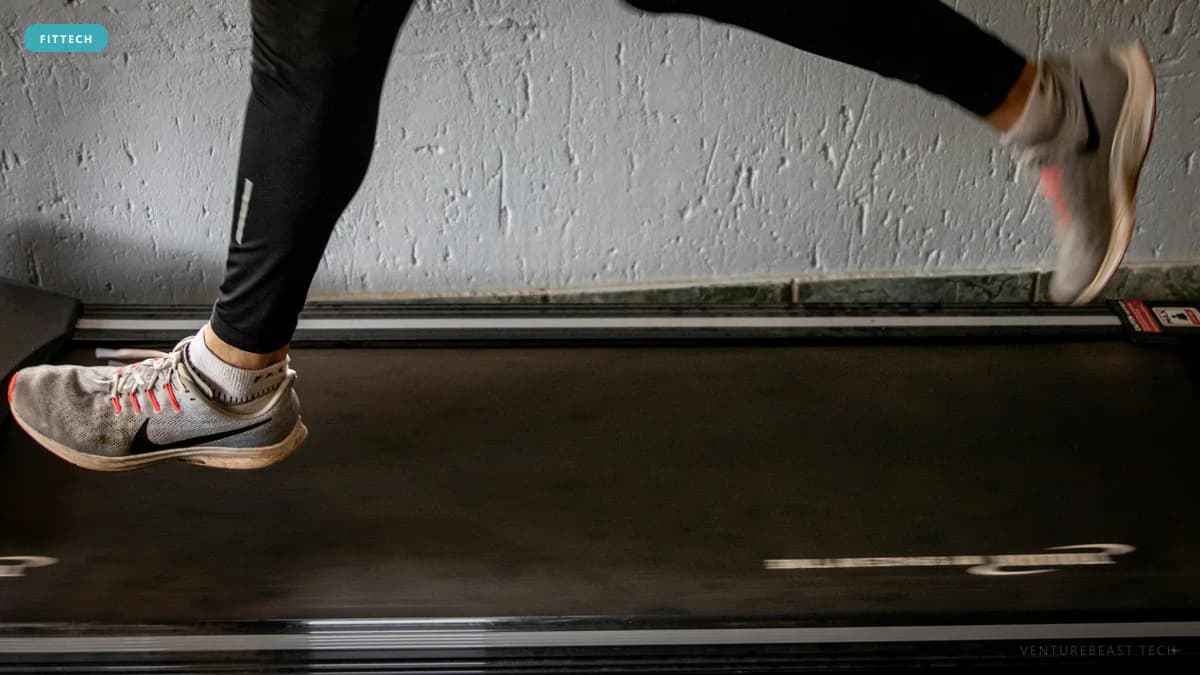
VO2 max — the maximum volume of oxygen your body can deliver and use during exercise — is the gold standard cardiorespiratory fitness metric and, separately, one of the strongest single predictors of all-cause mortality at the population level. Every major consumer wearable now estimates it. Garmin's Firstbeat Analytics is the most accurate single-device estimate (mean absolute percentage error ~5.7%); Whoop claims within 3.3–3.7 ml/kg/min of laboratory values; Apple Watch's 2024 published MAPE is 13.31% (with a tendency to underestimate). For tracking changes in fitness, all three are useful. For knowing your absolute VO2 max, only laboratory testing tells the truth.
The 2024–25 wave of independent validation studies clarified what wearables can and cannot do for VO2 max. The headline finding: all consumer wearables systematically underestimate VO2 max in highly fit individuals, because the underlying algorithms are trained on broader populations and the models compress accuracy at the upper end of the fitness distribution. For a sedentary or moderately active person, wearable estimates are usefully accurate; for an elite or sub-elite endurance athlete, the wearable number is meaningfully lower than the lab reading.
How wearables actually estimate VO2 max
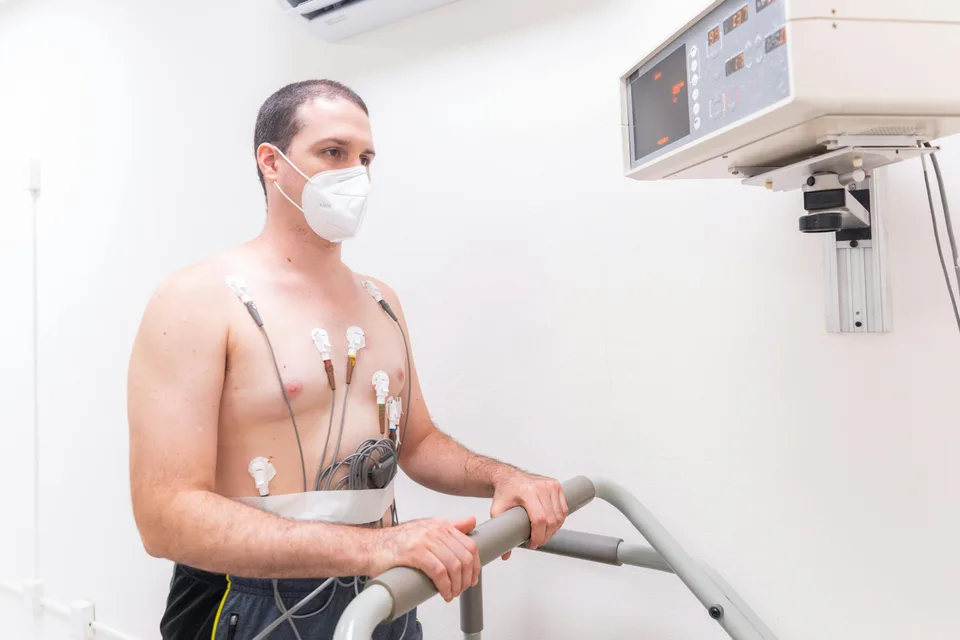
Direct VO2 max measurement requires a metabolic cart — a face mask that measures inhaled and exhaled gas concentrations during a progressive exercise-to-exhaustion test, typically on a treadmill or cycle ergometer. The clinical-grade equipment (ParvoMedics TrueOne, Cosmed K5, Vyaire Vyntus CPX) costs $20,000–$60,000 and requires trained operators. The output is a direct measurement, not an estimate.
Consumer wearables don't measure oxygen consumption. They estimate VO2 max from indirect inputs:
- Heart rate during steady-state running or cycling. The relationship between submaximal heart rate at a known pace and VO2 max is well-established in exercise physiology — Firstbeat Analytics (now Garmin-owned) has been refining this approach since the 2000s.
- Pace, GPS data, and elevation profile. Outdoor runs with GPS pace data provide better VO2 max signal than treadmill runs because pace is verifiable.
- Anthropometric inputs. Age, sex, weight, and (optionally) self-reported activity level adjust the baseline.
- Demographic priors. Population-distribution priors are applied so the estimate falls within plausible ranges for someone of your demographics.
The accuracy ranking flows from how cleanly the inputs are captured. Garmin's Firstbeat algorithm is the best of the consumer category because it specifically requires outdoor GPS-paced runs with sustained heart-rate data — clean inputs produce a cleaner estimate.
The 2024–25 validation evidence
| Device | Mean Absolute Percentage Error (MAPE) | Bias direction | Notes |
|---|---|---|---|
| Garmin Firstbeat | ~5.7% | Slight underestimation in highly fit | Requires outdoor GPS run; best consumer estimate |
| Whoop 4.0 | 3.3–3.7 ml/kg/min absolute error | Underestimation in fit, possible overestimation in sedentary | Vendor-published; less independent validation |
| Apple Watch (Series 9+) | 13.31% | Underestimates by ~6.07 ml/kg/min | Most validation data; sufficient for tracking change, weak on absolute |
The pragmatic interpretation: for tracking direction-of-change over weeks and months, all three are useful. For benchmarking against published age-normative tables ("am I above-average for my age?"), all three are useful but with the underestimation caveat for highly fit users. For making absolute training-zone or maximum-heart-rate decisions, none of them is sufficient — get a lab test.
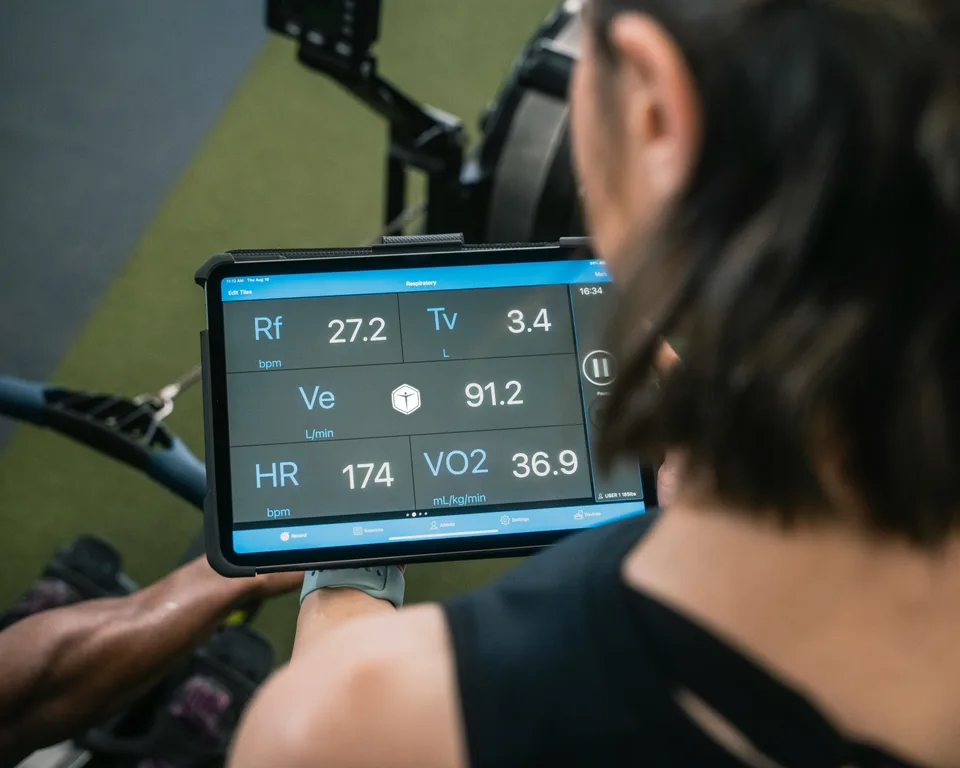
The home metabolic-cart category — VO2 Master, PNOĒ, et al.
A new product category emerged in 2023–25: portable metabolic carts marketed for at-home VO2 testing. VO2 Master ($2,799 hardware) and PNOĒ ($1,200–$3,000 depending on tier) are the leading consumer-accessible products. Both use breath-by-breath gas analysis — actual VO2 measurement, not estimation — and produce reports comparable to clinical-grade equipment within 3–5% accuracy.
The use case is real for serious athletes, sports-medicine practices, and corporate-wellness programs. The cost is real too — the hardware investment is non-trivial, and operating the device correctly requires understanding of test protocols (ramp test, step test, sport-specific protocol). For most users, a one-time lab test at a sports-performance facility ($150–$400) is more cost-effective than buying a metabolic cart.
What VO2 max actually tells you
The metric has three legitimate uses for consumer athletes:
- Health-population benchmarking. VO2 max correlates strongly with all-cause mortality risk — a 2018 JAMA study showed VO2 max ranks alongside smoking and diabetes as a mortality predictor. For users who want a single health-relevant fitness number, VO2 max is the strongest single metric.
- Training-progress tracking. Improvement over weeks and months reflects real cardiovascular adaptation. The 2–5 ml/kg/min improvement most users can expect from a structured 12-week training program is detectable by all three consumer wearables.
- Setting training zones. Once you know your true VO2 max (lab or metabolic-cart), heart-rate-based and pace-based training zones can be calibrated more accurately than the standard age-based formulas. This is most useful for serious endurance training and structured periodization.
The metric has one big limitation: VO2 max is heavily genetic. Individual variation in achievable VO2 max ranges from 35 to 90+ ml/kg/min in healthy populations, and trainability (the amount you can improve through training) also varies genetically. A user with a baseline VO2 max of 35 can train into the 45–50 range; a user with a baseline of 55 can train into the 65–70 range. Comparing your number to other users is less useful than comparing your number to your own past number.
What to actually use
- Casual user, tracking general fitness trend: Whatever wearable you already own. Apple Watch is fine for tracking direction-of-change; absolute number is approximate.
- Serious athlete, need accurate baseline: Garmin watch + outdoor GPS-paced runs. Or pay $150–$400 for a one-time lab VO2 max test.
- Endurance athlete, regular periodization: Annual or biannual lab test combined with Garmin tracking between tests. The annual lab test sets the calibration; the wearable tracks the trend.
- Sports-performance practice or corporate wellness: Portable metabolic cart (VO2 Master, PNOĒ) makes economic sense at multi-user scale.
The broader fitness-tech context, as covered in our analyses of HRV training and recovery wearables tested, is that consumer wearables have largely solved the "accurate enough for tracking change" problem and the remaining edge cases are about absolute clinical-grade measurement. For most users, wearable estimation is sufficient; for the long-tail of edge cases, lab testing fills the gap.
The bottom line
Consumer wearable VO2 max estimates are useful for tracking fitness change over time, but they systematically underestimate VO2 max in highly fit individuals. Garmin's Firstbeat is the most accurate consumer estimate (MAPE ~5.7%); Whoop is close behind; Apple Watch trails at 13.31% but is sufficient for most tracking purposes. For absolute accuracy, a lab VO2 max test or a portable metabolic cart is the answer — the wearable estimate is not. Take the wearable number as a relative signal, not an absolute truth.
Frequently Asked Questions
Which wearable estimates VO2 max most accurately?
Garmin's Firstbeat Analytics algorithm has the best published accuracy among major consumer wearables, with a mean absolute percentage error of approximately 5.7% in independent validation studies. Whoop's published accuracy is similar (absolute error 3.3–3.7 ml/kg/min). Apple Watch's published MAPE is 13.31%, with a tendency to underestimate by ~6 ml/kg/min — sufficient for tracking change, less accurate for absolute values.
What is a good VO2 max for my age?
Age-normative ranges vary by gender. For men 30–39: below 30 ml/kg/min is "poor," 30–37 is "fair," 38–45 is "good," 46–55 is "very good," and above 55 is "excellent." For women 30–39: below 25 is "poor," 25–31 is "fair," 32–38 is "good," 39–45 is "very good," above 45 is "excellent." Elite endurance athletes regularly score 65–85+ for men and 55–75+ for women.
Can I measure VO2 max at home accurately?
Yes, but it requires either a portable metabolic cart (VO2 Master $2,799, PNOĒ $1,200–$3,000) or a lab visit. Consumer wearables estimate VO2 max from indirect inputs — they don't directly measure oxygen consumption and can't be considered "accurate" in the clinical sense. For most users, a one-time lab test ($150–$400) is more cost-effective than home-metabolic-cart hardware. The wearable is for tracking the trend between lab tests.
How long does it take to improve VO2 max?
Most users can expect 5–15% improvement over 12 weeks of structured endurance training, which translates to roughly 2–7 ml/kg/min in absolute terms. The improvement is fastest in the first 8 weeks and slows after that. Genetic variation matters — some individuals are "high responders" who gain 15–25%; others are "low responders" with only 3–5% improvement. Both Garmin and Whoop will detect improvements in this range.
Does losing weight improve VO2 max?
Yes, mechanically — VO2 max is expressed as ml of oxygen per kilogram of body weight per minute (ml/kg/min), so losing weight increases the number even without changes to cardiovascular conditioning. This is a real effect for users carrying excess body weight. For users at normal weight, additional weight loss provides smaller VO2 max gains and may compromise other performance metrics. The cardiovascular gains from endurance training are independent of weight loss and persist regardless of body composition.
Enjoying this article?
Get more strategic intelligence delivered to your inbox weekly.
Enjoyed this article?
VentureBeast.Tech is independent and reader-supported. If this saved you time, you can buy us a coffee — it keeps the research deep and the site ad-light.
Support us on Ko-fi


Comments (0)
No comments yet. Be the first to share your thoughts!