This article may contain affiliate links. We may earn a small commission at no extra cost to you if you make a purchase through these links.
Unitree's IPO Pop and the Humanoid Bubble Test
Unitree closed its Shanghai debut up 460% at a 342 billion yuan valuation. Its prospectus shows why that price runs ahead of what humanoids earn.

Unitree Robotics' Shanghai debut priced the company as if humanoid robots were already a mass-market business. They are not yet. On August 19, 2026, the shares closed 460% above their 150.80-yuan IPO price, valuing Unitree at roughly 342 billion yuan. By our math that is about 200 times its 2025 revenue and more than 1,200 times its reported 2025 net profit. The market is paying today for demand that Unitree's own prospectus has not yet shown.
That does not make Unitree a bad company. It is profitable, fast-growing and, with AGIBOT, one of the two biggest humanoid shippers by units. But the IPO turned one private-market question into a public one that anyone can check: how much of the humanoid story is revenue, and how much is hope? Unitree is now one of the few humanoid makers whose numbers and share price the public can see side by side. Figure is still private, and Tesla has not yet started Optimus production. So Unitree has become a public price check for the sector.
What happened on Unitree's first day of trading?
Unitree sold 40.45 million new shares, 10% of its enlarged share capital, at 150.80 yuan each and raised about 6.1 billion yuan, according to China Daily, republished by the Shanghai Stock Exchange, and the South China Morning Post. The Associated Press put the raise at about $904 million. At the IPO price the company was valued at about 61 billion yuan.
The stock opened at 1,100 yuan, 629% above the offer price, which briefly valued Unitree at about 445 billion yuan ($66 billion), the SCMP reported. It then fell back during the session and closed at 845 yuan, up 460%, for a market value of 342 billion yuan. Quartz reported the same price, the same 460% close and a market value of roughly $50 billion. The Associated Press, via BNN Bloomberg, also reported the 629% intraday jump and the 460% close.
Two pieces of context keep the jump in proportion. First, big first-day gains are normal in China: Quartz reported that the average opening-day gain for new Chinese listings in 2026 was 279%, and that memory chipmaker CXMT rose 466% on its own debut a month earlier. Second, the jump did not last. According to 36Kr, the stock closed at 687 yuan on August 20, 672.41 yuan on August 21 and 603.08 yuan on August 24, for a market value of about 243.9 billion yuan. That is still four times the IPO valuation.

What do Unitree's fundamentals actually show?
The prospectus shows real growth and real profit, which most humanoid startups cannot claim. According to China Daily's summary of the filing, Unitree's revenue grew from 159.13 million yuan in 2023 to 392.77 million yuan in 2024, then to 1.70 billion yuan in 2025. Net profit in 2025 was 278.21 million yuan, and adjusted net profit was 590.75 million yuan. Quartz reported the same revenue and net-profit figures. Overseas customers made up 43.65% of main-business revenue in 2025.
Unitree's humanoid shipments exceeded 5,500 units in 2025, excluding wheeled dual-arm robots, according to China Daily. The same summary says Unitree sold 5,632 humanoids and 33,294 four-legged robots from 2023 to 2025. Shipments and sales are counted separately, which is why those two humanoid figures do not add up neatly. Inside Deep Tech's reading of the filing puts humanoid gross margins at 62.42% in the first half of 2025 and 63.91% in the third quarter. Those margins are high for hardware.
Look at who is buying, though, and the story changes. Here is how Unitree's humanoid revenue split by application in the first nine months of 2025:
- Research and education customers made up 73.60% of humanoid revenue (438.07 million yuan), according to Inside Deep Tech's breakdown of the filing.
- Commercial and consumer uses made up 17.39%.
- Industrial applications made up 9.01%. Inside Deep Tech reports that corporate guided tours accounted for roughly 50% to 70% of that industrial slice. 36Kr puts humanoid sales for smart manufacturing, inspection and logistics at just 15.702 million yuan over the same nine months.
Prices are also falling quickly. Unitree's average humanoid selling price went from 593,400 yuan in 2023 (five units) to 260,700 yuan in 2024 (410 units), then to 167,600 yuan in the first nine months of 2025 (3,551 units), according to Inside Deep Tech's figures from the filing. By our calculation, that is a 36% drop from the 2024 average. Falling prices are how a market grows, but they mean unit sales have to grow faster than prices fall just to keep revenue climbing.
The latest numbers point the same way. 36Kr reports that Unitree's first-half 2026 revenue rose 48.54% to 1.152 billion yuan, while adjusted net profit fell 19.34% to 244 million yuan. That is a big slowdown from the more-than-300% revenue growth of 2025, and profit is now falling, all before the listing.
How expensive is Unitree compared with its earnings?
These are our own calculations from the reported market values and the 2025 prospectus figures. They are rough multiples, not a valuation model.
| Price point | Market value | Price / 2025 revenue (1.70bn yuan) | Price / 2025 adjusted net profit (590.75m yuan) | Price / 2025 reported net profit (278.21m yuan) |
|---|---|---|---|---|
| IPO price (150.80 yuan) | ~61bn yuan | ~36x | ~103x | ~219x |
| Aug 19 close (845 yuan) | 342bn yuan | ~201x | ~579x | ~1,229x |
| Aug 24 close (603.08 yuan, per 36Kr) | ~243.9bn yuan | ~143x | ~413x | ~877x |
The IPO price was already expensive: about 100 times adjusted earnings for a company whose humanoid customers are mostly universities and labs. Most of the first-day gain rests on one assumption: that research robots will turn into robots doing factory and service work, at far higher volumes, while margins hold. None of that is impossible. None of it appears in the filing yet.
How does Unitree compare with Figure and Tesla Optimus?
Unitree's listing gives public investors a price to compare with the two most-watched Western humanoid programs. As of September 2026, the three stand like this:
| Unitree Robotics | Figure | Tesla Optimus | |
|---|---|---|---|
| Status | Listed on Shanghai's STAR Market since Aug 19, 2026 | Private | Program inside Tesla (not valued on its own) |
| Latest valuation | 342bn yuan at first-day close (~$50bn per Quartz) | $39bn post-money (Series C, Sept 2025) | No separate figure |
| 2025 humanoid shipments | More than 5,500 (prospectus) | Not disclosed | Production not yet started |
| Public financials | Revenue 1.70bn yuan; net profit 278.21m yuan (2025) | None | No Optimus-specific figures |
| Production status | Shipping in volume, mostly to research buyers | Ramping Figure 03 production (company update, April 2026) | Fremont lines being installed; production "anticipated later this year" |
Figure. Figure's Series C announcement (September 16, 2025) reported more than $1 billion in committed capital at a $39 billion post-money valuation. The company said the money would go toward expanding humanoid production and deployments, GPU infrastructure for its Helix AI system, and collecting human video data. We found no newer priced round confirmed by Figure. On the first-day close, then, the public market valued Unitree above Figure's last private price. Fortune made the same comparison. But Figure has no public financials, so this is not a like-for-like comparison. A private price is set by a handful of investors in a negotiated round. A public price is set by whoever trades that day.
Tesla Optimus. Tesla's Q2 2026 shareholder update says Tesla has "decommissioned the manufacturing lines for Models S & X at our Fremont Factory and are installing the first-generation lines for Optimus, where we expect to start production soon." It adds that "the initial Optimus builds will be used in our Optimus Academy for training data collection and further functionality development," and gives production as "anticipated later this year." That date keeps moving. Electrek reported that in April, Elon Musk pointed to a late-July or August start at Fremont. It also reported that Musk had predicted "roughly 10,000" Optimus robots for 2025, a target Tesla did not meet.
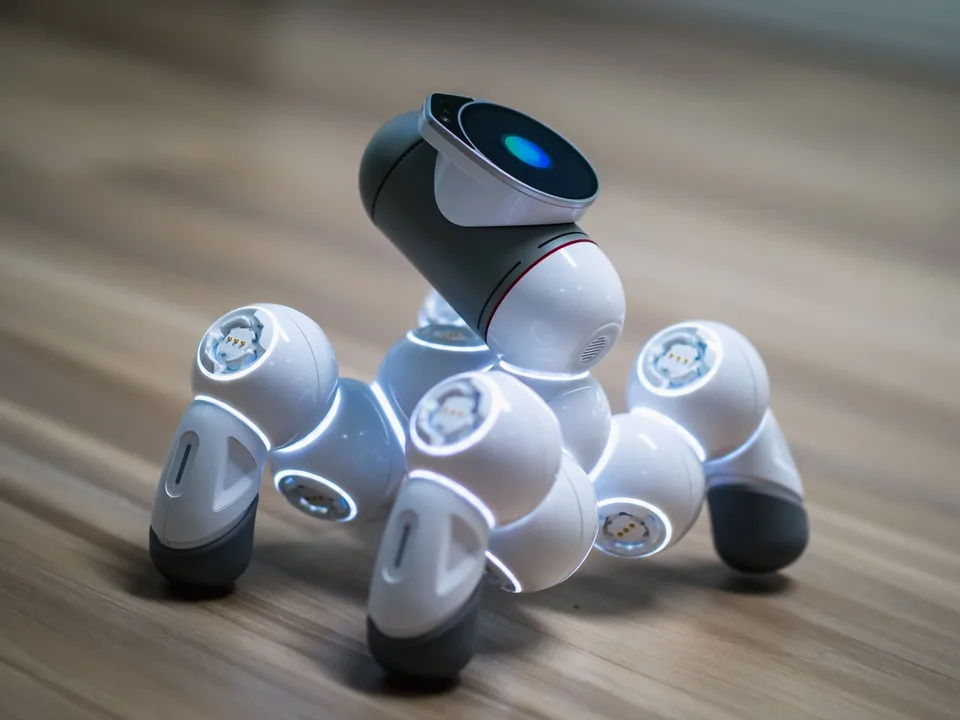
Put side by side, the gap is clear. Unitree is the only one of the three with disclosed humanoid sales in the thousands and audited profits, and it still trades at a multiple that assumes it will become something much bigger. For a broader look at how these programs differ technically, see our comparison of Figure, Optimus and Unitree.
Is public-market humanoid pricing ahead of the technology?
Yes, on current evidence. There are three reasons.
- The buyers are mostly not yet industrial. About three-quarters of Unitree's humanoid revenue in the first nine months of 2025 came from research and education. Corporate tours make up much of the industrial slice. A humanoid that walks a visitor through a showroom is a product, but it is not the labor-replacement market the valuation needs.
- Getting the robots to be useful is still unsolved. Fortune quoted HSBC warning that "the surge in shipments for robot makers could be illusionary" without big improvements in robot AI. Tesla's own plan points the same way: its first Optimus units will collect training data, not work on a line.
- The stock is scarce, and scarcity sets the price. Unitree floated only 10% of its shares, into a market where large debut gains are normal. Quartz quoted William Xin of Spring Mountain Pu Jiang Investment Management: "At this early stage of competition, whoever gets listed and has visibility can grab the resources and have staying power." That explains the price as a race for capital, not as a verdict on the robots.
The case for the other side is real. The Associated Press reported that Unitree and AGIBOT each shipped more than 5,000 humanoids last year, out of roughly 15,000 worldwide, and that Chinese humanoid shipments reached about 18,500 units in the first half of 2026. Volume is compounding in China, with Unitree near the front. Morningstar's Kangyuxiao Li wrote in a commentary cited by AP that the real test is whether companies "can achieve reliable performance and attractive returns on investment in large-scale industrial and commercial deployments." Unitree is already profitable as a company. What it has not yet shown is that its robots perform reliably and pay off for customers in large deployments outside a lab.
What should operators and investors watch next?
- Industrial revenue share. If humanoid sales to manufacturing, inspection and logistics move from single digits toward a large share of humanoid revenue, the valuation starts to make sense. If research customers still dominate in 2027, it does not.
- Average selling price against volume. Watch whether unit growth outruns the drop in price per robot. The first-half 2026 figures reported by 36Kr, with revenue up 48.54% and adjusted profit down, suggest it currently does not.
- Tesla's first Optimus production. The first confirmed units off the Fremont line, and what they are used for, will be the clearest sign of whether a Western rival can reach Unitree's volume.
- Figure's next priced round or listing. A new private price after Unitree's debut will show whether private investors follow the public market up or hold back.
For teams deciding whether to buy humanoids, the takeaway is simpler: the hardware is getting cheaper faster than its uses are growing. Pilot on narrow, measurable tasks, and do not treat a stock price as proof that the robots are ready. The same pattern of spending ahead of proven returns runs through Tesla's AI bets; see our analysis of why Tesla shut down Dojo.
Frequently Asked Questions
How much did Unitree raise in its IPO?
Unitree sold 40.45 million shares at 150.80 yuan each on Shanghai's STAR Market and raised about 6.1 billion yuan, according to China Daily and the South China Morning Post. The Associated Press put that at roughly $904 million. The offering was 10% of the enlarged share capital and valued the company at about 61 billion yuan at the IPO price.
How much did Unitree stock rise on its first day?
The shares opened 629% above the IPO price at 1,100 yuan on August 19, 2026, then fell back during the session to close at 845 yuan, up 460%. The close gave Unitree a market value of about 342 billion yuan, according to the SCMP and Quartz. The stock then fell over the next few trading days.
Is Unitree profitable?
Yes. Its prospectus, as summarized by China Daily and Quartz, shows 2025 net profit of 278.21 million yuan on revenue of 1.70 billion yuan, with adjusted net profit of 590.75 million yuan. 36Kr reports that adjusted profit fell 19.34% year over year in the first half of 2026, even as revenue grew 48.54%.
Is Unitree worth more than Figure?
At its first-day close, Unitree's public market value of roughly $50 billion was above Figure's $39 billion post-money valuation from its September 2025 Series C. The two numbers are not directly comparable. Unitree's price is set by daily public trading and backed by published financials. Figure's comes from a negotiated private round, and the company discloses no revenue.
Has Tesla started producing Optimus?
Not as of its Q2 2026 shareholder update. Tesla said it had removed the Model S and X lines at Fremont, was installing first-generation Optimus lines, and expected production "later this year." The first units are meant for Tesla's internal "Optimus Academy" to collect training data, not for customers.
Enjoying this article?
Get more strategic intelligence delivered to your inbox weekly.
Enjoyed this article?
VentureBeast.Tech is independent and reader-supported. If this saved you time, you can buy us a coffee — it keeps the research deep and the site ad-light.
Support us on Ko-fi


Comments (0)
No comments yet. Be the first to share your thoughts!