This article may contain affiliate links. We may earn a small commission at no extra cost to you if you make a purchase through these links.
Meta Muse Review: How It Stacks Up to OpenClaw, Manus, Grok
Meta's free Muse agent hit No. 1 on the App Store in days. What it really does, where it falls short, and how it compares to OpenClaw, Manus and Grok Bot.

Meta Muse is a free personal AI agent that runs on its own cloud computer and does errands for you: it books, fills out forms, emails and shops, asking for your approval before anything sensitive. It is the most polished consumer agent released so far, and the easiest to start using. It is not the most capable one, and it comes from the company with the weakest privacy record in the category. That trade-off is the whole story.
As of September 2026, Muse sits in the same space as three agents people keep comparing it to: OpenClaw, the open-source agent you run yourself; Manus, the general-purpose cloud agent Meta tried to buy; and Grok Bot, the "AI teammate" from xAI. Our verdict: Muse is the right first agent for most people, but only if you keep what you connect to it deliberately small.
What is Meta Muse?
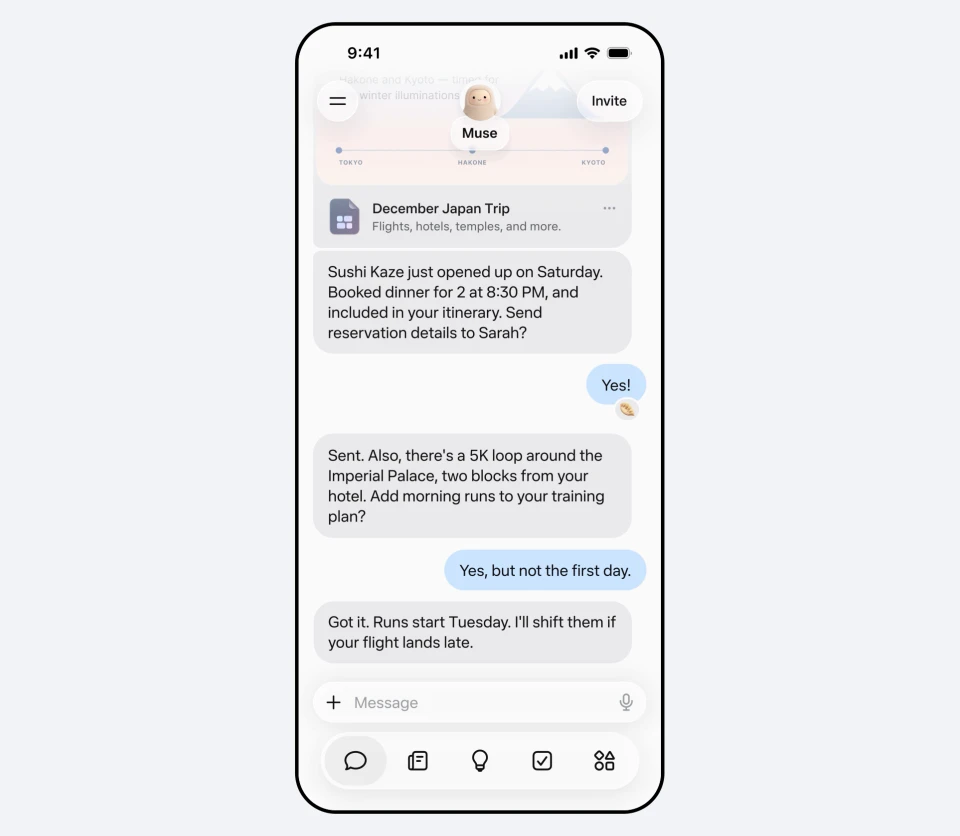
Meta launched Muse on September 8, 2026, on the web at muse.ai, on iOS and Android, and inside WhatsApp, starting in the US. Meta's announcement calls it a personal agent that "proactively helps with people's goals." In practice, it is a chat app that can act for you. You ask, and it plans the task, opens its own browser, and works through it.
Tasks Meta lists at launch include:
- Writing and sending email, and turning a thread into a plan
- Booking travel and restaurant reservations
- Filling out web forms
- Negotiating a vehicle purchase and trying to lower recurring bills
- Adjusting a training plan, and turning saved recipes into a grocery list
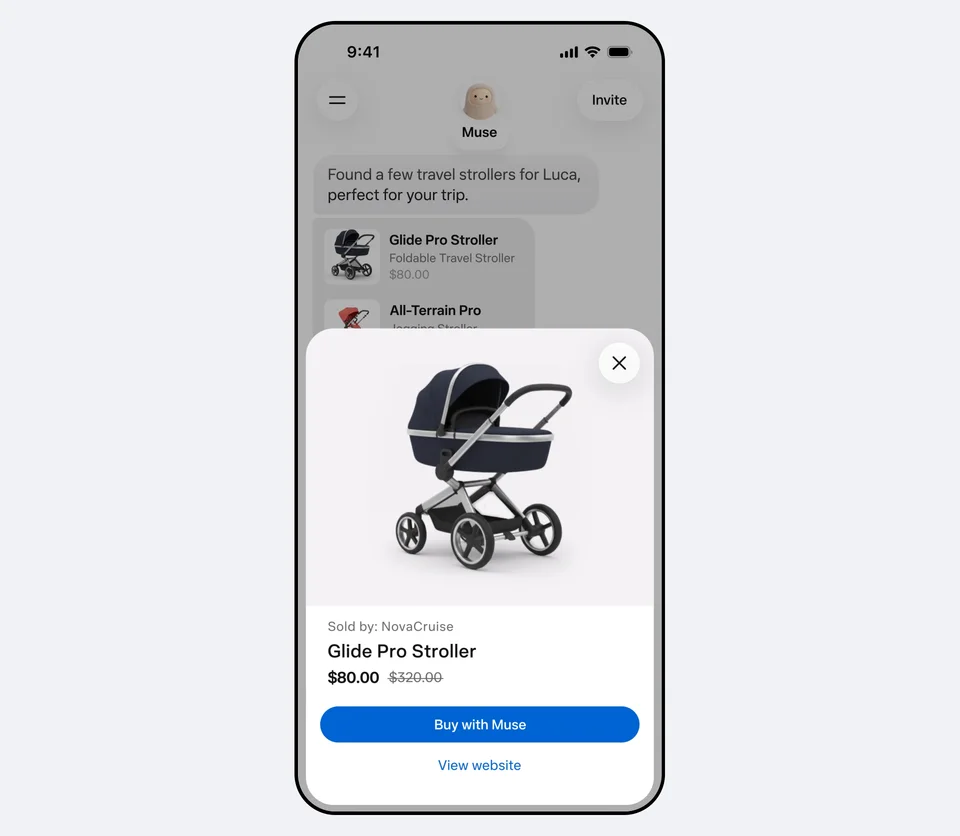
- Checking out purchases through Stripe's Link, with Shop Pay and PayPal on the way
- Continuing to work in the background after you close the app
Under the hood is Muse Spark, the multimodal model Meta Superintelligence Labs released on April 8, 2026. We covered it in our Muse Spark review. At launch, Artificial Analysis scored Spark 52 on its Intelligence Index, fourth behind Gemini 3.1 Pro, GPT-5.4 and Claude Opus 4.6. That puts it in the frontier tier, but not at the top of it. For an errand agent, that gap matters less than tool use and reliability, which is what Meta tuned Spark for.
How does Muse keep an agent with your accounts in check?
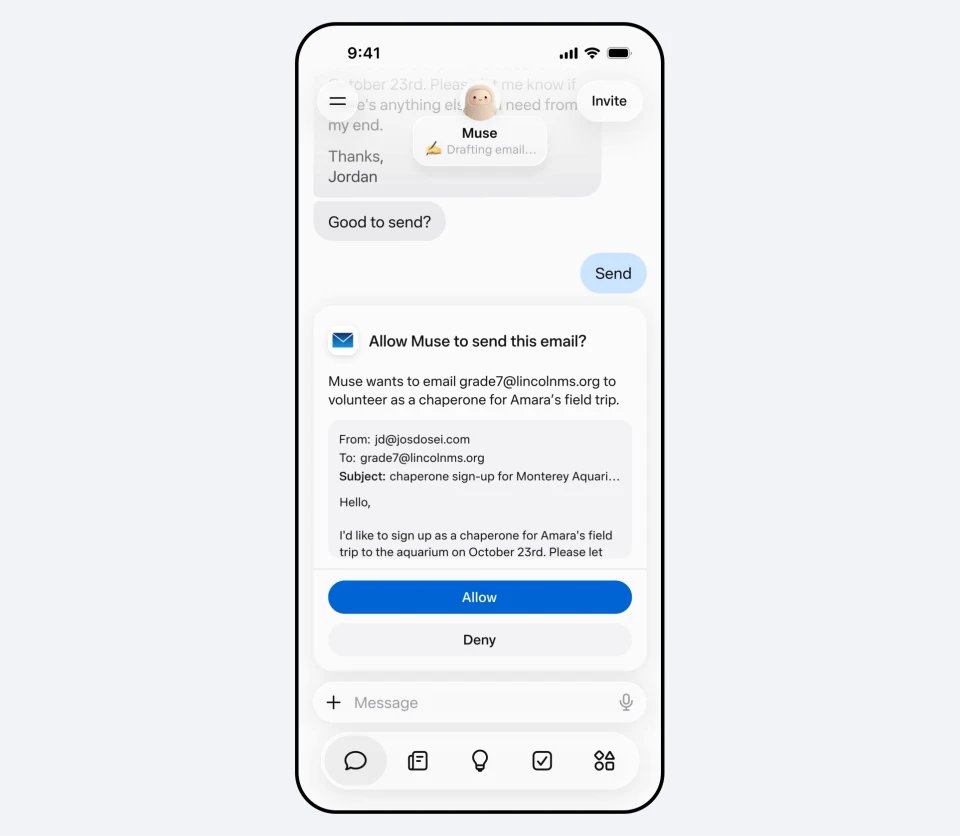
Muse's architecture is its most interesting part, because it answers the question every agent has to answer: what stops it from doing something you didn't want?
- Muse Secure VM. Each user gets an isolated cloud computer with its own browser. Your laptop and phone are never under the agent's direct control.
- A Sentinel agent. A second agent runs on the same VM, isolated at the system level, and reviews outbound actions before they happen.
- Credential vault. Meta says passwords and payment methods sit in secure storage the agent can use but cannot read.
- Approvals and an audit trail. Sensitive actions, such as purchases, need your sign-off, and every action is logged.
- Coming: Muse Confidential VM, which Meta describes as end-to-end encrypted.
This is the right design, and it is roughly what enterprise agents such as Anthropic's Claude Cowork and OpenAI's ChatGPT Work also do. Before Muse, no consumer agent had shipped it at this scale.
What happened in the first two weeks?
Adoption was immediate. Muse took the No. 1 spot among free iPhone apps in the US, overtaking ChatGPT, with roughly 730,000 downloads in its first five days, CNBC reported. By September 23, CNN counted more than 2.5 million downloads.
The hands-on results are more mixed. CNN's reporter had Muse book a Friday date night, build a day-by-day packing schedule for a move, email a friend about a trip, and draft a list of places to visit. It handled all four, but the review also noted that ChatGPT and Gemini can do similar planning tasks and "sometimes provided more detailed responses." That fits our read: Muse's edge is that it can act, not that it plans better.
Then came the pushback:
- Amazon blocked it. By September 20, Muse users saw a warning citing Amazon's Conditions of Use. Amazon says Meta never told it that Muse would shop there, that the agent does not identify itself while browsing, and that it appears to capture customer credentials. Meta says the agent never sees passwords. Amazon has also sued Perplexity over its Comet browser and moved to block shopping agents from Google and OpenAI, so this is a policy fight as much as a Muse problem.
- Training is on by default. Conversations are used to train Meta's models unless you turn it off under Data Controls.
- It asks for more data. Early testers reported Muse repeatedly suggesting they connect more sources, including email and banking. A test by Inc. found it read private message notifications without being asked.
- Trust is low. An Oppenheimer & Co. survey found only 8% of consumers would trust Meta with their passwords, compared with 30% for Google.
Meta's history explains that number: FTC settlements in 2011 and 2019 (the second was a record $5 billion), and another FTC action in 2023. Muse's security design may be sound. The issue is whether people believe the company running it.
Is Muse like OpenClaw, Manus or Grok Bot?
They all belong to the same new category of AI that takes actions, not just answers. Where they differ is who runs the computer, who they're built for, and what you pay.
OpenClaw: the do-it-yourself agent
OpenClaw is the open-source agent created by Peter Steinberger, the founder of PSPDFKit. It runs on your own machine, works with any model through your own API key (or a local model), and reaches you across 20+ messaging apps. Community "skills" let it run shell commands, manage files and automate the web. It is the most powerful of the four and the most dangerous: security researchers found hundreds of malicious skills on its ClawHub marketplace, and Bitdefender estimated roughly 20% of the registry was malicious at one point. Steinberger has since joined OpenAI and handed the project to an OpenAI-backed foundation.
Manus: the general-purpose cloud agent
Manus popularized the cloud-computer model: give it a goal and it plans, browses and produces a finished result. Meta agreed to buy it for about $2 billion in December 2025. China's antitrust regulator blocked the deal on April 27, 2026, and Manus keeps running independently. It uses credits: a free tier with 300 daily credits, and Pro plans from $20 to $200 a month. Muse is, in effect, Meta's answer after the Manus deal stalled.
Grok Bot: the paid coworker
xAI launched Grok Bot on August 11, 2026, as agents that each get a dedicated cloud computer, sign into your work software and carry out multi-step jobs. Its standout feature is teaching by demonstration: show it a task once and it saves a routine it can run on a schedule. It is aimed at work, not your personal life, and it is only available bundled with SuperGrok Heavy, Cursor Ultra or Cursor Teams Premium. There is no free tier.
Side-by-side comparison
| Meta Muse | OpenClaw | Manus | Grok Bot | |
|---|---|---|---|---|
| Made by | Meta | Open source (OpenAI-backed foundation) | Manus (independent after blocked Meta deal) | xAI |
| Where it runs | Meta's cloud VM | Your own computer or server | Manus's cloud | xAI's cloud computer |
| Built for | Everyday personal errands | Developers and tinkerers | Research and deliverables | Repeatable work tasks |
| Model | Muse Spark | Any (bring your own) | Mix of third-party models | Grok |
| Price | Free; Power $20/mo; Maximum $100/mo | Free software, you pay model API costs | Free tier; Pro $20–$200/mo | Bundled in SuperGrok Heavy or Cursor Ultra/Teams Premium |
| Safety model | Isolated VM, Sentinel reviewer, approvals, audit log | Whatever you configure | Sandboxed cloud VM | Cloud VM, asks before consequential actions |
| Biggest risk | Meta's data practices; retailer blocks | Malicious skills, full machine access | Unsettled ownership | Price; too new to judge |
Our short answer: Muse is closest to Manus and Grok Bot, because all three give the agent its own computer in the cloud. It is the opposite of OpenClaw, which gives an agent the keys to your own machine. Among cloud agents, Muse is the one built for consumers and priced for everyone.
How much does Muse cost, and what are tokens?
Muse is free to start, though a credit card is required to sign up. Usage is metered in "Muse tokens," a Meta usage unit that doesn't map to the model tokens you'd buy through an API:
| Plan | Price | Weekly allowance |
|---|---|---|
| Free | $0 | 100 million tokens |
| Power | $20/month | 500 million tokens |
| Maximum | $100/month | 3 billion tokens |
Mark Zuckerberg has said Meta will eventually "profit by taking a small fee from transactions," which explains the generous free tier. The business model is commerce, not subscriptions. That matters: an agent paid per transaction has a reason to nudge you toward buying.
Referral bonus: new users who enter an invite code under Settings > Redeem Code within 48 hours of joining get 1 billion bonus tokens, roughly ten weeks of the free allowance. Each code works only a limited number of times. Disclosure: DJH8N6 is the author's own invite code. If you redeem it, both of us receive the bonus tokens. Sign up at muse.ai/join.
What's coming next for Muse?
At Connect in September 2026, Meta laid out the roadmap, as TechCrunch reported:

- Smart glasses: wake-word access for workout guidance, meal logging, booking and buying, "in the coming months." That's where Meta's hardware lead matters. See our Samsung vs Meta smart glasses breakdown.
- Mac desktop control: Muse will operate apps on your computer. Meta's chief AI officer put it as "You can walk away from your computer and it keeps working for you."
- Its own email address: you'll be able to copy Muse into email threads or forward messages to it.
- A video avatar powered by a new Muse Realtime Avatar model, for live video chats with your agent.
- Connectors: Stripe, Shopify, Best Buy, Walmart, Expedia, Instacart, GitHub, Notion and more, plus more than 1,500 third-party connector applications submitted in under a week.
Who should use Muse, and who shouldn't?
Use Muse if you want an agent that works on day one with no setup, your tasks are planning and errands (bookings, forms, lists, trip plans), and you're comfortable with Meta holding what you connect.
Pick OpenClaw instead if you're technical, want full control of the model and data, and will audit every skill you install. Pick Grok Bot if you already pay for SuperGrok Heavy or Cursor Ultra and want repeatable work routines. Pick Manus if your jobs are research-heavy and you want a finished document rather than a completed errand. OpenAI's approach is covered in our ChatGPT Work analysis.
Whichever agent you pick, the same rules apply:
- Turn off model training under Data Controls on day one.
- Connect the fewest accounts that get the job done. Don't connect banking just because the agent asks.
- Keep approval prompts on for purchases and outgoing messages.
- Check the activity log weekly, as you would a credit card statement.
The verdict
Muse is the first agent a non-technical person can install and use for real errands in five minutes, and its architecture (an isolated VM, a second agent that reviews actions, and a credential vault) is the right way to build one. Muse Spark isn't the smartest model available, and Amazon's block shows the open web isn't going to cooperate with agents without a fight. The real question is trust, not capability. Muse is worth trying on the free tier today, with training turned off and only a few accounts connected. Expand what you connect only as Meta earns it.
FAQ
Is Meta Muse free?
Yes. The free plan includes 100 million Muse tokens per week, though Meta requires a credit card at signup. Paid plans are Power at $20 a month (500 million weekly tokens) and Maximum at $100 a month (3 billion). New users can add 1 billion one-time bonus tokens by redeeming an invite code in Settings within 48 hours of joining.
Is Meta Muse the same as OpenClaw?
No. OpenClaw is free, open-source software you install on your own computer and connect to any AI model, which gives it deep access to your files and system. Muse is a Meta-run service that works on its own isolated cloud computer, with a reviewer agent and approval prompts. OpenClaw offers more control; Muse offers more guardrails and far less setup.
Can Meta Muse buy things for me?
Yes. Muse can shop and check out through Stripe's Link, with Shop Pay and PayPal support coming, and it asks for your approval before completing a purchase. Some retailers resist: Amazon blocked Muse from shopping on its site in September 2026, saying the agent accessed its store without permission.
Does Meta use my Muse conversations to train AI?
By default, yes. Conversations are used for model training unless you opt out under Data Controls in the Muse app. Meta says Muse conversations are not shared with its ad systems, that the agent cannot see your passwords or payment methods, and that you can tell Muse to forget things it has learned.
Is Muse better than ChatGPT?
For acting on your behalf, such as filling forms, booking or shopping, Muse is built for exactly that and runs tasks in the background. For thinking tasks like research, writing and detailed planning, ChatGPT and Gemini sometimes give more detailed answers, according to CNN's hands-on test. Many people will use both: a chatbot to think and an agent to do.
Enjoying this article?
Get more strategic intelligence delivered to your inbox weekly.
Enjoyed this article?
VentureBeast.Tech is independent and reader-supported. If this saved you time, you can buy us a coffee — it keeps the research deep and the site ad-light.
Support us on Ko-fi


Comments (0)
No comments yet. Be the first to share your thoughts!