This article may contain affiliate links. We may earn a small commission at no extra cost to you if you make a purchase through these links.
Google Gemini’s CapCut Partnership: The End of AI Video Friction
Google partners with CapCut to bring conversational image and video editing directly into the Gemini app, solving workflow fragmentation for creators.

Google Gemini’s CapCut Partnership: The End of AI Video Friction
Google has announced a strategic partnership with ByteDance-owned CapCut to integrate its video and image editing capabilities directly within the Gemini application. By embedding advanced editing tools like trimming, timeline sequencing, automated captioning, and transitions directly into the conversational interface, Google is attempting to turn Gemini from an analytical chatbot into a comprehensive creative workspace. For creators and product operators, this integration eliminates the fragmented pipelines that have plagued AI content generation for years.
In Q2 2026, the race for multimodal utility has moved beyond simple generation to seamless execution. While models like OpenAI Sora demonstrated the potential of generative video, the workflow remained highly fragmented: users had to generate video clips in one platform, download them, and import them into separate editing suites. Google is leveraging CapCut’s mature infrastructure to bridge this gap. Rather than trying to build a video editing suite from scratch, this partnership creates a unified environment where content can be generated, edited, and formatted within a single thread.
The Workflow Bottleneck of Modern AI Video
The current state of generative video is characterized by a severe workflow gap. Generating a high-quality video clip with tools like Runway Gen-3 or Google Veo is only the first 10% of the content production process. A raw 5-second or 10-second clip is useless for distribution. To create a finished piece of content—whether it is a product demo, a marketing reel, or a training video—an operator must sequence multiple clips, adjust timing, overlay audio tracks, synchronize voiceovers, and add accessibility elements like closed captions.
Currently, this requires exporting media files, managing local storage, and navigating professional timeline tools like Adobe Premiere or DaVinci Resolve. For time-constrained teams, this process is an operational bottleneck that slows down the deployment of marketing assets and corporate training material. The friction is not in the generation itself, but in the post-production pipeline. By embedding CapCut's engine, Google aims to allow users to refine media using natural language instructions like, "trim the first 2 seconds of the generated clip, insert a dissolve transition, and auto-generate captions in a bold white font."
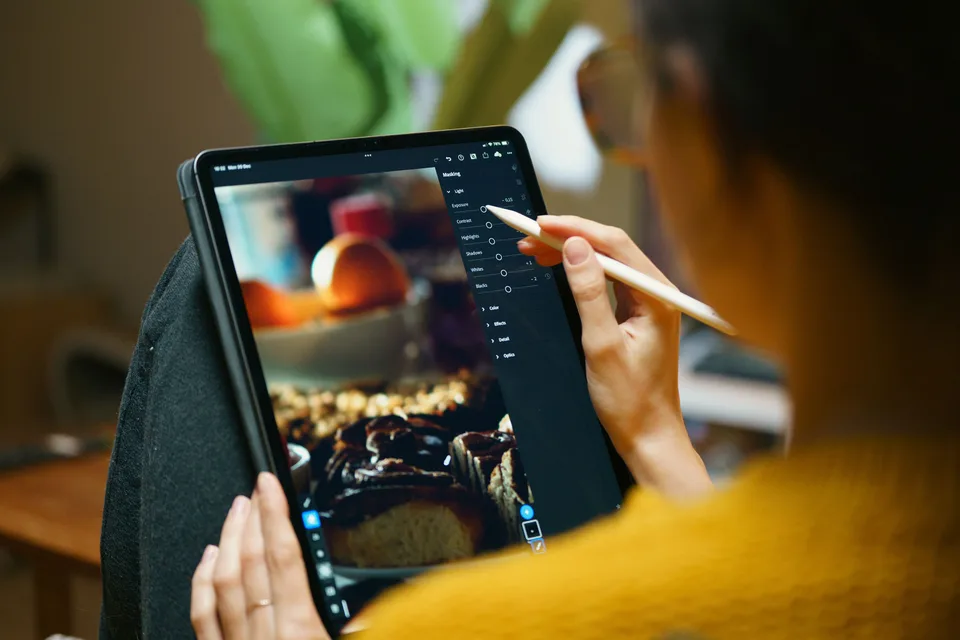
How CapCut inside Gemini Transforms Video Creation
The architectural integration of CapCut within Gemini is designed to make video editing conversational. Rather than presenting a complex multi-track timeline UI that can overwhelm casual users, the Gemini app coordinates editing tasks through natural language instructions. Under the hood, Gemini serves as the orchestration layer, translating conversational commands into precise edit parameters executed by CapCut’s web and mobile engines. The workflow operates through three critical mechanisms:
- Direct Image and Video Refinement: When a user generates an image using Google's Imagen model or a video using Google Veo, they can immediately request edits. Instead of generating a completely new asset (which often results in a loss of visual consistency), the user can prompt Gemini to crop, adjust lighting, or overlay elements on the existing file.
- Automated Timeline Sequencing: Users can input multiple media assets—both AI-generated and uploaded from local storage—and ask Gemini to compile them. For example, a user can instruct, "take these three product images, arrange them in a 15-second slideshow, add a professional cross-dissolve transition between each, and background music that matches a technical corporate tone."
- Intelligent Content Enhancements: The integration leverages CapCut’s industry-leading audio tools, such as text-to-speech voiceovers, vocal isolations, and automatic captioning. These features are historically computationally heavy and require specialized local software, but they will now be processed on Google's cloud infrastructure via CapCut's API.
This approach moves AI capabilities from static generation to agentic orchestration. Instead of acting as a passive recipient of media generation prompts, Gemini becomes an active post-production editor that handles the tedious aspects of video assembly, letting creators focus on high-level direction and messaging.
Ecosystem Comparison: Integrated AI Workspaces
To understand the strategic significance of this partnership, we must compare it to the current competitive landscape. AI platforms are rapidly forming alliances with established design and editing suites to build sticky creative ecosystems. The table below outlines how Gemini's new partnership compares to alternative approaches:
| Platform Ecosystem | Core Partners | Video Capability | Editing Paradigm | Primary Use Case |
|---|---|---|---|---|
| Google Gemini Workspace | CapCut, Canva, Adobe | Google Veo (Generation) + CapCut (Editing) | Conversational text-to-edit with timeline execution | End-to-end rapid content creation & marketing automation |
| OpenAI ChatGPT | Canva GPTs, Sora (selective) | Sora (Generation only) | Prompt-to-video, manual download for external edits | High-fidelity asset generation and cinematic experimentation |
| Standalone AI Suites | None (Proprietary) | Runway, Pika, Kling | Manual slider controls and web-based timelines | Professional video editors wanting specific model outputs |
As shown above, Google is building a highly integrated workspace. While OpenAI is focusing on pushing the boundaries of raw generation quality with Sora, Google is prioritizing the utility of the surrounding pipeline. This strategy acknowledges that for most business operations, a slightly less realistic video that is completely edited and captioned in 30 seconds is far more valuable than a cinematic 4K video that takes three hours to post-process manually.

The Strategic Play: Why Google Partnered with ByteDance
From a competitive standpoint, this partnership is a masterstroke of pragmatic engineering. ByteDance’s CapCut has captured the short-form mobile editor market, boasting over 200 million monthly active users. Rather than attempting to develop its own editing features—which would require years of UX refinement and feature updates—Google is leveraging CapCut’s existing infrastructure. This allows Google to immediately deploy a world-class editing engine, while offering ByteDance a direct pipeline to the millions of enterprise and developer users within the Google Cloud and Gemini ecosystems.
This integration also aligns with Google's efforts to strengthen its multimodal presence in Gemini. By connecting CapCut to Gemini's reasoning engine, Google creates an attractive alternative to Canva and Adobe's standalone AI features. It ensures that Gemini users have fewer reasons to leave the Google app ecosystem, creating a sticky, high-value workspace. The move is reminiscent of Google's previous integration of third-party plugins in Google Workspace, but scaled to meet the requirements of generative, agent-driven creation.
What This Means for Content Teams and Developers
The emergence of integrated creative workspaces like Gemini-CapCut has immediate implications for content production teams and software engineers building media pipelines:
- Drastic Cost Reductions: Marketing and social media teams can bypass the slow loop of sending draft videos back and forth to specialized editors for minor changes like captions or aspect ratio adjustments. These edits can now be completed in seconds by marketing coordinators directly via Gemini.
- Accelerated Output Cycles: Content production times will shrink from hours or days to minutes. A complete short-form video concept can go from script to generated visual to fully edited asset without ever switching application windows.
- API and Agentic Opportunities: Developers should prepare for the release of CapCut editing extensions within Google AI Studio. This will eventually allow engineers to write automated agents that generate, edit, caption, and schedule video content programmatically.
For builders, this partnership demonstrates that the value of AI is shifting from the base model itself to the richness of the integrations surrounding it. The platforms that succeed in the next phase of the AI transition will not necessarily be the ones with the largest parameter models, but the ones that build the most efficient bridges between raw intelligence and final execution.
Frequently Asked Questions
What is the Google Gemini and CapCut partnership?
The partnership integrates CapCut's video and image editing capabilities directly into the Google Gemini app, allowing users to crop, trim, add transitions, and auto-caption visual assets using natural language prompts within the chat interface.
Will the CapCut integration be free to use in Gemini?
While the initial announcement does not outline pricing details, it is highly likely that basic editing tools will be free for all Gemini users, while advanced AI features, premium templates, and high-fidelity cloud rendering may require a Gemini Advanced subscription.
Can I use CapCut to edit videos generated outside of Gemini?
Yes. The integration allows users to upload local media files (images and videos) directly to the Gemini chat and instruct the CapCut engine to edit, sequence, or overlay them alongside Gemini's native AI-generated media.
How does this compare to Adobe's AI integrations?
While Adobe focuses on professional, high-precision tools within its Creative Cloud suite (like Premiere Pro and Photoshop), the Gemini-CapCut integration is optimized for speed and conversational simplicity, making it ideal for rapid content turnarounds rather than cinema-grade post-production.
The Bottom Line
The Google Gemini and CapCut partnership marks the end of the fragmented AI creative pipeline. By placing premium editing capabilities directly within a conversational interface, Google and ByteDance are establishing a new standard for integrated content workspaces. For operators, this transition represents a significant reduction in production friction and a massive acceleration in media production speed.
Enjoying this article?
Get more strategic intelligence delivered to your inbox weekly.
Enjoyed this article?
VentureBeast.Tech is independent and reader-supported. If this saved you time, you can buy us a coffee — it keeps the research deep and the site ad-light.
Support us on Ko-fi

Comments (0)
No comments yet. Be the first to share your thoughts!