This article may contain affiliate links. We may earn a small commission at no extra cost to you if you make a purchase through these links.
Claude Fable 5.1 and Mythos 5.1: One Model, Two Safety Tiers
Anthropic ships one model under two names and cuts cache reads 75%. Why the access split may become the norm, and why caching matters more for agents.

Claude Fable 5.1 and Claude Mythos 5.1, released by Anthropic on September 1, 2026, are the same model sold under two names: Fable 5.1 is generally available with full safeguards, while Mythos 5.1 runs with fewer restrictions for vetted cybersecurity and life-sciences organizations. The headline price did not move, but cache reads fell 75%, and for anyone running long agent sessions that is the number that changes the bill.
Two things are worth an operator's attention here. First, the access split Anthropic introduced with Fable 5 in June is now a repeatable product pattern, and OpenAI is running a similar one. Second, the pricing change is aimed squarely at agentic workloads, where the cached prompt prefix, not the fresh input, is where most tokens go. This piece covers both, with the numbers taken from Anthropic's own documentation as of September 2026.
What exactly did Anthropic release?
According to Anthropic's announcement, "Claude Fable 5.1 and Claude Mythos 5.1 are the same model, but with different levels of safeguards." Fable 5.1 is available to all customers on the Claude API as claude-fable-5-1, and Anthropic's documentation lists it on Amazon Bedrock, Claude Platform on AWS, Google Cloud and Microsoft Foundry. Mythos 5.1 is invitation-only, as claude-mythos-5-1.
Both share the same specifications, per Anthropic's "What's new in Claude Fable 5.1" documentation: a 1M-token context window at standard per-token pricing across the whole window, 128K maximum output tokens, adaptive thinking that is always on, and a June 2026 knowledge cutoff.
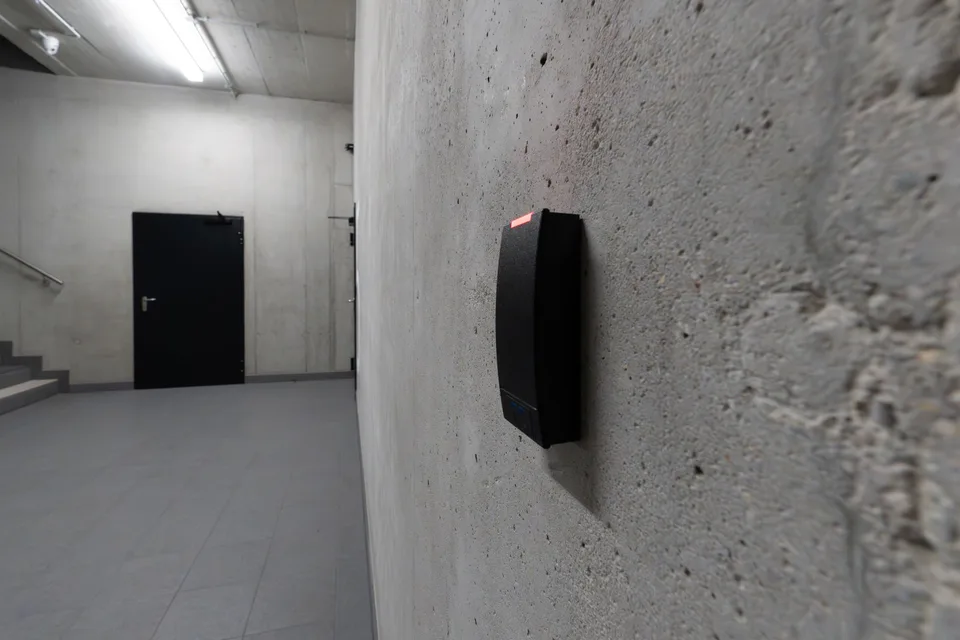
The announcement says Mythos 5.1 "will be available through two trusted access programs," but only one of them offers it today. Its Life Sciences Verification Program already lets enrolled life-sciences professionals use Mythos 5.1, and Anthropic says it has enrolled its first participants in partnership with the US government. The Cyber Verification Program currently covers certain Opus- and Sonnet-class models with reduced cyber safeguards, and Anthropic says it will add Mythos-class models "in the near future." On the security side, the model documentation lists Mythos 5.1 for approved Project Glasswing participants only. Anthropic states that Mythos 5.1 "is only available to a set of US organizations, though we're coordinating with the US government to expand access." The documentation directs would-be users to their Anthropic, AWS or Google Cloud account team.
Why ship one model under two names?
The split is not new with 5.1. When Anthropic launched Fable 5 and Mythos 5 on June 9, 2026, it gave the reasoning directly: "Without safeguards, Fable 5's capabilities in areas like cybersecurity could be misused to cause serious damage." Releasing a safeguarded version broadly and an unrestricted version to vetted specialists let the company, in its words, "release the model both safely and quickly."
This follows from the earlier Mythos Preview, which Anthropic kept inside its Project Glasswing security partnership rather than releasing publicly (we covered that in our look at the Mythos Preview system card). The 5.x series makes that containment a two-lane product: the same model, a public lane and a verified lane.
The 5.1 release refines the public lane rather than widening the gap. Anthropic says its cybersecurity safeguards now produce "60% fewer false positives than before," and that the model can identify vulnerabilities but will not develop exploits. That trade is the whole design problem in one sentence: every false positive is a legitimate developer blocked, and every missed case is a capability leaking out of the verified lane.
What did the June export-control episode change?
Three days after Fable 5 launched, the tiering was tested in the hardest possible way. On June 12, Anthropic said in a public statement that the US government had issued an export-control directive suspending all access to Fable 5 and Mythos 5 by foreign nationals. Anthropic said the net effect was that it had to disable both models "for all our customers to ensure compliance." It called the triggering finding "a narrow potential jailbreak" and disagreed that it justified recalling a commercial model. (Our earlier report covers how the shutdown unfolded.)
In its June 30 redeployment post, Anthropic said the controls had been lifted, that Fable 5 would return globally from July 1, and that researchers at the Commerce Department's Center for AI Standards and Innovation (CAISI) had tested its prior and new safeguards. The post says a new classifier blocks the specific bypass technique "in over 99% of cases." Mythos 5 access returned only to "a set of US organizations" after government approval.
The lesson for anyone building on these models: the verified lane is no longer a private arrangement between a lab and its customers. A government is now effectively a party to who sits in it, and the public lane's availability depends on the strength of the classifier separating the two. That is a supplier risk worth writing into vendor plans, whichever lab you buy from.
Is tiered access becoming an industry template?
The evidence points that way. OpenAI runs its own version, Daybreak, requested through its Trusted Access for Cyber program. According to OpenAI's documentation, approved users can reach GPT-Daybreak-Blue, which provides "reduced refusals for defensive security workflows," and GPT-Daybreak-Red, "a specialist cyber model for separately approved, explicitly authorized workflows" such as exploit validation and penetration testing. Access depends on approval and provisioning for a specific identity, workspace or API project.
| Element | Anthropic (Fable / Mythos 5.1) | OpenAI (Trusted Access for Cyber) |
|---|---|---|
| Public lane | Fable 5.1, all customers, full safeguards | Standard models under usage policies |
| Verified lane | Mythos 5.1, same model, fewer safeguards | GPT-Daybreak-Blue and GPT-Daybreak-Red tiers |
| Domains | Cybersecurity and life sciences | Cybersecurity |
| Gate | Project Glasswing (cyber) and Life Sciences Verification Program; Cyber Verification Program to add Mythos-class models later; US organizations only for now | Application plus identity verification; Red tier approved separately |
| Pricing difference | None: Mythos 5.1 and Fable 5.1 share one price list | Not published in the documentation reviewed |
The design difference matters. Anthropic's two lanes are the same weights with different safeguards around them, so the capability gap is purely a policy setting. OpenAI's Red tier, by contrast, is a separate specialist cyber model. Both converge on the same principle: capability access scales with verified identity, not with price.
Our read is that this becomes the default for frontier releases in any domain with serious misuse potential. It lets a lab ship its best model on schedule without waiting for safeguards that work for every possible user. The cost is structural: the least-restricted version of a model now reaches a smaller, pre-approved group first, and each domain's program opens on its own timetable. With 5.1, the life-sciences program is the one already offering Mythos 5.1, while the cyber verification program is still waiting for it.
How good is Fable 5.1, by Anthropic's numbers?
All of the following scores come from Anthropic's own announcement and have not been independently reproduced. VentureBeat, reporting on the launch, notes Anthropic's caution that production safeguards can affect scores and that some OSWorld results are not directly comparable with previously published ones.
| Benchmark (Anthropic-reported) | Fable 5.1 | Fable 5 | Opus 5 | GPT-5.6 Sol |
|---|---|---|---|---|
| Terminal-Bench 4.0 | 55.8% | 42.0% | 52.3% | 37.3% |
| CursorBench 3.2.0 | 73.4% | 70.5% | 70.0% | 67.2% |
| AutomationBench | 31.4% | 17.1% | 26.9% | 19.6% |
| Terminal-Bench-Science 0.1 | 52.6% | 24.7% | 29.0% | 22.4% |
| OSWorld 2.0 (strict) | 41.7% | 36.1% | 39.6% | not listed |
One row deserves attention. On Terminal-Bench 4.0, Anthropic lists Mythos 5.1 at 60.9% against Fable 5.1's 55.8%. Anthropic says the two are the same underlying model and that the gap "reflects the tasks on which our earlier, less precise cyber safeguards intervened." It is one vendor-reported data point, but it makes the cost of the public lane's safeguards visible in a way that is rarely published.
Notice the Opus 5 column too. On most rows Opus 5 sits close to Fable 5.1 at half the base price, and Anthropic's own documentation advises: "For most workloads, start with Claude Opus 5." Fable 5.1 is positioned for demanding reasoning and long-horizon agentic work, or for cases where Opus 5 falls short on your evaluations.
Why do cheaper cache reads matter more than the headline price?
According to Anthropic's pricing page, as of September 2026 Fable 5.1 costs $10 per million input tokens and $50 per million output tokens, the same as Fable 5. What changed is the cache-hit multiplier: cache reads on Fable 5.1 and Mythos 5.1 cost 0.025 times the base input price ($0.25 per million tokens), against the 0.1 multiplier on every other Claude model. On Fable 5 that rate was $1 per million. Cache writes are unchanged at $12.50 (5-minute) and $20 (1-hour) per million.

Why that line matters: an agent loop resends its whole context each turn. The system prompt, tool schemas, files already read and prior tool results form a prefix that grows as the session runs, while each turn adds only a small amount of new input and output. In a long session, cached prefix tokens outnumber everything else.
Here is a worked example using the published rates. Take one agent turn that reads a 200,000-token cached prefix, adds 5,000 new input tokens and produces 2,000 output tokens.
| Cost per turn | Fable 5 | Fable 5.1 | Opus 5 |
|---|---|---|---|
| Cache read (200K tokens) | $0.200 | $0.050 | $0.100 |
| New input (5K tokens) | $0.050 | $0.050 | $0.025 |
| Output (2K tokens) | $0.100 | $0.100 | $0.050 |
| Total | $0.350 | $0.200 | $0.175 |
That turn costs 43% less on Fable 5.1 than on Fable 5, in line with Anthropic's claim that the change cuts effective cost by around 25% for typical workloads and up to roughly 45% for highly agentic ones. The more telling comparison is with Opus 5. On headline pricing Fable 5.1 is twice as expensive; on this cache-heavy turn it costs about 14% more. Fable 5.1's cache read rate ($0.25) is half of Opus 5's ($0.50). The deeper the cached context, the closer the two models get in cost.
That reframes the choice between them. For short, fresh-context calls, Opus 5 remains the cheaper default. For hours-long coding or research agents with large, stable prefixes, the premium for Anthropic's top model has shrunk, and the question becomes whether its extra capability finishes the job in fewer turns.
What can erase the savings?
The discount only applies to cache hits, and Fable 5.1 changes some behaviors that affect how many turns you pay for. Anthropic's documentation flags several points worth checking before switching:
- Parallel tool calling is more variable. Fable 5.1 may issue one tool call per turn where Fable 5 batched several. Each extra turn re-reads the prefix. The docs recommend a one-line batching instruction in agent prompts.
- History must stay append-only. Editing earlier turns, rebuilding the system prompt or swapping the tools array invalidates thinking blocks, and the same practices break the prompt cache. Anthropic points to turn-scoped system messages (beta) for per-turn reminders instead.
- Forced tool use returns an error. A
tool_choiceofanyor a named tool is rejected with a 400; the docs point to strict tool use or structured outputs instead. - Whole-file rewrites. The model is more likely to rewrite an entire file for a small edit, which costs output tokens at $50 per million.
- Data retention. Fable 5.1 and Mythos 5.1 carry 30-day data retention and are not available under zero data retention unless Anthropic expressly authorizes it, which matters for regulated buyers.
Teams already tracking per-seat tool costs, as in our breakdown of the AI coding tool pricing wars, should measure their cache-hit ratio before and after migrating. That single metric decides whether the 5.1 discount shows up on the invoice.
What should operators do now?
- Measure your prefix. Check cache-read tokens against new input tokens in your API usage data. If cached tokens dominate, rerun the cost comparison against Opus 5 using the table above as a template.
- Evaluate on your tasks, not the vendor table. Anthropic's benchmarks are self-reported. Run Fable 5.1 against Opus 5 at matched effort levels on your own agent traces.
- Audit history handling before migrating. Any harness that edits or trims conversation history client-side will lose both thinking blocks and cache hits.
- Plan for lane risk. The June suspension showed that frontier access can be switched off at short notice. Keep a tested fallback model in your routing.
- If you do security or life-sciences work, start the verification process early. Mythos 5.1 is currently limited to US organizations, and its terms are shaped by government coordination rather than price.
The bigger picture: frontier labs are separating two things that used to move together, capability and access. Price is becoming a tuning knob for workload shape, as the cache-read cut shows. Access is becoming a matter of identity and policy. Expect the next major releases from any lab to arrive in more than one lane.
Frequently Asked Questions
Are Claude Fable 5.1 and Claude Mythos 5.1 different models?
No. Anthropic says they are the same model with different levels of safeguards. Fable 5.1 is generally available with full safeguards; Mythos 5.1 has more permissive safeguards and is offered only to approved organizations in cybersecurity and life sciences. They share specifications and pricing, including the 1M-token context window and 128K maximum output.
How much does Claude Fable 5.1 cost?
As of September 2026, Anthropic lists Fable 5.1 at $10 per million input tokens and $50 per million output tokens, unchanged from Fable 5. Cache reads dropped to $0.25 per million tokens from $1, a 75% cut. Cache writes are $12.50 (5-minute) and $20 (1-hour) per million. The Batch API halves input and output prices.
Who can get access to Claude Mythos 5.1?
Mythos 5.1 is invitation-only. Anthropic says it is currently available only to a set of US organizations and that it is coordinating with the US government to expand access. Today it is offered to approved Project Glasswing participants and through the Life Sciences Verification Program. Anthropic says its Cyber Verification Program will add Mythos-class models in the near future. Organizations are directed to their Anthropic, AWS or Google Cloud account team to request access.
Should I switch from Claude Opus 5 to Fable 5.1?
Not by default. Anthropic's own documentation recommends starting most workloads on Opus 5, which costs half as much at base rates. Fable 5.1 makes most sense for long-horizon agentic work with large cached contexts, where its cheaper cache reads narrow the cost gap, or where Opus 5 falls short on your evaluations.
Enjoying this article?
Get more strategic intelligence delivered to your inbox weekly.
Enjoyed this article?
VentureBeast.Tech is independent and reader-supported. If this saved you time, you can buy us a coffee — it keeps the research deep and the site ad-light.
Support us on Ko-fi

Comments (0)
No comments yet. Be the first to share your thoughts!