This article may contain affiliate links. We may earn a small commission at no extra cost to you if you make a purchase through these links.
Connected Home Gyms: Tonal, Tempo, Mirror in 2026
Tonal uses digital cable resistance with AI progressive overload. Tempo tracks real free weights. Mirror handles cardio and yoga. Match the device to the actual workout.

AI form-correction in home gyms is the killer feature that the connected-fitness category needed but never quite delivered. Tonal (wall-mounted resistance-cable system, $3,995 hardware + $59.95/mo membership) auto-adjusts resistance to match the user's effort curve. Tempo Studio (free-standing armoire, $2,495 + $39/mo) uses 3D sensors and computer vision to give real-time form feedback on free-weight movements. Mirror (now Lululemon Studio) ($1,495 + $39/mo) focuses on cardio, yoga, and bodyweight workouts with lighter form correction. Three different products, three different bets on what a home gym actually is in 2026.
The category exists because the gym-equivalent value proposition is genuinely hard at home. A real gym has experienced trainers, intimidating-but-functional racks, and the social pressure of being watched. Removing those three benefits, the average home workout drifts toward poor form, low intensity, and inconsistent attendance. AI form correction targets the first of those three. The 2026 product class is the result of five years of iterative refinement on a thesis that, as of 2024–25, has produced products genuinely worth recommending.
The three devices compared
| Device | Primary use | AI form mechanism | Strength training depth |
|---|---|---|---|
| Tonal | Strength (digital resistance, no free weights) | Cable tension + algorithmic resistance adjustment | Deep — full strength program with progressive overload |
| Tempo Studio | Strength (real free weights + 3D vision) | 3D depth sensor + computer vision tracks form on actual barbells/dumbbells | Deep — tracks real-weight progression |
| Mirror / Lululemon Studio | Cardio, yoga, bodyweight, light strength | Camera-based pose detection | Light — bodyweight focus, no integrated resistance |
The product positioning splits cleanly. Tonal is the strength-training-purist's answer to the "no free weights at home" problem — the device generates resistance digitally through motorized cables, with the trade-off that you're not learning a barbell movement, you're learning the Tonal version of that movement. Tempo is the answer for users who want real free-weight strength training at home with AI form correction over actual barbells and dumbbells (included in the bundle). Mirror is the answer for users where strength isn't the priority — cardio, yoga, pilates, and bodyweight movement.
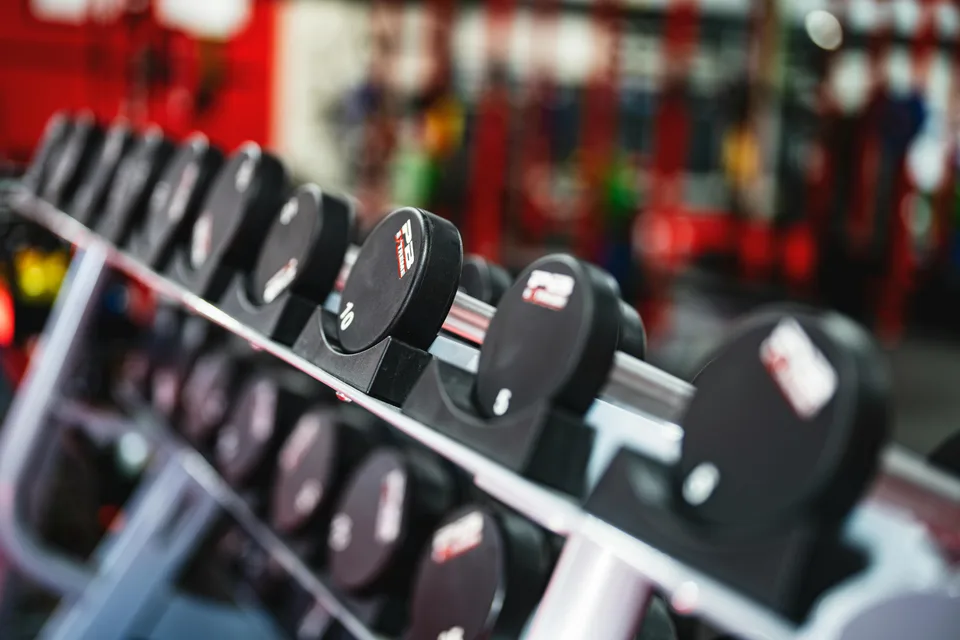
How the AI form correction actually works
Three technical approaches, each with strengths and limitations:
Tonal's cable-resistance algorithm. The device generates resistance through two motorized arms. Sensors in the arms measure the user's force application throughout the rep — including which side is doing more work, where in the rep the bar speed slows, and how peak vs sustained force compares. The system then adjusts resistance dynamically: drop set when the user fails, eccentric overload when the user is descending, partner-style assist on the last rep. The "form correction" is implicit — the resistance pattern essentially auto-corrects mechanical disadvantage by adjusting the load.
Tempo's 3D-vision + free-weight tracking. The Tempo Studio uses a depth-sensing camera (similar to Microsoft Kinect technology) to track 25+ body landmarks during free-weight exercises. The system measures joint angles, bar path, and tempo for each rep. Form feedback appears on the mirror in real time — "lower the dumbbells more slowly," "drive your knees out," "keep your chest up." Rep counting is automatic from the visual signal. The free-weights are tracked passively via vision rather than instrumented.
Mirror's pose-detection. Camera-based pose detection comparable to Apple Fitness+ — the system identifies major joints and angles but doesn't track resistance or weight load. Feedback is qualitative ("keep your back straight") rather than weight-aware. Excellent for yoga, pilates, cardio choreography, bodyweight movements; less useful for serious strength work.
The hidden cost — Bowflex, the Mirror restructuring, and what survived
Connected fitness had a brutal 2022–24 contraction. Mirror was acquired by Lululemon in 2020 for $500 million, was written down by $443 million in 2022 as growth disappointed, and was relaunched as "Lululemon Studio" in late 2023 with reduced ambition. The Mirror hardware is still sold but the product roadmap has clearly slowed.
Tonal had similar pressure but survived more cleanly. The company raised $250 million in 2021 at a $1.6 billion valuation, then did a substantial down round in 2023. As of 2026, Tonal is reportedly approaching break-even, with the most successful enterprise/corporate-wellness installation program in the category. The product roadmap is healthy and the AI form correction has improved iteratively.
Tempo is the steadiest of the three. Privately held, mid-stage, focused on the strength-and-form-correction core use case. Less marketing volume than Tonal or Mirror; reportedly stronger per-unit economics because the hardware bundle (including real free weights) commands a higher price point with less discounting.
The broader category context, which we covered in recovery wearables tested and omnichannel fitness strategy, is that connected fitness as a category is consolidating around products with credible long-term unit economics. The "free trial peloton boom" era is over; the 2026 winners are products that command real subscription value because they deliver real outcomes.
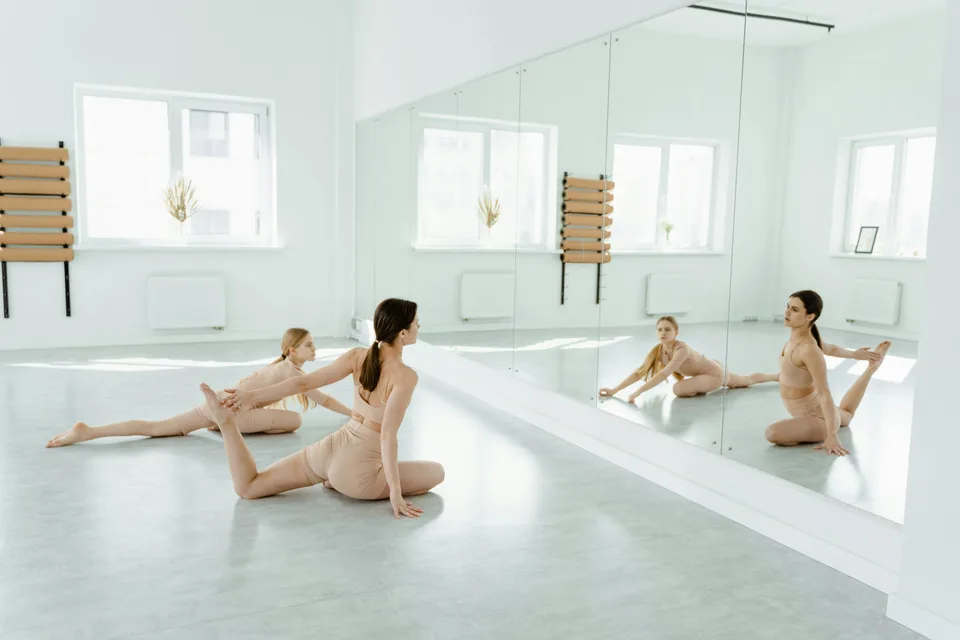
The decision tree
- Strength training is the goal, willing to spend $4k+ upfront: Tonal. The cable-resistance system is unique and the AI-driven progressive overload is genuinely useful for a user without a coach.
- Strength training is the goal, want real free weights with AI feedback: Tempo Studio. The 3D sensor + free weight bundle is the most "transferable to a real gym" experience.
- Cardio, yoga, bodyweight, light strength: Mirror (Lululemon Studio). Cheaper hardware, broader class library, less serious strength focus.
- Existing gym + supplement at home: None of the three are necessary. A subscription to Apple Fitness+, Peloton App, or a barbell + an iPad covers the same use case at a fraction of the cost.
- Apartment or small-space living: Tonal (wall-mounted, low floor footprint) or Mirror (~22 inches deep). Tempo Studio's armoire footprint is meaningful — measure first.
The bottom line
AI form-correction connected-fitness products survived a brutal 2022–24 contraction and emerged in 2026 as a real category for the right buyer. Tonal is the strength purist's answer; Tempo is the "real free weights with AI coaching" answer; Mirror/Lululemon Studio is the cardio-and-yoga answer. None of the three is universally right — match the device to the actual workout the user will do, not to the marketing pitch. The $2,000–$4,000 hardware investment is justified only when the user will actually train consistently; for sporadic users, a phone-app subscription is the better answer.
Frequently Asked Questions
Which is better for strength training: Tonal or Tempo?
Both are credible for strength training. Tonal uses digital cable resistance with AI-driven progressive overload — no free weights involved. Tempo Studio tracks form on real free weights (dumbbells, barbell) using 3D vision. If you want a system that "just works" without thinking about weight selection, Tonal is cleaner. If you want a home setup that translates to a real gym experience, Tempo is closer to traditional barbell training. Both are deep enough for serious strength progression.
How much do Tonal, Tempo, and Mirror cost in 2026?
Tonal: $3,995 hardware + $59.95/month membership. Tempo Studio: $2,495 hardware (includes dumbbells, weight plates) + $39/month membership. Mirror / Lululemon Studio: $1,495 hardware + $39/month membership. Annual cost including membership runs $1,950–$4,715 in year one and $400–$700 in subsequent years. The hardware is rarely discounted at full price; refurbished and seasonal sales can reduce hardware cost by 20–40%.
What happened to Mirror after Lululemon bought it?
Lululemon acquired Mirror in 2020 for $500 million, took a $443 million write-down in 2022 as growth fell below targets, and relaunched the product as "Lululemon Studio" in late 2023. The hardware is still sold but the product roadmap and content investment have clearly slowed. The product remains credible for cardio, yoga, and bodyweight workouts but is no longer the category leader it was positioned as in 2020.
Does AI form correction actually improve technique?
For users without prior strength-training experience, yes — the published outcome data (mostly vendor-funded) shows measurable form improvements in squat depth, knee tracking, and bar path during the first 12–24 weeks of use. For experienced lifters, the AI feedback is less impactful because users already have proprioceptive familiarity with the movements. The strongest use case is the first-year home-strength-training novice; the value diminishes as the user's experience grows.
Can I cancel the membership and still use the device?
Partially. Tonal becomes a static cable machine without the membership — no AI coaching, no progressive overload tracking, no class library. Tempo becomes a basic free-weight stand without form feedback or content. Mirror reverts to a regular mirror with no workouts. All three products lose substantially more than 50% of their stated value when the membership lapses, which is a real cost-of-ownership consideration not always disclosed upfront.
Enjoying this article?
Get more strategic intelligence delivered to your inbox weekly.
Enjoyed this article?
VentureBeast.Tech is independent and reader-supported. If this saved you time, you can buy us a coffee — it keeps the research deep and the site ad-light.
Support us on Ko-fi


Comments (0)
No comments yet. Be the first to share your thoughts!