This article may contain affiliate links. We may earn a small commission at no extra cost to you if you make a purchase through these links.
Meta's $115M Trades Academy: AI's Real Bottleneck Is Labor
Meta is spending $115M to train and hire electricians and fiber techs. The AI boom's real constraint is no longer chips or capital — it's skilled labor.

Meta is committing $115 million to teach Americans how to wire electrical panels and pull fiber — and guaranteeing every graduate a job at the end. The move is the clearest signal yet that the binding constraint on the AI boom is no longer silicon, capital, or even power. It is the shortage of people who can physically build the data centers that artificial intelligence runs on.
On June 8, 2026, Meta announced America's Workforce Academy (AWA), a free skilled-trades training program that the company calls the largest private-sector commitment to trades training with a job guarantee in U.S. history. Strip away the corporate framing and a sharper story emerges: one of the most valuable software companies on earth has decided it must manufacture its own blue-collar labor supply, because the open market can no longer deliver it fast enough. That decision tells operators, investors, and policymakers more about where the AI economy is headed than any model benchmark released this year.
What did Meta actually announce?
The America's Workforce Academy is a five-week, no-cost trade school built to feed Meta's data-center construction pipeline. According to Fox Business, Meta is covering everything — tuition, housing, and a daily training stipend — so participants graduate with zero debt and, critically, a guaranteed job placement. The first-year investment is $115 million.
Graduates leave with two portable credentials: one from the National Center for Construction Education and Research (NCCER) and an America's Workforce Certificate, both designed to travel across employers rather than locking workers into Meta alone. The initial trades target electricians, fiber technicians, and mechanics — the exact roles that gate a data-center build — with the curriculum expanding toward welders, plumbers, and controls specialists over time. The 2026 pilot launches in four states chosen for their proximity to active and planned construction: Louisiana, Ohio, Indiana, and Texas.
The roster of names attached to the program signals how seriously Meta is treating it. Dina Powell McCormick, Meta's President and Vice-Chairman, framed it in generational terms: "Skilled workers electrified rural America one pole at a time... a new generation will pour the foundations and lay the fiber that secures American strength." Rachel Peterson, Meta's VP of Data Centers, tied it directly to the company's AI buildout. And Mike Rowe, CEO of the mikeroweWORKS Foundation and the most recognizable advocate for the trades in America, lent his credibility, arguing the moment "requires us to completely rethink the way we train the next generation of skilled workers." Partners include the National Urban League, Associated Builders and Contractors, CBRE, the U.S. Hispanic Chamber of Commerce, and STRIVE.
Why has the bottleneck moved from silicon to labor?
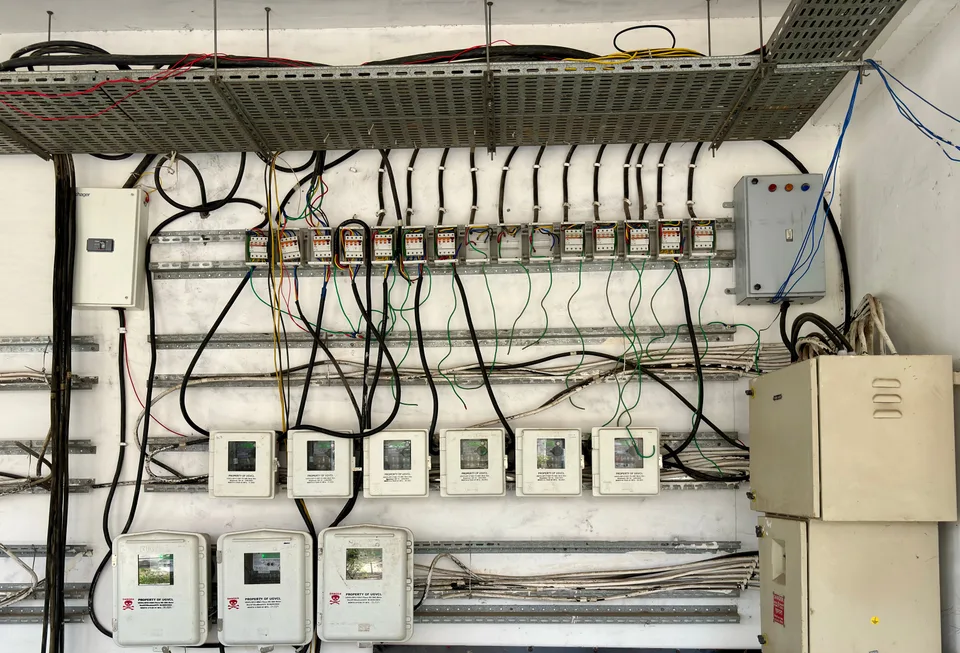
For three years, the AI infrastructure narrative was about chips. Could you get enough NVIDIA GPUs? Then it became about power — could you secure enough grid capacity and strike enough energy deals? Both constraints are real and well-documented; we covered the capital side in our analysis of Meta and Google's $10B AI infrastructure deal. But as of mid-2026, a third constraint has quietly become the hard ceiling: there are not enough trained hands to build the buildings.
The numbers are stark. The data-center industry faces a structural deficit of roughly 340,000 unfilled positions by the end of 2026, according to workforce analysis from Introl, driven by AI-fueled construction demand colliding with an aging technical workforce. Zoom out to the broader trades and the gap widens: nearly 600,000 skilled-trades jobs were posted across the U.S. in 2025, while only about 150,000 new workers entered through apprenticeship programs — a four-to-one mismatch between demand and supply.
This is not a problem money alone solves quickly. A GPU order can be expedited; a substation can be fast-tracked. But you cannot summon a journeyman electrician on a quarterly timeline — licensure and competence take years. That asymmetry is why labor has become the rate-limiting reagent. As site-selection analysts have noted, the availability of qualified electricians and high-voltage field talent is now a primary factor in where hyperscalers choose to build at all. The constraint has migrated from the bill of materials to the labor pool.
It is a familiar pattern for anyone who has watched AI infrastructure economics whipsaw the giants. When the math on building proprietary capacity turns punishing, even the largest players pivot hard — as Tesla did when it shut down its Dojo supercomputer program. Meta's bet is the inverse: rather than retreat from the constraint, it is spending to dissolve it at the source.
Why is Meta building a school instead of raising wages?
The orthodox economic answer to a labor shortage is to pay more and let the market clear. Meta is doing something more aggressive: it is vertically integrating its own talent supply chain. The logic is the same one that drove the company to design custom silicon and strike multi-year power deals — when a critical input is scarce and strategic, you stop renting it and start producing it.
Three features of the AWA design reveal the strategy. First, the job guarantee converts training from a gamble into a recruiting funnel — graduates are pre-committed labor, not a hopeful talent pool. Second, the portable NCCER credential signals confidence: Meta is willing to train workers who could theoretically leave, betting that scale and speed matter more than lock-in. Third, the geographic targeting is surgical — these four states map to where Meta's shovels already are. This is workforce development as supply-chain management, not corporate philanthropy.
Is Meta alone, or is this an industry-wide land grab?
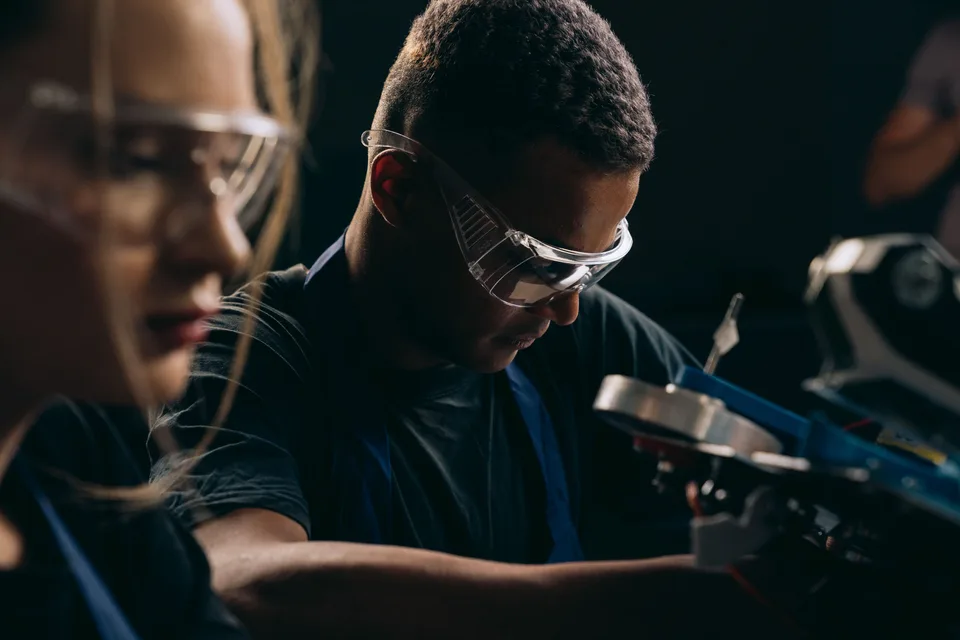
Meta is the largest single commitment, but it is the loudest entry in a crowded field — and that competitive context is the real story. Lowe's, BlackRock, and Google have collectively pledged more than $365 million toward training electricians, plumbers, HVAC technicians, and other tradespeople, according to industry tracking. BlackRock's $100 million initiative, championed by CEO Larry Fink, frames the trades as a path to six-figure, stable careers for a generation skeptical of college debt. Siemens has pledged to prepare 200,000 electricians and manufacturing experts by 2030.
The table below captures how fast this corporate-funded vocational layer has materialized:
| Company / Entity | Commitment | Focus |
|---|---|---|
| Meta | $115M (year one) | Electricians, fiber techs, mechanics — with job guarantee |
| BlackRock | ~$100M | Electricians, plumbers, HVAC — six-figure career pathways |
| Google, Lowe's (combined w/ others) | Part of $365M+ total | Broad trades training and apprenticeships |
| Siemens | Pledged by 2030 | 200,000 electricians and manufacturing experts |
When the world's largest asset manager, a search monopoly, a home-improvement retailer, and an industrial conglomerate all start writing nine-figure checks for the same scarce workers within the same eighteen months, the signal is unambiguous: skilled trades have become a contested strategic resource, the way GPU allocation was in 2023. The companies racing to staff the AI buildout are the same ones racing to scale data-center operations — and they have concluded the chokepoint is human.
What does this mean for the AI economy?
The strategic takeaway runs deeper than one program. For most of the past decade, the dominant assumption was that AI would compress demand for human labor. The infrastructure reality is inverting that narrative at the foundation: the technology cannot scale without a physical buildout, and that buildout is intensely labor-dependent in exactly the categories software was supposed to make irrelevant.
This creates a durable, well-paid demand curve for blue-collar work tied directly to the AI cycle. Reporting from CNBC documents trade salaries running up to 30% above typical construction pay, with specialized "AI infrastructure" roles reaching around $200,000. For a generation weighing a six-figure college debt against a debt-free, paid path to a six-figure trade, the calculus is shifting — and corporations are now actively funding the alternative.
For operators and investors, three implications follow. The buildout timelines underpinning AI capacity forecasts now carry labor risk that is harder to model than chip supply. Regional economics will increasingly favor states that invest in trades education and permitting speed. And a new category of intermediary — credentialing bodies, staffing platforms, and training providers — sits in a structurally advantaged position, the same way picks-and-shovels suppliers profited during every prior technology gold rush.
What should you watch next?
Three signals will tell you whether Meta's bet is working and whether the model spreads. First, watch graduation-to-placement throughput: a five-week program is fast, but the binding question is whether AWA can scale to thousands of certified workers per year without diluting quality. Second, watch whether competitors copy the job-guarantee structure specifically — that feature, more than the dollar figure, is what converts training spend into reliable labor supply. Third, watch federal policy: with corporate pledges now exceeding the better part of a billion dollars and Pell Grant eligibility expanding to vocational programs, public and private money is converging on the same problem for the first time in a generation.
The bottom line
Meta's $115 million academy is not a charity line item or a public-relations gesture — it is a confession. The most efficient way for one of the world's premier software companies to keep building artificial intelligence is to go teach Americans how to run conduit and splice fiber. The AI revolution, it turns out, is bottlenecked by the physical world, and the companies that win the next phase will be the ones that solve for labor as deliberately as they once solved for compute. The bricks-and-mortar layer of AI just became its most contested frontier.
Frequently asked questions
What is Meta's America's Workforce Academy?
America's Workforce Academy (AWA) is a free, five-week skilled-trades training program Meta announced on June 8, 2026, backed by a $115 million first-year investment. It covers tuition, housing, and a daily stipend, awards portable NCCER and America's Workforce credentials, and guarantees every graduate a job. The 2026 pilot runs in Louisiana, Ohio, Indiana, and Texas, targeting electricians, fiber technicians, and mechanics.
Why is Meta training tradespeople instead of software engineers?
Meta's constraint is physical, not digital. Building AI data centers requires electricians, fiber technicians, and controls specialists, and the U.S. faces a structural shortage of roughly 340,000 unfilled data-center positions by end of 2026. Software talent is abundant relative to this need; trained trade workers are the scarce input gating construction timelines, so Meta is investing to expand that supply directly.
How big is the skilled-trades shortage driving this?
It is severe and widening. Nearly 600,000 skilled-trades jobs were posted in the U.S. in 2025 while only about 150,000 new workers entered through apprenticeships — a four-to-one gap. Industry analysts estimate the broader trades shortage costs the economy on the order of $1 trillion annually, and data-center site selection now hinges partly on local availability of qualified electricians.
Are other companies making similar investments?
Yes. Lowe's, BlackRock, and Google have collectively committed more than $365 million to trades training, with BlackRock's roughly $100 million effort emphasizing six-figure career pathways. Siemens has pledged to prepare 200,000 electricians and manufacturing experts by 2030. Meta's program is the largest single commitment and the first to pair training with an explicit job guarantee at this scale.
Do AI infrastructure trade jobs actually pay well?
They increasingly do. CNBC reports data-center trade roles paying up to 30% above typical construction wages, with specialized AI-infrastructure positions reaching around $200,000. Combined with debt-free, employer-funded training and guaranteed placement, the economics are becoming competitive with — and in some cases superior to — traditional four-year college paths for many workers.
Enjoying this article?
Get more strategic intelligence delivered to your inbox weekly.
Enjoyed this article?
VentureBeast.Tech is independent and reader-supported. If this saved you time, you can buy us a coffee — it keeps the research deep and the site ad-light.
Support us on Ko-fi


Comments (0)
No comments yet. Be the first to share your thoughts!