This article may contain affiliate links. We may earn a small commission at no extra cost to you if you make a purchase through these links.
Gemini Omni: Google's Any-to-Any AI Video Model Explained
Google's Gemini Omni turns any mix of text, image, audio, and video into editable clips. Here's what the any-to-any model means for AI video.

Gemini Omni is Google's new family of multimodal generation models that turns any combination of text, image, audio, and video into a finished, editable video clip. Announced at Google I/O on May 19, 2026, it folds Gemini's reasoning into the act of creation: you describe a change in plain language and the model regenerates the scene without re-prompting from scratch. The strategic point is not the output quality — it is that "any input, any output" collapses the boundary between an AI that understands media and one that produces it.
That arrives at a peculiar moment. OpenAI shut down its consumer Sora app in April 2026, leaving Google's Veo line as the de facto leader in generative video. Gemini Omni is Google pressing that advantage — not with a longer clip or higher resolution, but with a different interaction model. For operators building content pipelines, the question is no longer "which model makes the prettiest five seconds?" It is "which model lets my team iterate fastest without a re-render tax?"
What does Gemini Omni actually do?
Gemini Omni is positioned as an "any-to-any" model: it accepts text, images, audio, and video as input — in any combination — and generates video grounded in Gemini's real-world knowledge. The flagship tier at launch is Gemini Omni Flash, which produces roughly 10-second clips with synchronized audio. The headline capability is conversational editing: rather than treating a generated clip as a finished artifact, Omni lets you keep talking to it.
In practice that means you can:
- Transform environments and objects inside an existing clip ("make it dusk," "swap the sedan for a pickup")
- Modify actions, add characters, or replace entire scenes
- Edit progressively across multiple conversation turns, with the model holding character consistency, physics, and scene continuity between edits
- Apply style changes without losing the original scene's composition
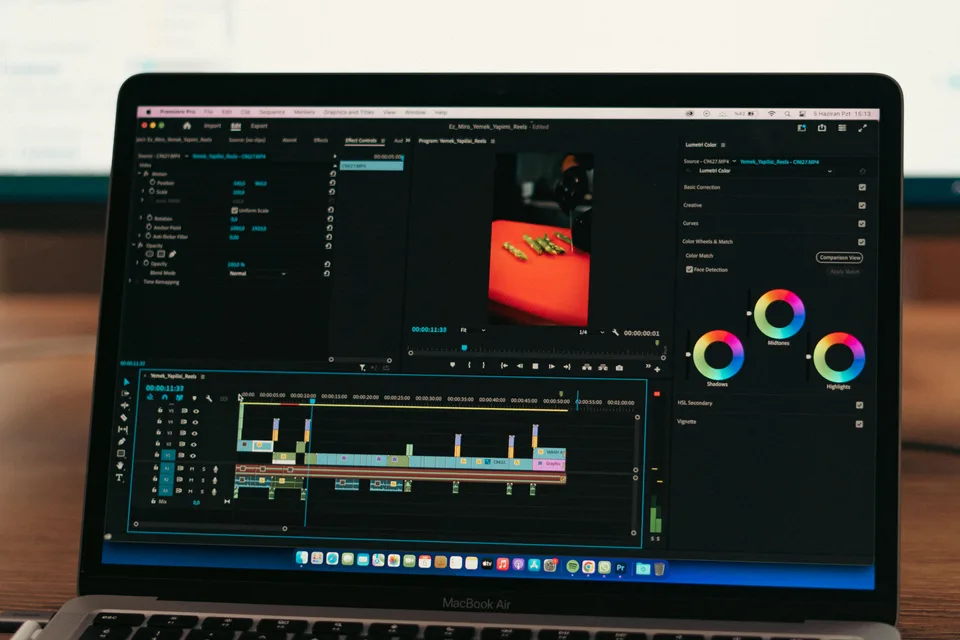
This is the part that separates Omni from a conventional text-to-video generator. Most models treat each generation as stateless — every prompt is a fresh roll of the dice. Omni's pitch is statefulness: the model remembers what it made and amends it, the way a human editor works a timeline. Google published the capability in a set of demos alongside the launch, detailed in its Gemini Omni announcement.
Why is "any-to-any" the real shift?
The industry spent 2024 and 2025 building specialist models: text-to-image here, text-to-video there, speech synthesis somewhere else. Stitching them together was the integrator's job. Gemini Omni's "any-to-any" framing dissolves that seam. Feed it a product photo, a voice memo describing the vibe, and a reference clip, and it returns a single grounded video — no handoff between three tools.
"Grounded in real-world knowledge" is the phrase doing the heavy lifting. Because Omni is built on the same Gemini backbone that powers Google's Gemini 3 agentic stack, it is meant to reason about what it generates rather than pattern-match pixels. A clip of someone pouring coffee should obey gravity because the model knows how liquids behave, not because it saw enough coffee videos. Whether the output fully lives up to that claim is the open question — but the architectural intent matters for where this goes next.
For a fuller picture of how Google's video stack got here, our analysis of Google Veo traces the lineage that Omni now sits on top of.
How does Gemini Omni compare to Sora 2 and Veo?
As of June 2026, the competitive field looks very different than it did a year ago. The most consequential change is subtraction: OpenAI announced Sora's wind-down in March 2026, citing roughly $1 million per day in compute costs and softening user growth, and discontinued the consumer app the following month. We covered the fallout in OpenAI Shuts Down Sora: The $1B Wakeup Call for AI Video. The Sora 2 API is scheduled to sunset later in 2026, which removes it as a serious option for any new build.
Here is how the active flagship models line up on the specs that matter for production work:
| Model | Max single clip | Native audio | Defining strength | API status (June 2026) |
|---|---|---|---|---|
| Gemini Omni Flash | ~10 sec | Yes (synchronized) | Any-to-any input; conversational editing | Coming "in the coming weeks" |
| Google Veo 3.1 | ~8 sec (up to ~60 sec with extension) | Yes | Resolution (up to 4K) and clip length | Generally available (Vertex AI) |
| OpenAI Sora 2 | ~25 sec (Pro) | Yes | Single-generation length; cinematic fidelity | Sunsetting in 2026 |
Read the table and the strategy becomes obvious. Google is not trying to win the "longest clip" or "highest resolution" race with Omni — Veo already holds that ground inside the same company. Omni competes on workflow. A 10-second cap looks modest until you realize the intended loop is generate-edit-edit-edit in conversation, not generate-one-perfect-shot. For social-first formats — the model ships free inside YouTube Shorts Remix and the YouTube Create app for users 18 and over — 10 seconds is the format, not a limitation.
What does this mean for operators and creators?
If you run a content operation, the practical implications cluster into three areas.
Distribution comes bundled. Omni is rolling out to Google AI Plus, Pro, and Ultra subscribers through the Gemini app and Google Flow, and free inside YouTube's creation surfaces. The model meets creators where distribution already happens. You are not exporting a file from a standalone tool and uploading it elsewhere — generation and publishing collapse into one surface. That is a structural advantage no independent video startup can easily match.
The editing tax drops. The expensive part of AI video has never been the first generation — it is the twentieth, when a stakeholder wants the jacket blue and the background quieter. Stateless models force a full re-roll and you lose everything you liked. Omni's conversational editing, if it holds continuity as advertised, turns revisions into cheap incremental asks. That changes the unit economics of iterative creative work more than any fidelity bump.
Tool consolidation is the threat and the opportunity. If one model ingests every modality and outputs grounded video, the multi-tool stacks many teams assembled in 2025 start to look like overhead. Specialist tools like Runway will need to compete on control, fine-tuning, and pro-grade features rather than on raw generation. For operators, that is a chance to simplify — but it also concentrates dependence on a single vendor.
What should you watch next?
Three signals will tell you whether Omni is a genuine shift or a well-marketed demo. First, the developer and enterprise API — Google said it is coming "in the coming weeks" after I/O, and real pricing plus rate limits will determine whether Omni is viable for production pipelines or just consumer fun. Second, independent continuity testing: the conversational-editing claim only matters if character and physics consistency survive five or ten turns, not one. Third, the Veo-versus-Omni division of labor inside Google itself — if the two lines stay distinct (Veo for long-form fidelity, Omni for iterative short-form), that tells you Google sees them as complementary rather than a migration path.
The bottom line
Gemini Omni is less a better video generator than a different one. Its bet is that the future of AI media is conversational and stateful — that the winning interaction is "change this, now change that," not "roll the dice again." With Sora exiting and Veo holding the high-fidelity ground, Google has room to make that bet from a position of strength. For operators, the move now is to pilot Omni inside the YouTube and Gemini surfaces where it is free, measure how many revision cycles it actually saves, and hold your production commitment until the API and its pricing land.
Frequently asked questions
What is Gemini Omni?
Gemini Omni is a family of Google generation models, announced at Google I/O in May 2026, that accepts any combination of text, image, audio, and video as input and produces editable video as output. Built on the Gemini backbone, it is designed to generate clips grounded in real-world knowledge and to support conversational, multi-turn editing rather than one-shot generation.
How is Gemini Omni different from Google Veo?
Veo focuses on high-fidelity, longer-form video — up to 4K resolution and clip extension toward roughly a minute. Gemini Omni Flash focuses on shorter (~10-second) clips with synchronized audio and a conversational editing loop. In short, Veo optimizes for output quality and length; Omni optimizes for iterative workflow and multimodal input flexibility. Google appears to position them as complementary rather than competing.
Is Gemini Omni free to use?
Partly. As of June 2026, Gemini Omni Flash is free inside YouTube Shorts Remix and the YouTube Create app for users 18 and over. It also ships to paying Google AI Plus, Pro, and Ultra subscribers through the Gemini app and Google Flow. A separate developer and enterprise API was announced as "coming in the coming weeks" after I/O, with pricing not yet detailed at launch.
Did Gemini Omni replace OpenAI's Sora?
Not directly, but the timing matters. OpenAI announced Sora's shutdown in March 2026 over compute costs and slowing growth, discontinuing the consumer app in April and scheduling the API to sunset later in the year. That exit left Google's Veo and now Gemini Omni as the leading options, so for many teams Omni effectively becomes a Sora replacement by default rather than by head-to-head win.
What can you create with Gemini Omni?
You can generate short videos from mixed inputs — for example, a product photo plus a spoken description plus a reference clip — and then refine them conversationally: changing the time of day, swapping objects, adding characters, or restyling a scene while preserving continuity. It is aimed at social-first short-form content today, with longer-form production better served by Veo.
Enjoying this article?
Get more strategic intelligence delivered to your inbox weekly.
Enjoyed this article?
VentureBeast.Tech is independent and reader-supported. If this saved you time, you can buy us a coffee — it keeps the research deep and the site ad-light.
Support us on Ko-fi


Comments (0)
No comments yet. Be the first to share your thoughts!