This article may contain affiliate links. We may earn a small commission at no extra cost to you if you make a purchase through these links.
BCIs Beyond Neuralink: Synchron, Precision Neuroscience
No BCI has full FDA approval yet. Synchron's safer endovascular approach and Precision Neuroscience's minimally invasive array may beat Neuralink there.
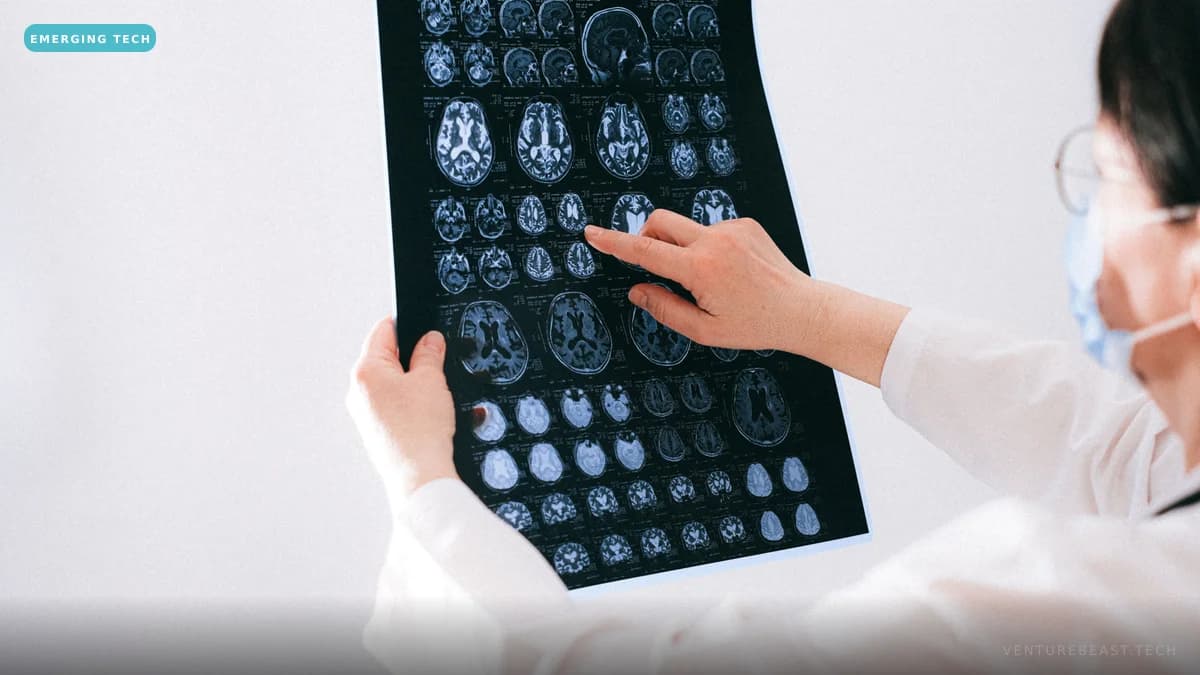
Neuralink gets the headlines, but two competitors — Synchron and Precision Neuroscience — are pursuing meaningfully different technical approaches to brain-computer interfaces, and as of 2026, no company holds full FDA premarket approval (PMA) for a permanently implanted BCI restoring movement or speech. Every device in this category remains investigational in the United States. What's changed in 2026 is that all three are now deep enough into clinical trials that the real technical and regulatory trade-offs are visible for the first time.
The core engineering tension across the category is the same one that's shaped medical implant design for decades: signal resolution versus surgical invasiveness. Higher electrode density and direct cortical placement produce richer neural signal — but require more invasive surgery. Lower-risk, less invasive placement sacrifices signal fidelity for safety and broader patient eligibility. Synchron, Neuralink, and Precision Neuroscience sit at three distinct points on that trade-off curve.
The three approaches compared
| Company | Device | Surgical approach | Electrode count | 2026 trial status |
|---|---|---|---|---|
| Synchron | Stentrode | Endovascular — placed through a blood vessel, no open-brain surgery | 16 | COMMAND trial reached 12 implanted patients; preparing pivotal trial for first PMA submission attempt |
| Neuralink | N1 implant | Open craniotomy — skull section removed | 1,024 | PRIME study ~21 participants across US/UK/Canada/UAE; PMA not expected before 2027-2028 |
| Precision Neuroscience | Layer 7 array | Minimally invasive slit craniotomy | 1,024 | Received an FDA clearance; filed what may be the first BCI PMA submission in 2025 |
Synchron's Stentrode is the clearest bet on safety-first scalability. Placed through a blood vessel via a catheter procedure — the same general category of intervention as a cardiac stent placement — the Stentrode avoids the risks of open-brain surgery entirely, at the cost of a much lower electrode count (16, versus 1,024 for the other two). The device's 12-patient COMMAND trial is a meaningful step toward what the company hopes will be the first BCI to reach full FDA premarket approval, precisely because the lower surgical risk profile makes the regulatory and patient-eligibility path more tractable.
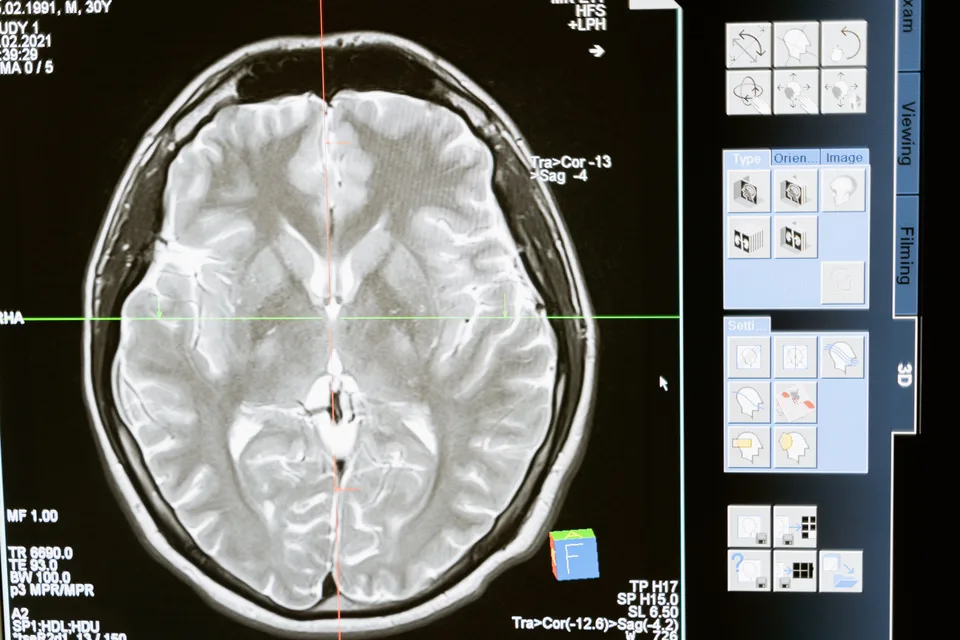
Neuralink's signal-degradation problem
Neuralink's N1 implant remains the highest-resolution device in the category by raw electrode count, but the PRIME feasibility study has surfaced a genuine engineering challenge: electrode threads have been observed to retract from cortical tissue over months of implantation, progressively degrading signal quality over time. This is a known risk category for penetrating-electrode BCI designs generally, not unique to Neuralink's specific engineering, but it's a real limitation that the company's PRIME participants — who have now accumulated thousands of hours of home use for cursor and keyboard control — are living with in practice.
The PRIME study's international footprint (participants across the U.S., U.K., Canada, and the UAE) reflects both genuine global clinical interest and a degree of regulatory arbitrage — different countries have different clinical-trial pathways and risk tolerances for early-stage implanted devices, and Neuralink has structured its trial to gather data across multiple regulatory environments simultaneously. Analysts do not expect Neuralink to reach full FDA premarket approval before 2027-2028 at the earliest — a timeline that reflects both the open-craniotomy surgical risk profile and the signal-degradation issue still being actively studied.
Precision Neuroscience's minimally invasive middle path
Precision Neuroscience's Layer 7 array matches Neuralink's 1,024-electrode density but achieves it through a minimally invasive slit craniotomy — a smaller, less traumatic surgical opening than the full craniotomy Neuralink's implant requires. The device rests on the surface of the brain (an epicortical design) rather than penetrating cortical tissue with individual electrode threads, which is a structurally different engineering approach that may sidestep some of the signal-degradation dynamics Neuralink has observed, though Precision Neuroscience's device is earlier in its clinical trial trajectory and has less long-term data.
Precision Neuroscience has already received an FDA clearance for its device (distinct from full premarket approval — likely a narrower authorization for a specific use case or as part of the regulatory pathway toward PMA) and reportedly filed what may be the industry's first BCI premarket approval submission in 2025, positioning the company as a genuine contender in the race to be first to full FDA approval alongside Synchron.

Why the FDA approval race actually matters
The company that reaches full FDA premarket approval first gains a meaningful commercial and clinical head start — PMA status enables broader clinical deployment, insurance reimbursement conversations, and the credibility that accelerates every subsequent regulatory and commercial milestone. As of 2026, this race is genuinely open between Synchron (safety-first, lower signal resolution, more tractable regulatory path) and Precision Neuroscience (higher signal resolution, minimally invasive, earlier PMA filing). Neuralink, despite its public profile and funding scale, is not expected to be first to full approval given its more invasive surgical approach and the ongoing signal-degradation research question.
This dynamic connects to the broader pattern we've covered in AI radiology's FDA clearance landscape — the distinction between an FDA clearance (often a narrower, faster authorization) and full premarket approval (a more rigorous, comprehensive review) matters enormously for how quickly a medical technology actually reaches patients, and BCI is a category where that regulatory distinction is especially consequential given the stakes of permanent brain implantation.
The neurotechnology sector broadly connects to Anthropic's expansion into life sciences we covered in Anthropic's Coefficient Bio acquisition — AI labs and medical-device companies are increasingly converging on overlapping neuroscience and biotech infrastructure investments.
The market and use-case context
The current generation of clinical BCI trials targets patients with severe paralysis (ALS, spinal cord injury, brainstem stroke) who have lost the ability to move or speak — restoring cursor control, text communication, and in some trial arms, direct device control (wheelchairs, robotic arms). This is meaningfully different from the more speculative "general cognitive enhancement" framing that sometimes surrounds BCI discourse; the actual clinical trials underway in 2026 are squarely focused on restoring lost function for patients with severe motor or communication disability, not augmenting healthy cognition.
The bottom line
Brain-computer interfaces in 2026 are a genuine three-way technical race, not a Neuralink-dominated category as public perception often suggests. Synchron's endovascular, lower-electrode-count Stentrode is the safety-first bet most likely to reach patients broadly first. Precision Neuroscience's minimally invasive, high-density Layer 7 array is the technical dark horse with an early PMA filing. Neuralink's open-craniotomy, highest-electrode-count N1 has the most public attention and funding but faces both the longest regulatory timeline and an unresolved signal-degradation engineering question. None of the three has reached the finish line yet — full FDA premarket approval for a permanently implanted BCI restoring movement or speech remains, as of 2026, still ahead of all of them.
Frequently Asked Questions
Has any brain-computer interface received full FDA approval?
No. As of 2026, no company has received full FDA premarket approval (PMA) for a permanently implanted brain-computer interface designed to restore movement or speech for paralyzed patients. Every device from Synchron, Neuralink, and Precision Neuroscience remains investigational in the United States, though several have received narrower FDA clearances or breakthrough device designations as part of the path toward eventual PMA.
What is the difference between Synchron's Stentrode and Neuralink's N1 implant?
Synchron's Stentrode is placed through a blood vessel via an endovascular procedure with no open-brain surgery required, and carries 16 electrodes. Neuralink's N1 implant requires an open craniotomy (removing a section of skull) and carries 1,024 electrodes — significantly higher signal resolution but with greater surgical risk. Synchron's approach trades signal fidelity for safety and broader patient eligibility.
Why does Neuralink's implant lose signal quality over time?
Neuralink's PRIME feasibility study has documented cases where the implant's electrode threads retract from cortical brain tissue over months of implantation, progressively degrading signal quality. This is a known risk category for penetrating-electrode BCI designs generally and is an active area of ongoing engineering research at the company, not a fully resolved issue as of 2026.
Which company is likely to be first to full FDA approval for a BCI?
Synchron and Precision Neuroscience are considered the leading contenders. Synchron's lower-invasiveness endovascular approach makes for a more tractable regulatory and patient-eligibility path, and the company is preparing a pivotal trial toward its first PMA submission attempt. Precision Neuroscience has already received an FDA clearance and reportedly filed what may be the industry's first BCI PMA submission in 2025. Neuralink is not expected to reach full approval before 2027-2028 at the earliest.
What conditions do brain-computer interface clinical trials currently target?
Current clinical BCI trials primarily target patients with severe paralysis from conditions like ALS, spinal cord injury, or brainstem stroke who have lost the ability to move or speak. The technology aims to restore functions like cursor control, text communication via a keyboard, and in some trial arms, direct control of assistive devices like wheelchairs or robotic arms — restoring lost function rather than augmenting healthy cognition.
Enjoying this article?
Get more strategic intelligence delivered to your inbox weekly.
Enjoyed this article?
VentureBeast.Tech is independent and reader-supported. If this saved you time, you can buy us a coffee — it keeps the research deep and the site ad-light.
Support us on Ko-fi


Comments (0)
No comments yet. Be the first to share your thoughts!