This article may contain affiliate links. We may earn a small commission at no extra cost to you if you make a purchase through these links.
Robinhood's Super-App Pivot: AI, Banking & Prediction Bets
Robinhood crossed $143.6B in assets as it morphed from a stock app into an AI-powered financial super-app. Here is the strategy and what it means.

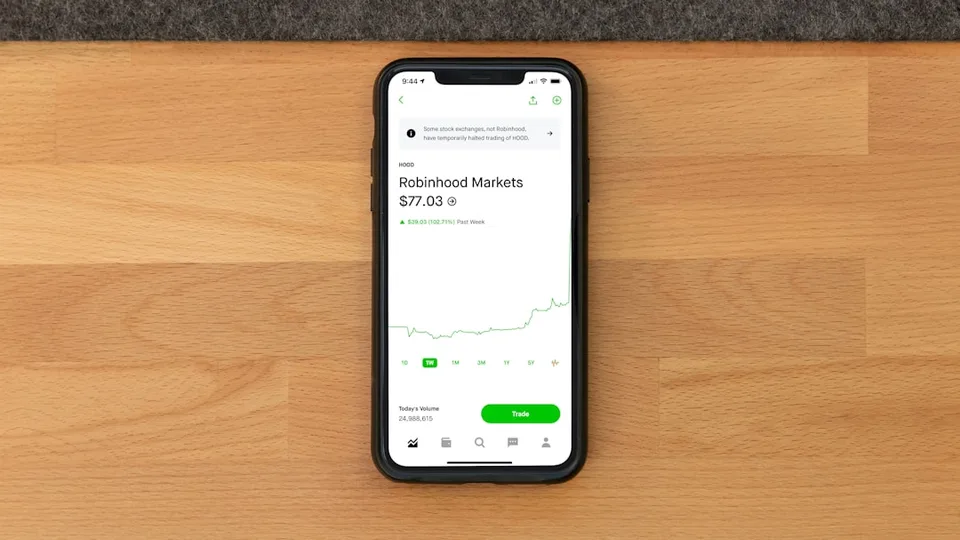
Robinhood is no longer a stock-trading app. As of its first-quarter 2026 results, the company reported more than $143.6 billion in assets under custody and now bundles AI-driven research, prediction markets, tokenized equities, a Gold credit card, retirement accounts, and a banking product into a single phone-first experience. The pitch has quietly shifted from "trade stocks for free" to "run your entire financial life here" — and that pivot is the most consequential story in consumer fintech right now.
The strategic question is not whether Robinhood can keep adding features. It clearly can. The question is whether bundling brokerage, banking, crypto, and gambling-adjacent prediction markets under one roof builds a durable moat — or stacks up regulatory and trust risk. This is our read on the super-app play: the evidence behind it, who it serves, and what both users and investors should watch.
What has Robinhood actually shipped?
Robinhood Markets started in 2013 with one idea: commission-free stock trades on a phone. The 2026 product surface is almost unrecognizable by comparison. Over the past 18 months the company has layered on an AI research assistant, regulated event contracts, on-chain tokenized stocks for European users, a cash-back credit card, IRA accounts with a matching incentive, and a deposit-taking banking tier. The through-line is consolidation — pulling functions that used to live in five separate apps into one.
| Product | What it does | 2026 status |
|---|---|---|
| Cortex | AI assistant for research, digests, and plain-English trades | Cortex Digests used by ~1 million customers; Cortex Assistant rolling out |
| Prediction Markets | Regulated yes/no event contracts (rates, sports, elections) | 1M+ customers, ~11 billion contracts traded since launch |
| Tokenized Stocks | Blockchain versions of ~2,000 US equities | Live for eligible European users |
| Robinhood Banking | Deposits, spending, high-yield cash | $2B+ deposits across 125,000+ funded customers |
| Gold Card | Cash-back credit card tied to the Gold subscription | Rolling out from waitlist |
Why does the super-app strategy make sense?
The financial logic is about switching costs and deposit gravity. A user with only a brokerage balance can leave in an afternoon. A user whose paycheck, savings, credit card, retirement account, and trading positions all sit inside one app faces real friction to move — and every additional product deepens that lock-in. Crossing $143.6 billion in assets under custody is the headline number, but the more telling signal is that Robinhood is now competing for the deposit relationship, not just the trade.
This mirrors a broader convergence we've tracked across the sector, where AI-native tools collapse research, execution, and analysis into one interface — a pattern we explored in our analysis of AI day-trading tools. The platforms winning attention in 2026 are the ones that shorten the distance between "I have a question about my money" and "the action is done."
How does Cortex change the product?
Cortex is the piece that most changes Robinhood's character. Cortex Digests — AI-generated summaries that explain why a holding moved — have reached roughly 1 million customers. The newer Cortex Assistant goes further: it accepts plain-English commands to buy or sell equities and crypto, run research, and adjust account settings, drawing on real-time market data and analyst reports to personalize what it surfaces.
That is a meaningful shift in who holds the expertise. Traditional brokerages assume the user arrives with a thesis; Cortex assumes the user arrives with a question. It is the same agentic direction we documented when Google Finance rebuilt around AI — the interface stops being a data terminal and becomes a conversation. The strategic risk is obvious: an AI that can both recommend and execute a trade inside a single tap compresses the moment of deliberation that protects inexperienced investors.
Are prediction markets a growth engine or a liability?
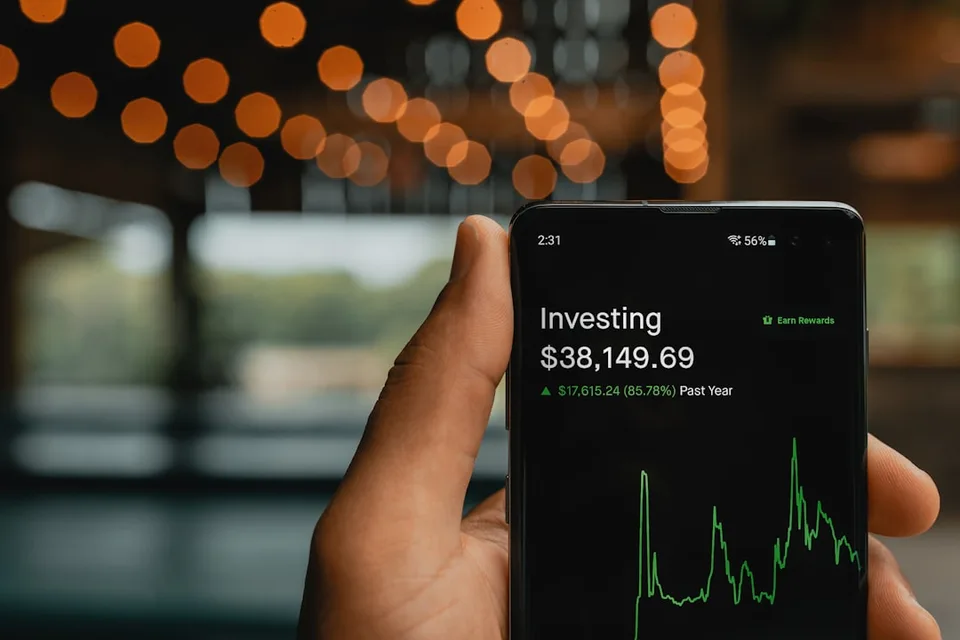
Prediction markets have been Robinhood's fastest-growing surface. Since launching late in 2025, the event-contracts product has drawn more than 1 million customers trading roughly 11 billion contracts, and Q1 2026 set record volumes. Letting users take yes/no positions on interest-rate decisions, sporting outcomes, and elections taps a different psychological appetite than long-term investing — and it monetizes engagement that would otherwise sit idle between market hours.
It is also the clearest source of long-term risk. Event contracts live in a contested regulatory zone, and critics argue the line between a "prediction market" and sports gambling is thin. The same feature that drove record quarterly volume is the one most likely to attract scrutiny from the CFTC and state regulators. For investors, that makes prediction-market revenue both the most exciting and the least predictable line in the model.
The referral growth loop — and how to claim free stock
One reason Robinhood can keep customer-acquisition costs low is its referral mechanic, which turns existing users into a distribution channel. When you invite a friend who opens an account and links a bank or debit card, both of you receive a "gift stock" — a fractional share you choose from a list of available companies, valued between roughly $5 and $200. There are guardrails worth knowing: you must hold the stock for three trading days before selling, leave proceeds in the account for 30 days before withdrawing, and claim within 60 days. The annual cap on referral stock is about $1,500.
Strategically, this is a cheap, viral acquisition loop layered on top of the super-app — every new product gives existing users one more reason to refer, and every referral seeds a new deposit relationship. If you want to try the platform and pick a free stock in the process, you can sign up through our referral link: join Robinhood and pick your gift stock.
Disclosure: The link above is a Robinhood referral link. If you sign up and link a funding source, both you and VentureBeast.Tech receive a free gift stock at no cost to you. This is not financial advice — a gift stock is a promotional incentive, not a reason to invest. Trading involves risk, including the loss of principal.
The risks operators should weigh
Three concerns temper the bull case. First, concentration: bundling banking deposits, brokerage positions, and credit into one app means a single outage, breach, or freeze touches a user's entire financial life at once. Second, regulation: prediction markets, tokenized securities, and a banking tier each invite a different regulator, and Robinhood is now exposed to all three simultaneously. Third, conflated incentives: when the same app earns from your trades, your bets, your card spending, and your idle cash, the interface design choices that maximize engagement are not always the ones that serve the user's long-term wealth.
None of these are fatal, but they are the variables to monitor. A super-app's strength — everything in one place — is also its single largest attack surface, both technically and reputationally.
The bottom line
Robinhood's 2026 pivot is the most ambitious attempt yet to build a US consumer financial super-app, and the early metrics — $143.6B in custody, a fast-scaling AI assistant, and a record-setting prediction-markets business — show the strategy is working commercially. Whether it endures depends on execution against regulation and trust, not on feature velocity. For users, the practical takeaway is to treat Robinhood as a powerful but consolidated tool: convenient, increasingly AI-guided, and worth understanding before you route your whole financial life through it. Watch the next two earnings cycles for how prediction-market regulation and banking adoption land — those, not the next product launch, will decide whether the super-app holds.
Frequently asked questions
What is Robinhood Cortex?
Cortex is Robinhood's AI layer. It includes Cortex Digests, which generate plain-language summaries explaining why your holdings moved, and Cortex Assistant, which accepts plain-English commands to research, buy, or sell equities and crypto and to adjust account settings. It draws on real-time market data and analyst reports to personalize insights, and as of early 2026 the Digests feature reached roughly 1 million customers.
How does the Robinhood referral free-stock offer work?
When a friend signs up through your referral link and links a bank account or debit card, both of you receive a gift stock — a fractional share you choose, typically valued between $5 and $200. You must hold it for three trading days before selling and keep proceeds in the account for 30 days before withdrawing. You have 60 days to claim, and the annual referral cap is around $1,500 in stock.
Are Robinhood prediction markets legal?
Robinhood's prediction markets operate as regulated event contracts in the US, but the category sits in a contested legal zone. Regulators including the CFTC and several states continue to scrutinize where event contracts end and sports gambling begins. The product is live and growing quickly, but its regulatory status is the single biggest uncertainty in Robinhood's 2026 roadmap.
Is Robinhood a bank now?
Robinhood added a banking tier offering deposits, spending, and high-yield cash, reporting more than $2 billion in deposits across 125,000+ funded customers in early 2026. It partners with chartered institutions for deposit insurance rather than holding a full bank charter itself, so it functions like a bank for everyday use while remaining, at its core, a brokerage-led financial platform.
Should I move my whole financial life into one app?
Convenience is real, but concentration is a genuine trade-off. Putting your brokerage, banking, credit, and retirement accounts in one app maximizes lock-in and simplicity while also creating a single point of failure for outages, breaches, or account freezes. A reasonable middle path is to use a super-app for what it does best while keeping core emergency savings at a separate institution.
Enjoying this article?
Get more strategic intelligence delivered to your inbox weekly.
Enjoyed this article?
VentureBeast.Tech is independent and reader-supported. If this saved you time, you can buy us a coffee — it keeps the research deep and the site ad-light.
Support us on Ko-fi


Comments (0)
No comments yet. Be the first to share your thoughts!