This article may contain affiliate links. We may earn a small commission at no extra cost to you if you make a purchase through these links.
Medicare's $50 GLP-1 Bridge: What It Changes for Telehealth
Medicare now covers Wegovy, Foundayo and the Zepbound KwikPen at $50 a month for eligible enrollees. Telehealth loses the drug margin but keeps the care work.

Medicare's GLP-1 Bridge, which runs from July 1, 2026 to December 31, 2027, lets eligible Part D enrollees fill Wegovy (injection or pill), Foundayo, or the Zepbound KwikPen for a flat $50 a month. For telehealth weight-care companies, that removes the main thing they sold older patients: a cheaper route to the drug. What the Bridge does not pay for, and in some ways makes harder, is the clinical work around the prescription. That work is where the business now sits.
This article covers the Medicare program and the move to pills, not a platform-by-platform comparison. For that, see our telehealth shakeout analysis of Hims, Ro and Lemonaid and our look at manufacturer-direct GLP-1 dispensing. Nothing here is medical advice. Eligibility and prescribing decisions belong to a patient and their clinician.
What exactly is the Medicare GLP-1 Bridge?
The Bridge is a short-term demonstration run by the Centers for Medicare & Medicaid Services (CMS). CMS previewed it in its December 23, 2025 BALANCE announcement and set out the details in a May 6, 2026 press release. The Bridge runs entirely outside the normal Part D benefit. According to CMS guidance for Part D plans, plan sponsors "will not carry risk" for these drugs and do not need to opt in.
Several features make it different from ordinary drug coverage, as of September 2026:
- Flat $50 copay for a one-month (28- or 30-day) supply, paid outside the normal Part D benefit. The Part D deductible does not apply.
- The copay does not count toward a beneficiary's true out-of-pocket (TrOOP) total. Medicare.gov states it "can't be lowered by programs like Extra Help," the low-income subsidy.
- A $245 net price. CMS's Part D guidance refers to "the $245 net price" and says no part of it counts toward plans' gross covered drug costs.
- One central processor. CMS uses a single processor for prior authorization, claims and pharmacy payment. Its pharmacy guidance names Humana as that administrator.
- Medicare Advantage enrollees in coordinated care plans with drug coverage (MA-PD plans such as HMOs and PPOs) can use it, according to Medicare.gov.
The Bridge was meant to bridge to something. CMS announced the BALANCE Model on December 23, 2025. It is a voluntary model in which CMS negotiates GLP-1 prices on behalf of state Medicaid agencies and Part D plans. The original plan had Medicaid starting in May 2026 and Medicare Part D in January 2027. CMS now says BALANCE "will not launch in Medicare in 2027," and it extended the Bridge through December 31, 2027, to collect more utilization data. That end date is the most important fact in this article. Everything built on the Bridge has a fixed expiry unless CMS acts again.

Who qualifies, and why does the gate matter to telehealth?
The clinical criteria are specific. According to CMS's information for providers, a beneficiary must be 18 or older and meet one of three tests, assessed when GLP-1 therapy starts:
| BMI threshold | Additional condition required |
|---|---|
| 35 or higher | None |
| 30 or higher | Heart failure with preserved ejection fraction, uncontrolled hypertension (systolic above 140 or diastolic above 90 despite treatment with two antihypertensive medications), or chronic kidney disease stage 3a or above |
| 27 or higher | Prediabetes, a previous heart attack, a previous stroke, or symptomatic peripheral artery disease |
Two exclusions matter. First, people with type 2 diabetes, moderate-to-severe obstructive sleep apnea, or noncirrhotic MASH (a form of fatty liver disease) must go through their regular Part D plan instead. Second, anyone who already got a GLP-1 through Part D is out. The drug must also be prescribed alongside "current and ongoing lifestyle modification including structured nutrition and physical activity."
The process is where telehealth operators should pay attention:
- The pharmacy starts the prior authorization. The prescriber sends the prescription, then waits for the pharmacy to forward a prior-authorization request. If none arrives within 72 hours, the prescriber can submit CMS's form directly. CMS says decisions come within 72 hours of submission.
- The prescriber attests "under penalty of perjury" that the form is accurate. CMS says it may independently verify the information.
- There is no appeals process. A denied request can only be resubmitted with corrected information.
- The prescriber does not need to be enrolled in Medicare but must not be on Medicare's Preclusion List.
That last point is the regulatory opening. A clinician at a cash-pay telehealth company does not need to join Medicare to write a prescription that a Bridge pharmacy can fill. The perjury attestation cuts the other way. High-volume, questionnaire-driven prescribing now puts the prescriber's signature on a federal form whose contents CMS says it may independently verify. BMI and comorbidity claims need documentation behind them, not a self-reported weight typed into an intake form.
Why do the pills change the math?
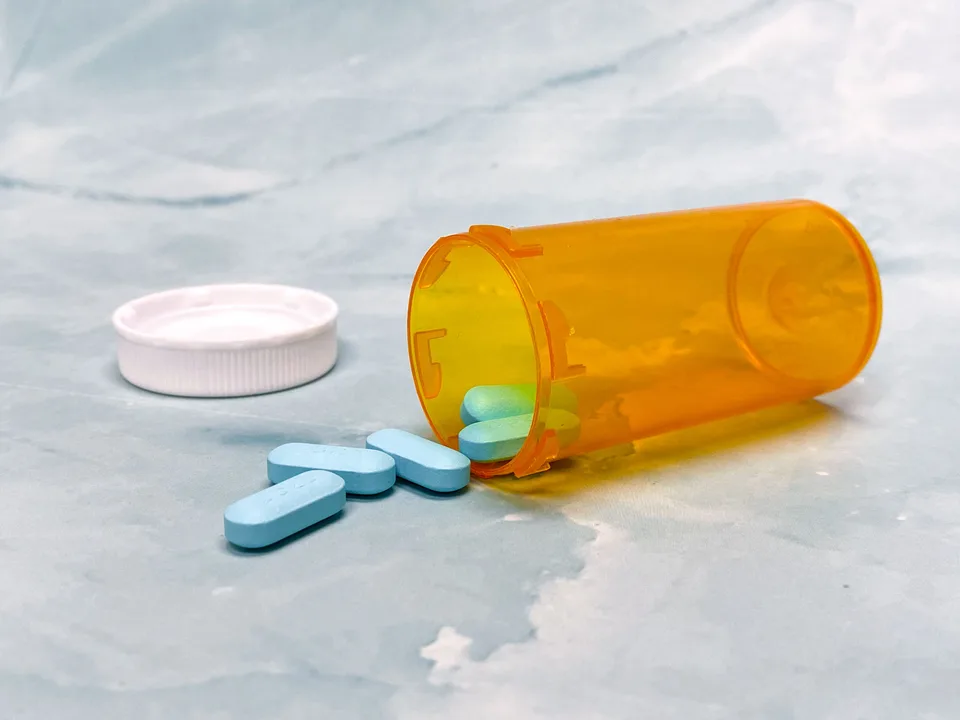
Two of the three Bridge-eligible brands come as daily pills: Foundayo, and the tablet form of Wegovy. The FDA approved Novo Nordisk's Wegovy pill (oral semaglutide 25 mg) as the first oral GLP-1 for weight management, according to the company's December 22, 2025 announcement. Novo said the pill would launch in early January 2026 through pharmacies and "select telehealth providers," at $149 a month cash-pay for the 1.5 mg starting dose. In its OASIS 4 trial, Novo reported about 17% average weight loss among people who stayed on treatment, compared with about 3% on placebo, and about 14% regardless of adherence, compared with about 2% on placebo.
Eli Lilly's Foundayo (orforglipron) is the second pill. Its DailyMed label lists film-coated tablets in six strengths from 0.8 mg to 17.2 mg, an initial U.S. approval in 2026, and Eli Lilly and Company as labeler. The label directs patients to take it once daily. CMS covers "all formulations" of Foundayo and of Wegovy under the Bridge. For Zepbound, it covers only the KwikPen, not single-dose vials or pens.
For telehealth businesses, pills do three things:
- They make fulfillment ordinary. A daily tablet is dispensed like any other maintenance prescription, so the convenience a telehealth company adds matters less than it did for injectables.
- They shrink the cash-price gap, then Medicare erases it. Novo's $149 cash price for the starting dose already set a low anchor. At $50, an eligible Medicare patient has little reason to pay cash at all.
- They make the Zepbound carve-out matter. Zepbound single-dose vials and pens are not Bridge-eligible. An eligible Medicare patient on one of those formats has a financial reason to switch to the KwikPen or a pill, and every switch needs a prescriber.
Who wins and who loses in digital weight care?
The Bridge splits value into two parts. The drug is now paid for publicly. The care around it is still unpaid. How each player fares depends on which part it was earning from.
| Player | What the Bridge changes | Our read |
|---|---|---|
| Cash-pay telehealth (for example, Ro) | For eligible Medicare patients, drug markup and bundled pricing are replaced by a $50 pharmacy fill. As of September 2026, Ro's weight-loss page labels the Wegovy pill, Foundayo pill and Zepbound KwikPen "cash-pay only." | Loses drug margin with eligible Medicare patients. Keeps ineligible patients and the non-Medicare market. |
| Manufacturer direct channels (for example, NovoCare Pharmacy) | Volume moves from cash sales to a program with a CMS-stated $245 net price | Neutral to positive. Fewer cash sales, but access to a large new pool of patients |
| Retail and mail pharmacies | Per CMS pharmacy guidance, paid wholesale acquisition cost minus the copay, plus a $3 dispensing fee ($5 in long-term care), within 14 days. No opt-in required. | Small but low-risk gain in prescription volume |
| Lifestyle and coaching programs | Bridge eligibility requires "current and ongoing lifestyle modification" alongside the drug | An opening, but the Bridge itself does not pay for coaching |
| Part D plan sponsors | No risk now. The open question is what happens after 2027. | Protected now, exposed at the end of 2027 |
A telehealth company's first instinct may be to lose these patients gracefully. That leaves value on the table. Eligible seniors still need a prescriber who documents BMI and comorbidities properly, responds promptly when the pharmacy requests prior authorization, and follows up on titration and side effects. That is paid clinical work. Medicare's drug payment does not fund it, so the operator has to decide whether to charge a visit fee, bill Medicare for the visit as an enrolled provider, or treat the patient as an acquisition cost. Companies that treated the drug margin as the product are likely to struggle. Companies that were already selling ongoing care, including monitoring and nutrition support, may find the Bridge increases demand for exactly what they sell.
The ineligible population is the other half of the opportunity. A Medicare patient with a BMI of 28 and no qualifying condition is outside the Bridge. So, for different reasons, is one with type 2 diabetes, who goes to Part D. Cash pricing still applies to them, and so does the case for a convenient digital front door. The employer side is already showing how navigation layers capture value once someone else pays for the drug. Our coverage of employer health navigation with Transcarent and Included Health covers the same pattern.
What should operators do before the 2027 cliff?
The Bridge is a demonstration with an end date, and CMS has already moved its successor once. That argues for building capabilities that pay off whatever Congress or CMS decides next, rather than betting on the $50 price lasting:
- Build prior-authorization handling now. Electronic prior-authorization submission (CMS "strongly encourages" it), documented BMI history, and structured comorbidity capture are likely to carry over to BALANCE, Part D or commercial plans.
- Turn lifestyle support into a product with measurable outcomes. CMS wrote the requirement into the eligibility language and built manufacturer-funded lifestyle programs into BALANCE's Medicaid track. Payers are likely to want evidence that the support is actually delivered.
- Separate prescribing revenue from dispensing revenue in your unit economics. If a model only works when the company also profits on the drug, eligible Medicare patients are a loss.
- Track who is ineligible. The Bridge's exclusions define a cash-pay and Part D population that still needs a clinician. Build intake that routes each patient correctly instead of rejecting them.
The bottom line: Medicare has turned the GLP-1 drug into a $50 commodity for a defined group of Medicare enrollees, and the pills make it easy to fill anywhere. That shrinks the drug-arbitrage business that fueled cash-pay telehealth. It also makes the clinical service layer more valuable: documentation, prior authorization, titration and lifestyle support. Watch three things next: CMS's plan for 2028, whether BALANCE eventually launches in Medicare, and whether any large telehealth company starts billing Medicare for the visits around Bridge prescriptions.
Frequently Asked Questions
How much does the Medicare GLP-1 Bridge cost patients?
Eligible beneficiaries pay a $50 copay for a one-month (28 to 30 day) supply, according to Medicare.gov. The Part D deductible does not apply, the copay does not count toward Part D out-of-pocket totals, and Extra Help cannot reduce it. The program runs from July 1, 2026, through December 31, 2027, as of September 2026.
Which drugs are covered under the Bridge?
CMS lists all formulations of Foundayo (orforglipron tablets), all formulations of Wegovy (injection and tablet), and only the KwikPen formulation of Zepbound. Zepbound single-dose vials and single-dose pens are not covered. Pen needles are not billable under the program. Coverage is limited to weight reduction and maintenance, used together with lifestyle modification.
Can a telehealth clinician prescribe under the Medicare GLP-1 Bridge?
CMS's provider guidance does not bar telehealth prescribing. It says a prescriber does not need to be enrolled in Medicare but must not be on Medicare's Preclusion List. The prescriber must complete a prior-authorization form, attesting under penalty of perjury that the patient meets the criteria. CMS says it may independently verify that information.
What happens when the Bridge ends on December 31, 2027?
CMS has not announced what replaces it in Medicare. The Bridge was designed as a stopgap until the BALANCE Model reached Part D, and CMS says BALANCE will not launch in Medicare in 2027. No one should assume the $50 price continues past that date. CMS and Medicare.gov will post any updates.
Why are people with type 2 diabetes excluded?
They are not left without coverage. They are routed elsewhere. CMS says beneficiaries with type 2 diabetes, moderate-to-severe obstructive sleep apnea, or noncirrhotic MASH should seek GLP-1 coverage through their regular Part D plan, because those uses are already coverable there. The Bridge exists specifically for weight management.
Enjoying this article?
Get more strategic intelligence delivered to your inbox weekly.
Enjoyed this article?
VentureBeast.Tech is independent and reader-supported. If this saved you time, you can buy us a coffee — it keeps the research deep and the site ad-light.
Support us on Ko-fi


Comments (0)
No comments yet. Be the first to share your thoughts!