This article may contain affiliate links. We may earn a small commission at no extra cost to you if you make a purchase through these links.
The AI Memory Crunch Is Making Your Next Gadget Pricier
AI data centers are soaking up DRAM and flash. Here is how the memory shortage is raising phone, laptop and GPU prices, and how to buy smart.

Yes, your next phone, laptop or graphics card will probably cost more, or give you less memory for the same money, because AI data centers are buying up the world's DRAM and flash storage. As of September 2026 the squeeze is already visible on store shelves: higher MacBook and iPad prices, a Pixel 11 Pro that starts with less RAM than its predecessor, and double-digit jumps in GPU prices at Newegg. The practical response is to buy for the memory you will need in three years, and to buy it sooner rather than later.
This is not a normal chip cycle. Memory has always swung between glut and shortage, but this time the demand shock comes from one customer class, the hyperscalers building AI infrastructure, and that customer is willing to pay more than any phone or PC maker. Consumer electronics are being outbid for the same factory output. What follows explains how that happens, where it shows up in prices, and what to do about it.
Why are AI data centers causing a memory shortage?
Modern AI accelerators are packaged with stacks of high-bandwidth memory (HBM), and the servers built around them carry large amounts of conventional server DRAM and enterprise SSD storage. The same handful of manufacturers, Samsung, SK hynix and Micron, make the DRAM that goes into your laptop and the HBM that goes into an Nvidia data center system. Their wafer capacity is finite, and building new fabs takes years.
When suppliers can sell a wafer's worth of output to a cloud provider at a higher margin, they steer production that way. Counterpoint Research figures cited by CNBC in June 2026 showed that memory and storage prices had quadrupled over the previous three quarters as suppliers moved more production toward the HBM used in AI servers. Market tracker TrendForce said in a July 3, 2026 forecast that mobile DRAM supply remains tight as suppliers prioritize AI applications.
The supplier side of the ledger shows how lopsided this has become. In its fiscal third-quarter 2026 results, announced June 24, 2026, Micron reported revenue of $41.46 billion, up from $9.30 billion in the same quarter a year earlier, and guided to about $50 billion for the following quarter. Chief executive Sanjay Mehrotra said the results "reflect the strategic value of memory in the AI era." When a memory maker's revenue more than quadruples in a year, someone is paying for it. Increasingly, that someone is you.
If you want the broader context on how AI compute spending reshaped the chip industry, our earlier pieces on Nvidia's $4 trillion milestone and Google's TPU strategy cover the demand side. This article is about the downstream bill.
How much are memory prices expected to rise?
The most widely cited forecast comes from Gartner. In a February 26, 2026 press release (reprinted in full by MacTech), Gartner estimated that combined DRAM and SSD prices would rise 130% by the end of 2026, pushing average PC prices up 17% and smartphone prices up 13% compared with 2025 levels. Gartner also forecast that memory would climb to 23% of a PC's bill of materials, up from 16% in 2025, and that worldwide PC shipments would fall 10.4% and smartphone shipments 8.4% in 2026.
"This is the steepest contraction in device shipments witnessed in over a decade," Ranjit Atwal, senior director analyst at Gartner, said in the release. Speaking to CNBC on June 26, 2026, Atwal added that what sets this cycle apart is both the size of the increases and how long they are expected to last, saying the current cycle looks like it "won't be until the end of 2027" before pricing returns to normal.
TrendForce's more recent quarterly numbers point the same direction, though at a slowing pace. In its July 3 release, the firm forecast conventional DRAM contract prices rising 13–18% quarter over quarter in the third quarter of 2026, and NAND flash rising 10–15%. It also noted that record contract prices mean consumer-market buyers "are reaching their affordability limit." A July 9 TrendForce release said server DRAM prices are expected to keep rising every quarter from the second half of 2026 through the second half of 2027, with the pace of increases likely to moderate.
Read those forecasts carefully. "Moderating" means prices go up more slowly, not that they come down. Nothing in the published outlooks from Gartner or TrendForce suggests a return to 2025 pricing in the next few quarters.
Where is the memory crunch already showing up in prices?
Forecasts are one thing. Shelf prices are another. Here is what has actually changed, as reported by the outlets and companies named.
| Product | What changed | Source |
|---|---|---|
| Google Pixel 11 Pro / Pro XL | Base 256GB models ship with 12GB RAM; every Pixel 10 Pro tier had 16GB. Pixel 11 Pro starts at $1,099, $100 more than its predecessor | Google Store spec pages; Engadget |
| MacBook Air (512GB) | $1,099 to $1,299 (June 25, 2026) | CNBC |
| MacBook Pro (1TB) | $1,699 to $1,999 | CNBC |
| iPad Air (128GB) | $599 to $749 | CNBC |
| Nvidia RTX 5060 Ti 16GB | $569.99 (June) to $804.99 (August 2026) at Newegg | PCGamesN |
| Nvidia RTX 5070 | $659.99 (June) to $899.99 (August 2026) at Newegg | PCGamesN |
Phones: less RAM, higher price
The Pixel 11 Pro is the clearest example of the pattern. According to Google's own Pixel 11 Pro tech specs, the 256GB base model pairs with 12GB of RAM, and you have to step up to the 512GB or 1TB versions to get 16GB. Google's Pixel 10 Pro spec page lists 16GB of RAM on every storage tier. A Google spokesperson told Engadget that "the tech industry is navigating a severe, supplier-driven RAM shortage and we will need to adjust Pixel 11 pricing and RAM configurations to mitigate this." Engadget reported that the Pixel 11 Pro and Pro XL cost $100 more than last year's models.
That is the double squeeze in one product: the price went up and the spec went down. Expect other Android makers to reach for the same levers, especially in mid-range phones where margins are thinner than Google's.
Laptops and tablets: Apple raises prices
Apple raised prices across MacBook and iPad on June 25, 2026, according to CNBC, which listed the changes above plus the MacBook Neo entry model moving from $599 to $699 and the 256GB Wi-Fi iPad Pro going from $999 to $1,199. "We have never seen a component price increase this much, this quickly," Apple said in a statement quoted by CNBC, adding that it had "reached a point where we need to begin raising prices on a number of products." When the company with the most purchasing power in consumer electronics says it cannot absorb a component cost, smaller PC brands have even less room.
PC gaming: GPUs move fastest
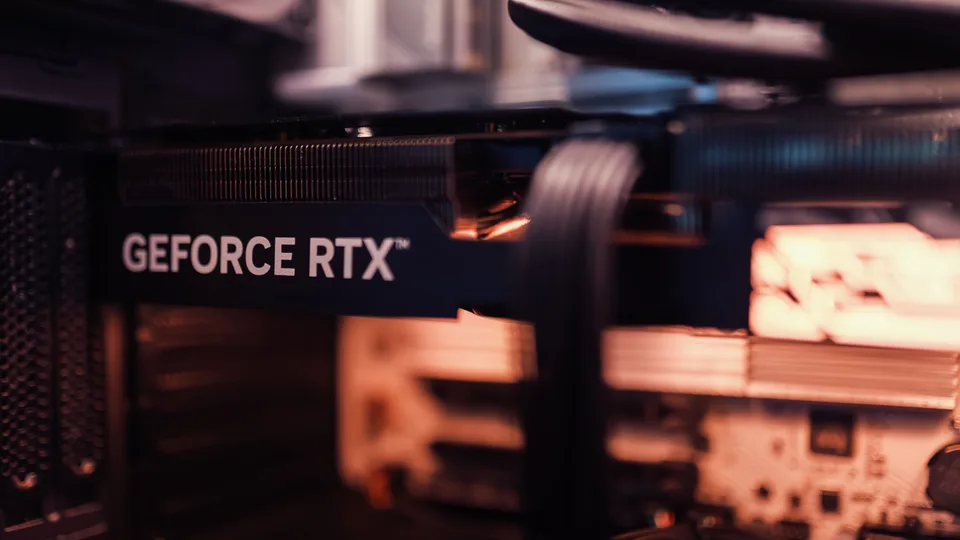
Graphics cards react quickly because their memory is a large share of the board's cost. PCGamesN tracked Newegg listings between June and August 2026 and found the RTX 5060 Ti 16GB up about 41% and the RTX 5070 up 36%, attributing the rise to "the AI-driven memory shortage." The 8GB version of the RTX 5060 Ti rose only about 13% over the same period, which tells you the premium is concentrated on memory-heavy configurations. PCGamesN reported only single-digit increases for the RTX 5080 and 5090.
Why are cheap devices hit hardest?
Memory is a roughly fixed cost per gigabyte, whatever the device sells for. Adding the same dollar amount of DRAM cost to a $400 laptop and a $2,000 laptop is a very different share of the price. That is why Gartner's February forecast said the sub-$500 entry-level PC segment could disappear by 2028, and that basic smartphone buyers would exit the market five times faster than premium buyers in 2026.
There is a second-order effect that matters for anyone who cares about on-device AI. Features that run locally, like the small language models we covered in our look at running Gemma 4 offline on a phone, need RAM to work well. Just as software wants more memory, the market is pushing base configurations down. CNBC reported that IDC expects all new iPhone models to move to 12GB of RAM so they can run the full Apple Intelligence feature set. When a premium Android flagship's base RAM falls back to that same 12GB, the gap between what the software wants and what a cheap device ships with gets wider.
Our read: the entry tier is where you will see the most spec cuts, the most quietly discontinued base models, and the longest "out of stock" stretches. The premium tier will see price increases, but it will still ship the memory.
What should you buy, and when?
You cannot wait out a shortage that the forecasters say runs through 2027. What you can do is avoid paying twice. Here is how we would approach it.
- Buy the RAM you will need for the whole life of the device, now. RAM in phones and most thin laptops is soldered and cannot be upgraded. If the 16GB configuration costs more today, it will not get cheaper later, and running out of memory in year three is what pushes people into an early replacement. For a laptop you plan to keep four years or more, 16GB is the floor we would accept, and 32GB is sensible for development or local AI work.
- If your current device works, keep it. Gartner itself expects consumers to hold PCs about 20% longer by the end of 2026. A battery replacement or a clean OS reinstall costs far less than paying peak memory prices for a marginal upgrade.
- If you need to buy soon, don't wait for a dip. TrendForce's forecasts show contract prices still rising quarter over quarter, and retail prices follow contract prices with a lag. Stock bought before the latest increases is still on shelves, so it is often the cheapest you will see.
- Check storage and RAM separately. Some makers, Google included, now tie more RAM to more storage. Compare the price per step. Sometimes the jump to the higher-memory tier is worth it on RAM alone.
- For PC builders, compare memory-heavy SKUs carefully. The PCGamesN data shows 16GB graphics cards carrying far larger markups than 8GB versions. If your games and resolution genuinely fit in 8GB of VRAM, the cheaper card avoids most of the shortage premium. If they do not, a used or previous-generation card with more VRAM may be the better value.
- Consider refurbished and last-generation flagships. A previous-year flagship that shipped with 16GB before the cuts can be a better long-term buy than a new base model with 12GB.
When will gadget prices come down?
Not soon. Gartner's Atwal told CNBC in June that pricing may not normalize until the end of 2027, and TrendForce expects server DRAM prices to keep rising through the second half of 2027, only more slowly. Relief depends on new fab capacity coming online and on AI infrastructure spending leveling off, and neither has a firm date.
The signals worth watching are straightforward. If TrendForce's quarterly contract-price forecasts turn flat or negative, retail relief should follow, with a delay. If memory makers' revenue growth slows sharply, hyperscaler demand is cooling. And if next year's phone launches restore the RAM that this year's took away, the worst is over. Until then, treat memory as the component you pay for once and plan around.
Frequently Asked Questions
Why is RAM so expensive in 2026?
AI data centers need huge amounts of high-bandwidth memory, server DRAM and enterprise SSDs. The same few manufacturers make consumer memory, and they are shifting production toward the higher-margin AI products. Counterpoint Research figures reported by CNBC in June 2026 showed memory and storage prices had quadrupled over three quarters. Consumer device makers are paying more for a smaller share of supply.
How much will PC and smartphone prices rise because of the memory shortage?
Gartner's February 2026 forecast projected average PC prices rising 17% and smartphone prices rising 13% in 2026 compared with 2025, driven by an estimated 130% increase in combined DRAM and SSD costs. Actual increases vary by product. Memory-heavy and entry-level devices are affected most, because memory makes up a larger share of their cost.
Why does the Pixel 11 Pro have less RAM than the Pixel 10 Pro?
Google told Engadget the industry faces a "severe, supplier-driven RAM shortage" and that it adjusted Pixel 11 pricing and RAM configurations in response. According to Google's spec pages, the 256GB Pixel 11 Pro ships with 12GB of RAM, while every Pixel 10 Pro tier had 16GB. The 512GB and 1TB Pixel 11 Pro models keep 16GB.
Should I wait for memory prices to drop before buying a laptop?
Probably not, if you need one within the next year. Gartner's analyst told CNBC that pricing may not normalize until the end of 2027, and TrendForce expects server DRAM contract prices to keep rising through the second half of 2027. If your current device still works, keeping it is the cheapest option. If you must buy, choose enough RAM for its full lifespan.
Are graphics cards affected by the AI memory shortage?
Yes. PCGamesN found the Nvidia RTX 5060 Ti 16GB rose from $569.99 to $804.99 at Newegg between June and August 2026, and the RTX 5070 from $659.99 to $899.99. The 8GB RTX 5060 Ti rose far less, which suggests memory-heavy cards carry most of the increase.
Enjoying this article?
Get more strategic intelligence delivered to your inbox weekly.
Enjoyed this article?
VentureBeast.Tech is independent and reader-supported. If this saved you time, you can buy us a coffee — it keeps the research deep and the site ad-light.
Support us on Ko-fi


Comments (0)
No comments yet. Be the first to share your thoughts!